
Electric vs Non-Electric Water Softener Comparison Guide
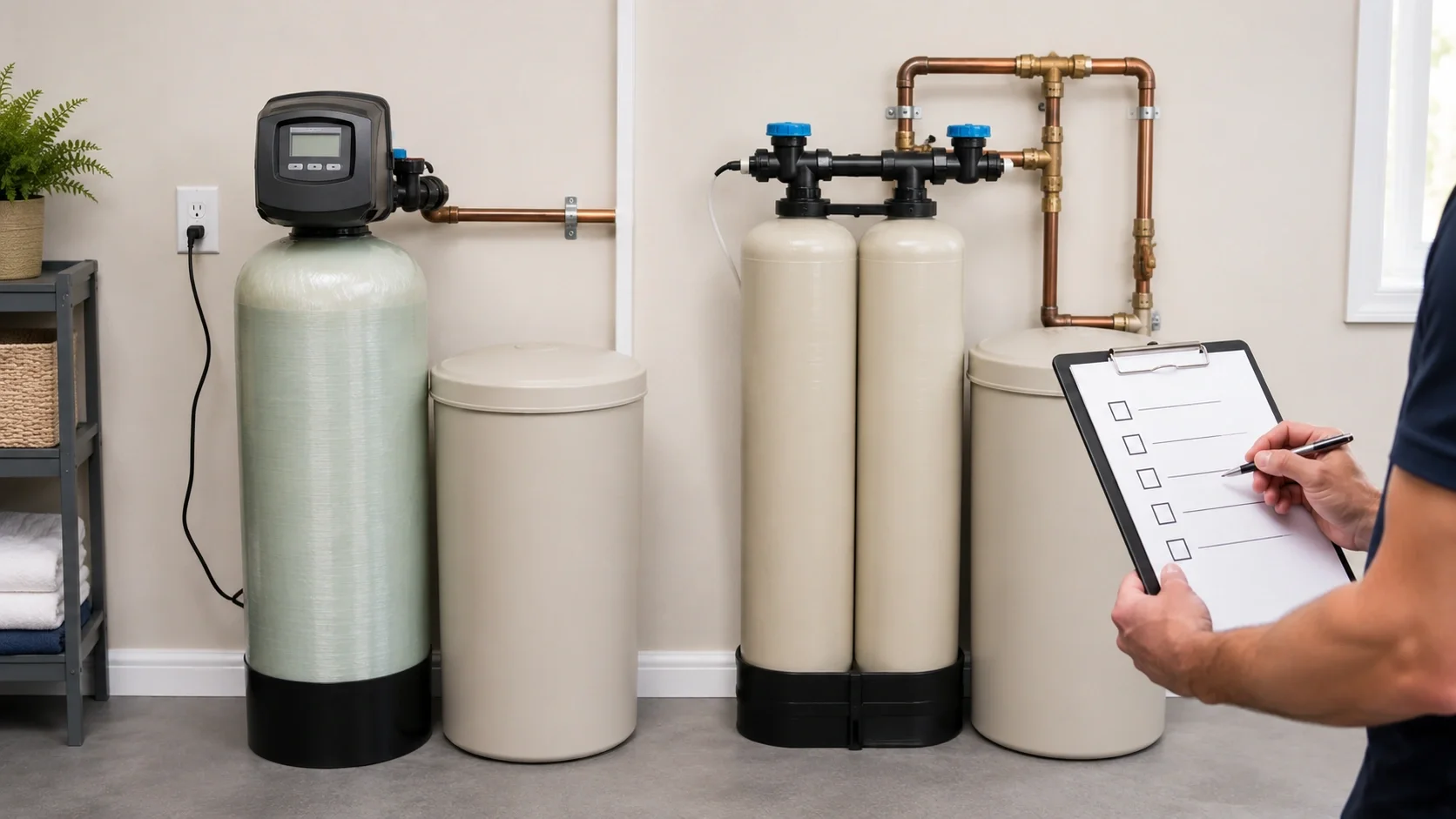
Technology Comparison
Electric vs non-electric systems with different regeneration approaches and efficiency levels
Cost Analysis
Initial investment, operating costs, and long-term value comparison between both system types
Maintenance Needs
Different service requirements, part availability, and DIY maintenance capabilities
Quick Comparison Overview
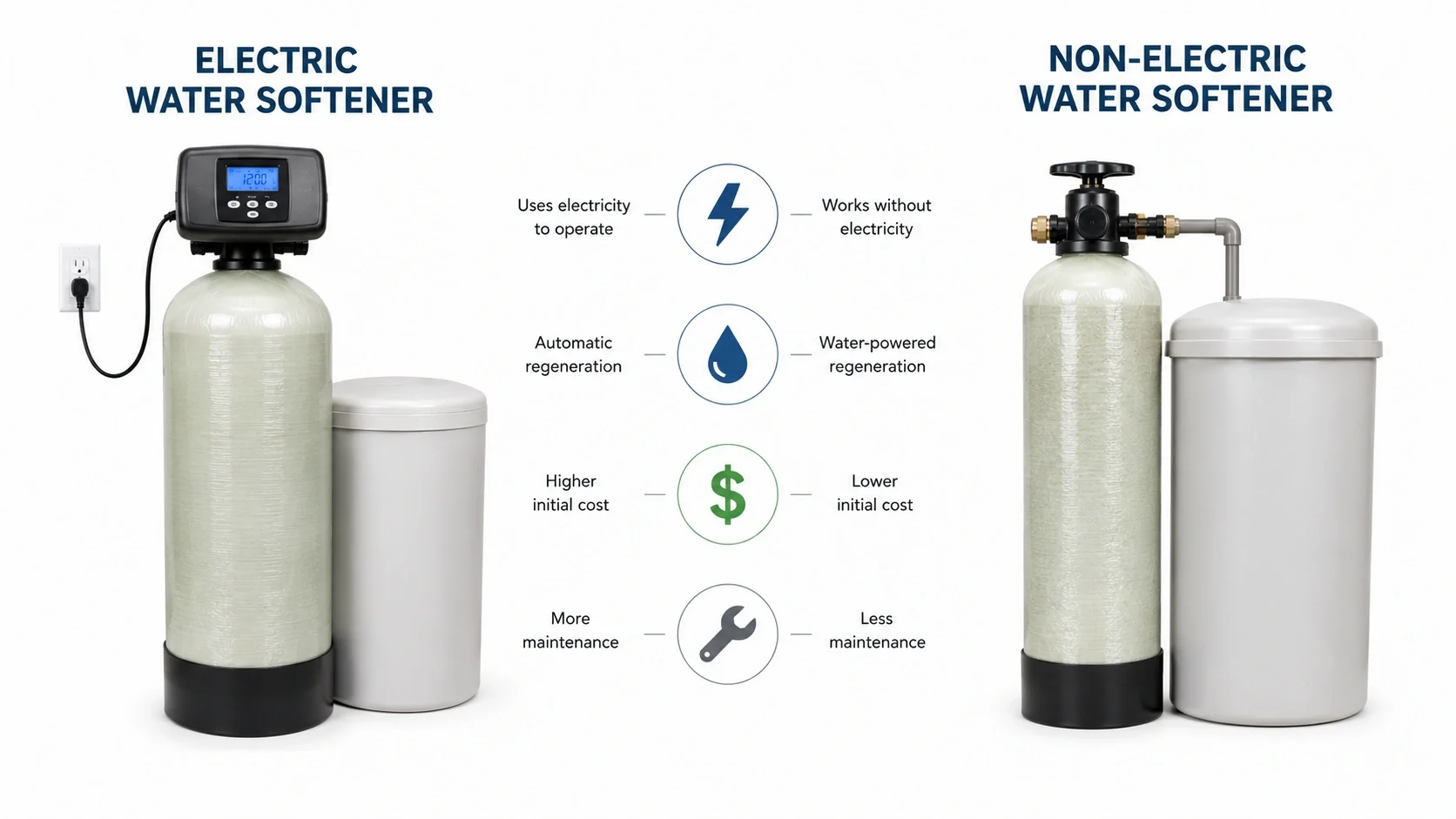
Fleck Electric Systems
- Uses electricity for control operation
- Timer or metered regeneration
- Widely available parts
- DIY-friendly installation
- Lower initial cost
- Proven technology
Kinetico Non-Electric Systems
- Water pressure powered operation
- Demand-initiated regeneration
- Professional installation
- Higher initial cost
- No electricity needed
- Continuous soft water
Recommended Water Softener Systems
Fleck vs Kinetico: Technology and Operation Differences
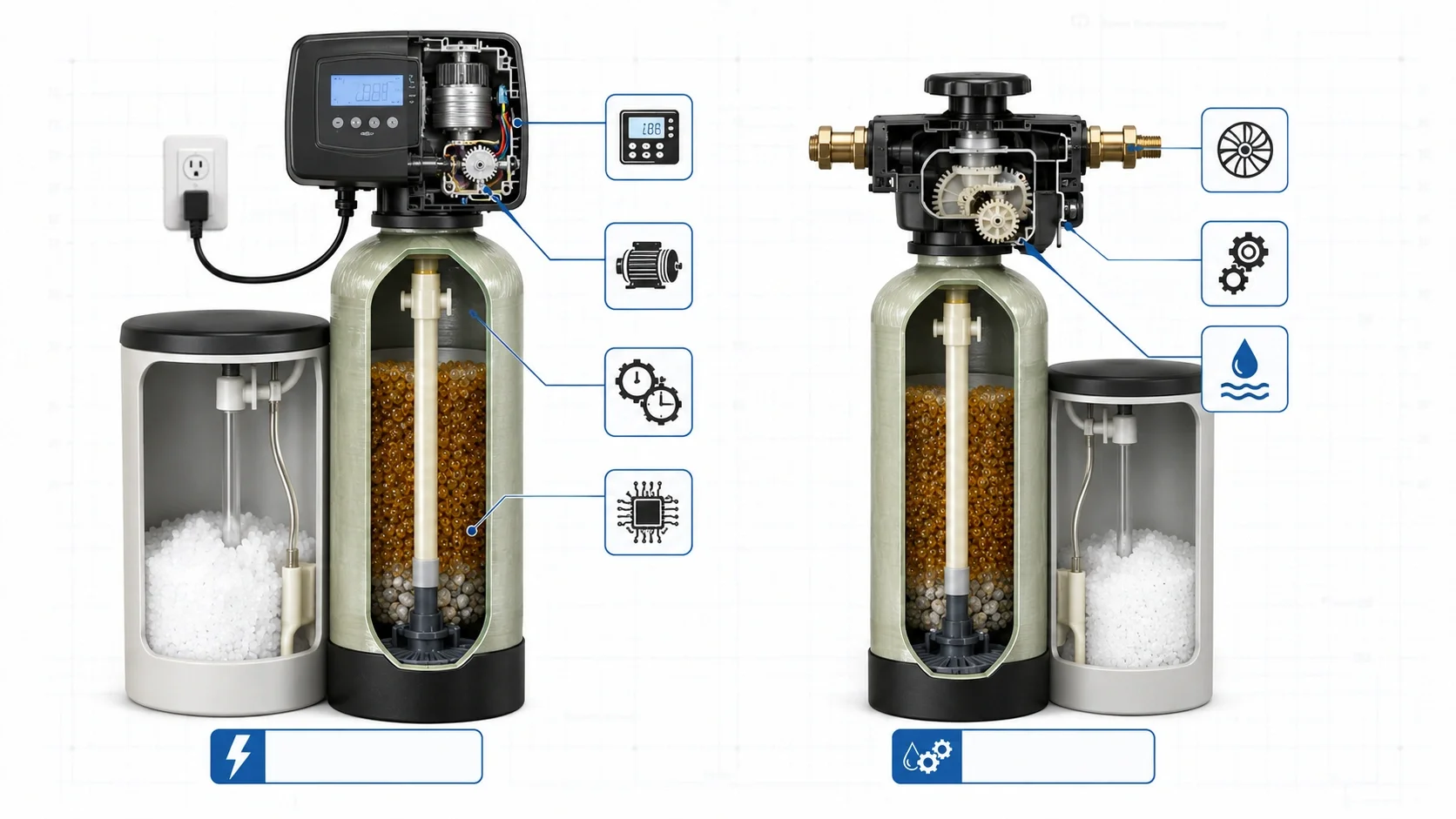
The comparison between Fleck and Kinetico water softeners represents one of the most significant decisions in residential water treatment. Electric systems typically utilize electronic control valves with timer-based or metered regeneration cycles, while non-electric systems employ hydraulic principles powered by water pressure. This fundamental difference in operation technology leads to distinct advantages and considerations for each system type, affecting everything from installation requirements to long-term operating costs and maintenance needs.
Fleck System Key Characteristics:
- Electric Operation: Requires standard 110V electrical outlet for control system operation
- Timer or Metered Control: Programmable regeneration based on time intervals or actual water usage
- Wide Availability: Easily sourced parts and multiple supplier options
- DIY Friendly: Generally easier for homeowners to install and maintain
- Cost Effective: Lower initial investment compared to premium non-electric systems
- Proven Technology: Established reputation with decades of reliable performance
Kinetico System Key Characteristics:
- Non-Electric Operation: Uses water pressure and hydraulic principles for regeneration
- Demand-Initiated Regeneration: Softens water only when needed, based on actual usage
- Dual Tank Systems: Many models feature twin resin tanks for continuous soft water
- Professional Installation: Typically requires certified installer for setup and service
- Higher Initial Cost: Premium pricing reflecting advanced non-electric technology
- Water Efficiency: No electricity usage and optimized water consumption during regeneration
Pros and Cons Comparison
✅ Fleck System Pros
- Lower upfront cost
- Easy to find replacement parts
- Simple DIY maintenance
- Programmable regeneration
- Widely available support
❌ Fleck System Cons
- Requires electricity
- May regenerate on schedule, not demand
- Higher long-term energy costs
- Dependent on power availability
✅ Kinetico System Pros
- No electricity needed
- Demand-initiated regeneration
- Continuous soft water supply
- More water efficient
- Works during power outages
❌ Kinetico System Cons
- Higher upfront cost
- Professional installation needed
- Parts harder to find
- Limited DIY repair options
Detailed Comparison Table
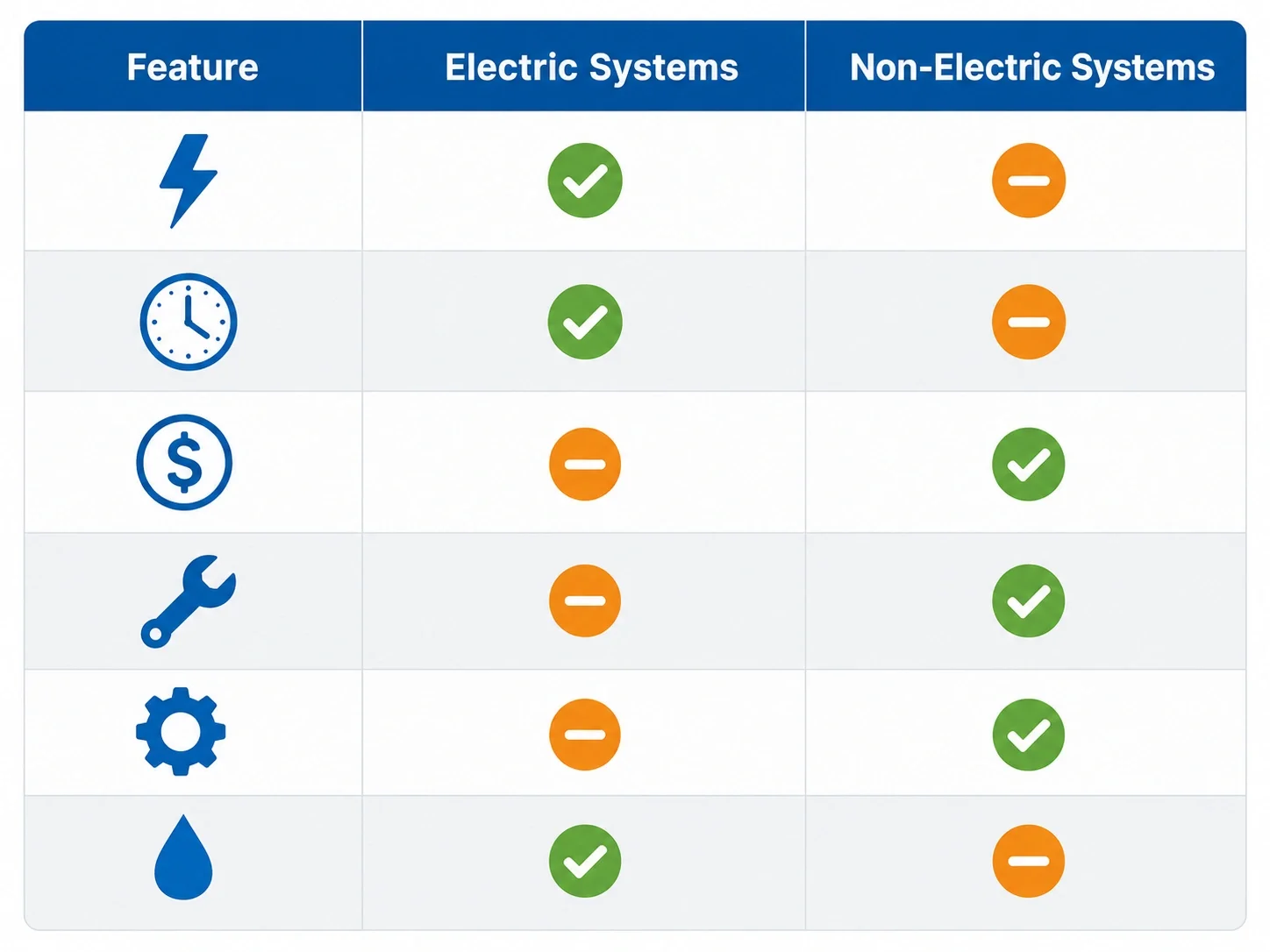
| Feature | Electric Systems | Non-Electric Systems |
|---|---|---|
| Power Source | 110V Electricity | Water Pressure |
| Regeneration Control | Timer or Meter | Demand-Initiated |
| Initial Cost | $400-$1,500 | $800-$3,000+ |
| Installation | DIY Friendly | Professional |
| Parts Availability | Widely Available | Limited |
| Electricity Usage | Yes | No |
| Water Efficiency | Good | Excellent |
| Continuous Soft Water | Single Tank | Dual Tank |
| DIY Maintenance | Easy | Difficult |
| Warranty | Standard | Extended |
Performance and Cost Comparison Analysis
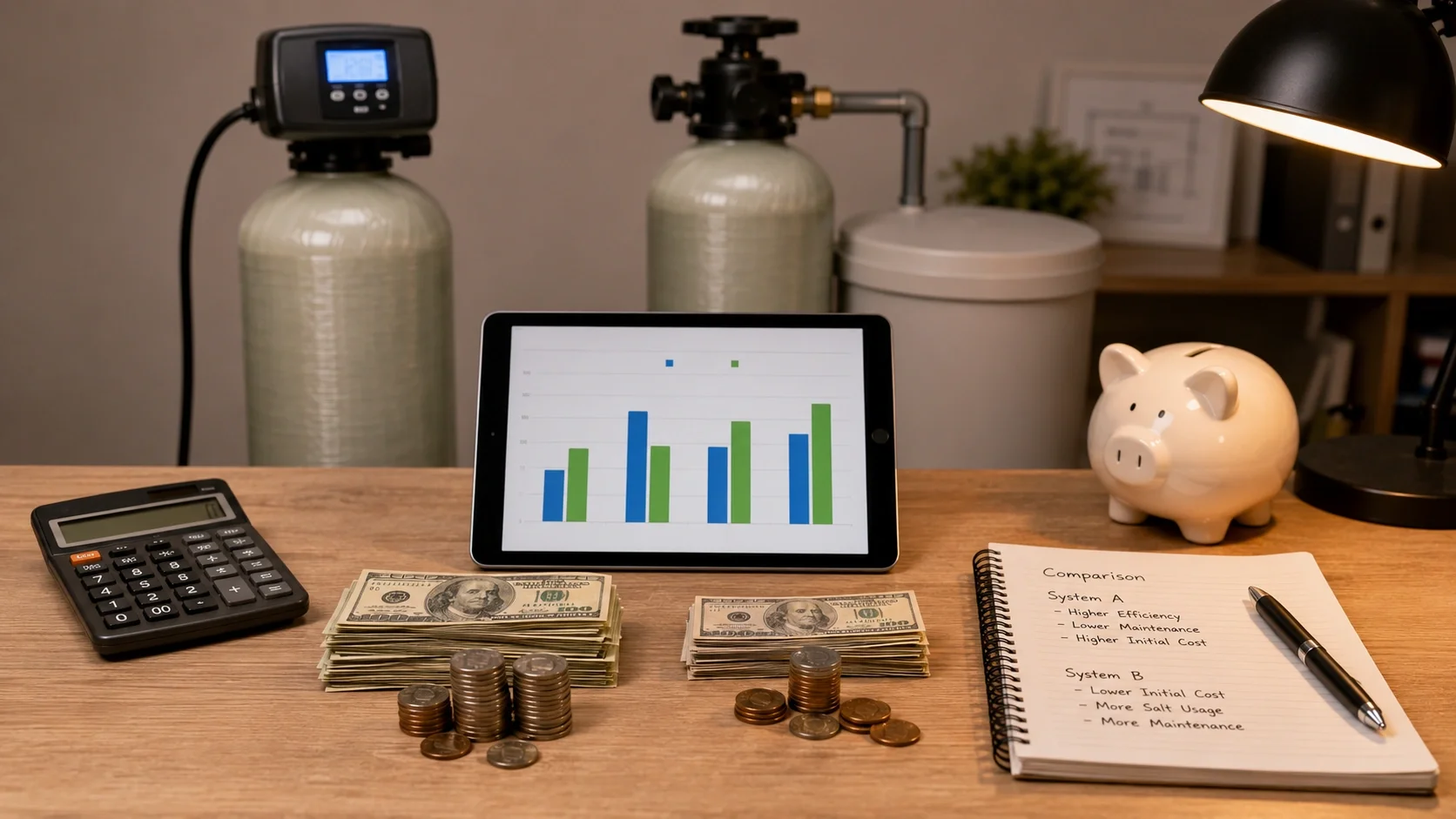
When evaluating electric versus non-electric water softeners, several key performance and cost factors should be considered to determine the best fit for your specific needs:
- Initial Investment: Electric systems generally offer more affordable entry points, while non-electric represents premium pricing
- Operating Costs: Non-electric operation may save on electricity, but both require salt and periodic maintenance
- Water Efficiency: Non-electric demand-initiated regeneration typically uses less water and salt per regeneration cycle
- Reliability: Both have excellent reliability records with proper maintenance and installation
- Service Availability: Electric parts are widely available, while non-electric often requires authorized dealer service
- Warranty Coverage: Both offer substantial warranties, but terms and service requirements differ significantly
10-Year Cost Comparison
| Cost Category | Fleck Electric System | Kinetico Non-Electric System |
|---|---|---|
| Initial Purchase | $800 (average) | $1,800 (average) |
| Installation | $0 (DIY) - $500 | $500-$1,000 |
| Salt (10 Years) | $500-$1,500 | $400-$1,200 |
| Electricity (10 Years) | $200-$500 | $0 |
| Maintenance/Repairs | $200-$500 | $300-$800 |
| Total 10-Year Cost | $1,700-$3,800 | $3,000-$4,800 |
Which System Is Right for You?
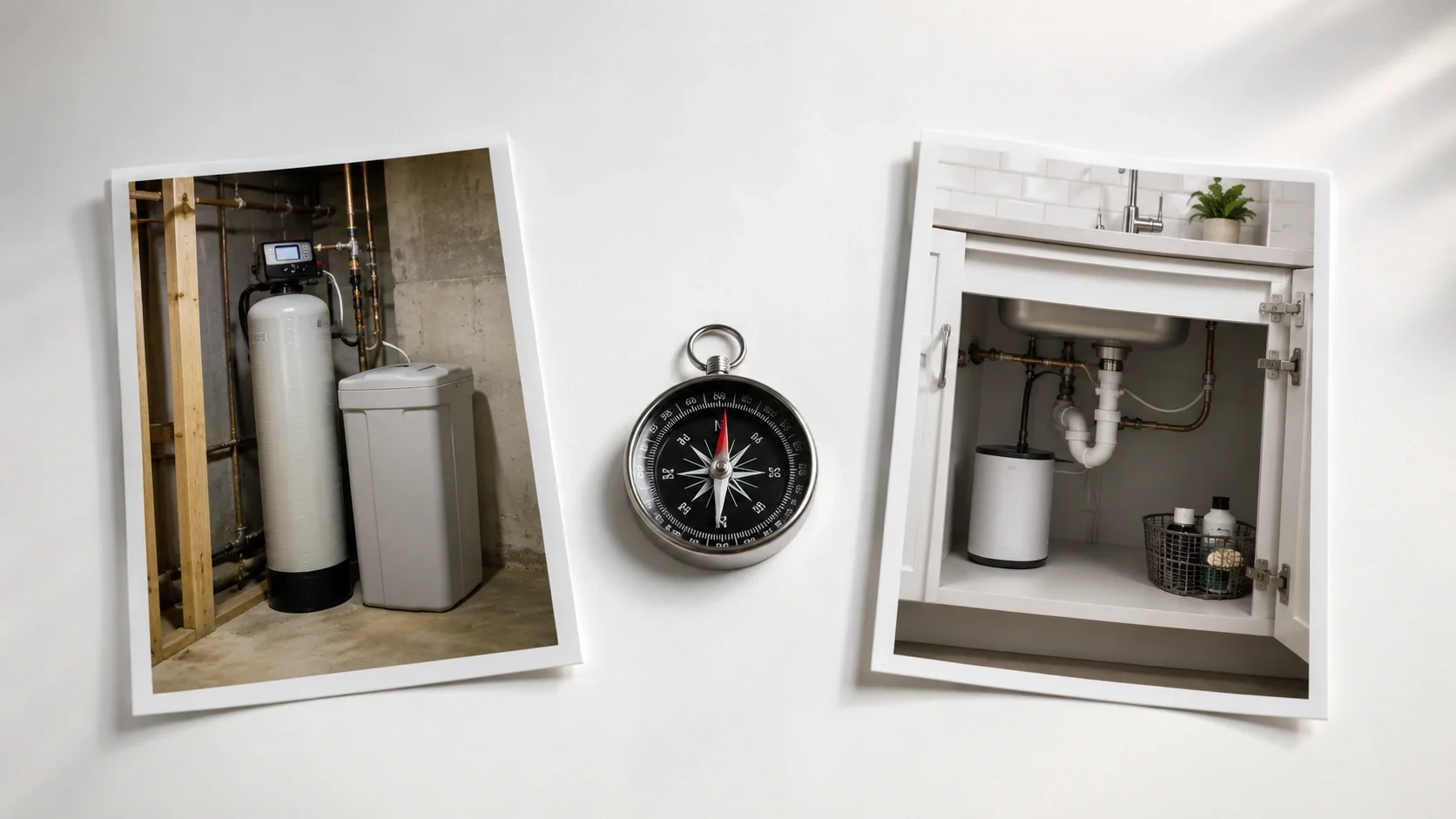
Choose Electric If:
- You're looking for a budget-friendly option
- You want to DIY installation
- Easy part availability is important
- You have reliable electricity
- You prefer programmable controls
- You're comfortable with basic maintenance
Choose Non-Electric If:
- You want maximum efficiency
- You need continuous soft water
- You want to avoid electricity use
- You prefer professional service
- Budget is less of a concern
- You experience frequent power outages
Pro Tip: If you're still unsure, consider your specific needs. Electric systems are excellent for most households, while non-electric systems are ideal for those prioritizing efficiency, continuous soft water, and minimal electricity usage.
Installation and Maintenance Comparison
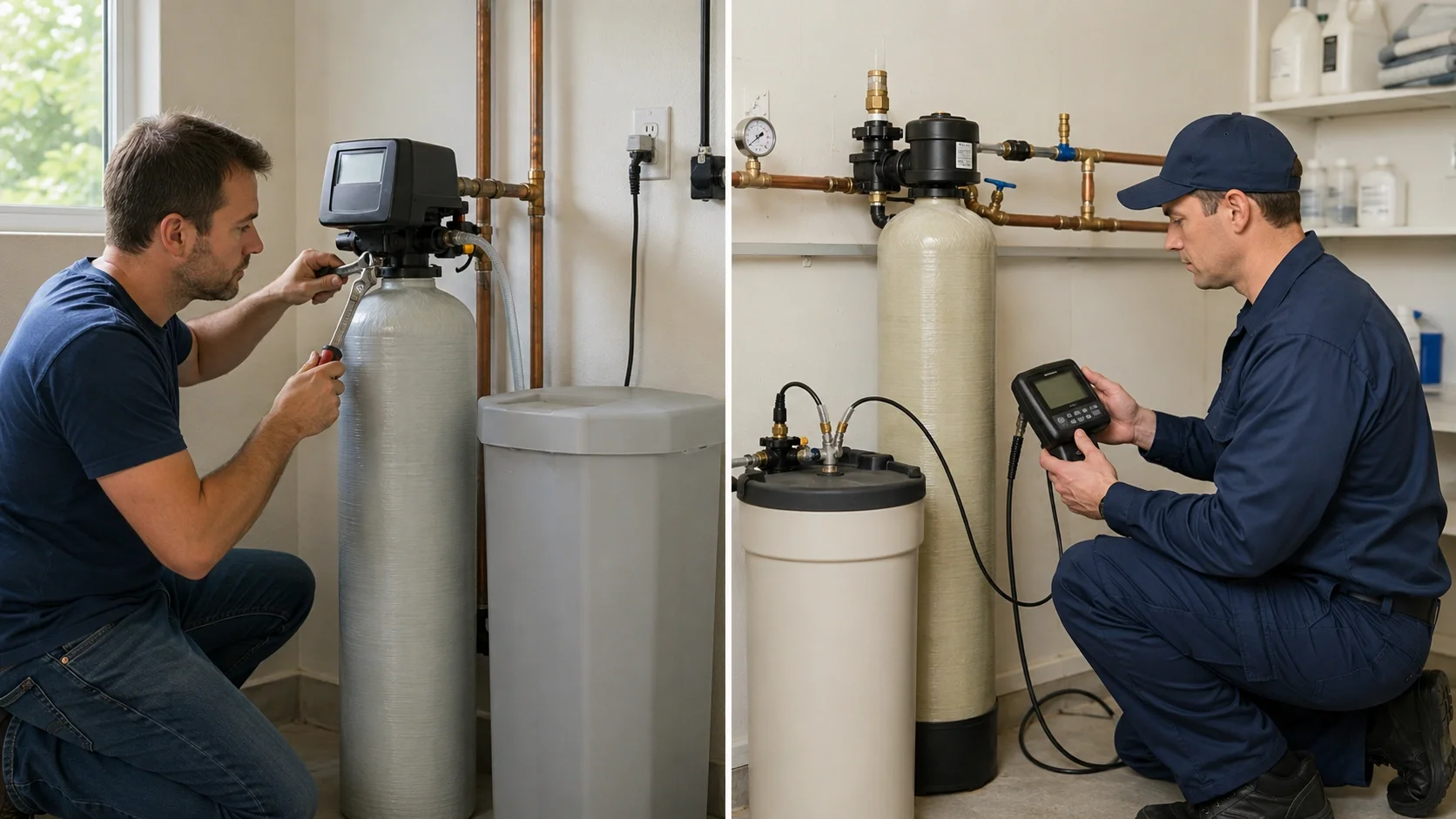
🔧 Fleck Electric Systems
- Installation: DIY-friendly with basic plumbing skills
- Tools Needed: Basic plumbing tools, multimeter
- Maintenance: Regular salt checks, annual cleaning
- Repairs: Easy part replacement, DIY capable
- Common Issues: Power outages, timer malfunctions
🔧 Kinetico Non-Electric Systems
- Installation: Professional recommended
- Tools Needed: Specialized tools, professional equipment
- Maintenance: Professional service recommended
- Repairs: Often requires certified technician
- Common Issues: Pressure issues, hydraulic malfunctions
Frequently Asked Questions
Which system is more reliable?
Both electric and non-electric systems are highly reliable with proper maintenance. Electric systems have more electronic components that can fail, while non-electric systems have fewer parts but require professional service.
Which is more cost-effective long-term?
Electric systems typically have a lower initial cost and similar long-term costs. Non-electric systems save on electricity but have higher upfront and service costs. Over 10 years, the total cost can be comparable.
Can I install a non-electric system myself?
Non-electric systems typically require professional installation due to their complexity and the need for specialized knowledge of hydraulic systems and water pressure requirements.
Do electric systems use a lot of electricity?
Electric systems use minimal electricity - typically $20-$50 per year. The main power usage is for the control board and motor during regeneration cycles.
Which system is better for well water?
Both can work with well water. However, non-electric systems can be advantageous during power outages common with well pumps, as they don't require electricity to operate.
How long do these systems last?
With proper maintenance, both electric and non-electric water softeners typically last 15-20 years. The resin bed may need replacement after 10-15 years in both types.
Step-by-Step Decision Process
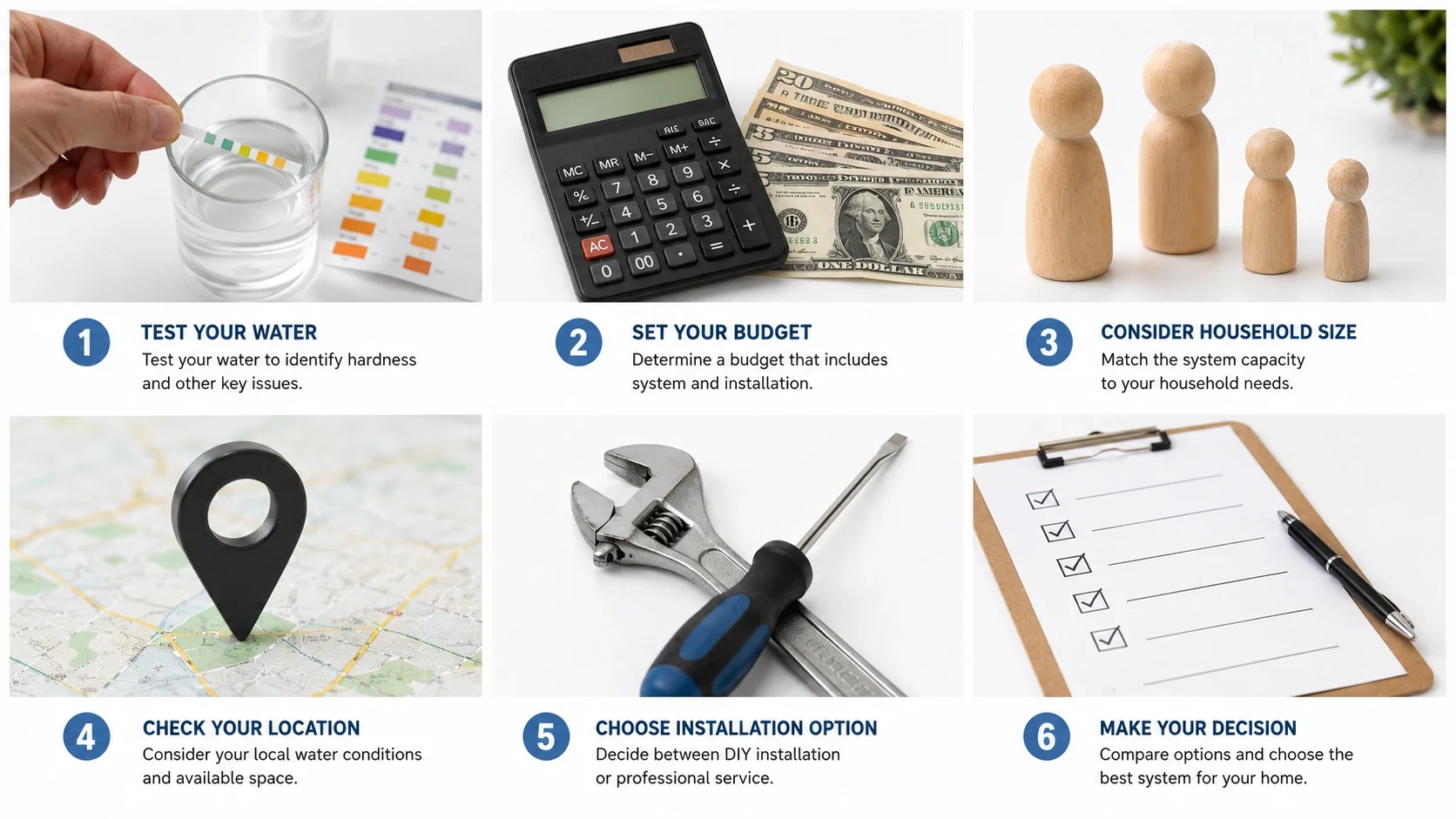
- Test your water hardness: Determine the hardness level to understand your needs.
- Assess your budget: Consider both upfront and long-term operating costs.
- Evaluate your household size: Larger households may benefit from higher capacity or dual-tank systems.
- Consider your location: Areas with frequent power outages may favor non-electric systems.
- Decide on installation approach: DIY vs professional installation affects total cost and complexity.
- Review maintenance preferences: Consider whether you prefer DIY maintenance or professional service.
- Compare specific models: Research specific system capacities, features, and warranties.
- Get professional advice: Consult with water treatment specialists for personalized recommendations.
Related Water Softener Resources
Explore these additional resources to better understand water softener options and comparisons:
Water Softener Systems
Complete guide to water softener systems, including types, features, and selection criteria for different household needs.
Water Softener Buying Guide
Comprehensive buying guide with factors to consider when choosing a water softener for your home.
Water Softener Cost Guide
Detailed cost analysis including purchase price, installation, and long-term operating expenses for water softeners.
Salt vs Salt-Free Systems
Comparison of traditional salt-based water softeners and salt-free conditioning systems for different water treatment needs.