
Water Softener Salt - Types, Benefits & Recommendations
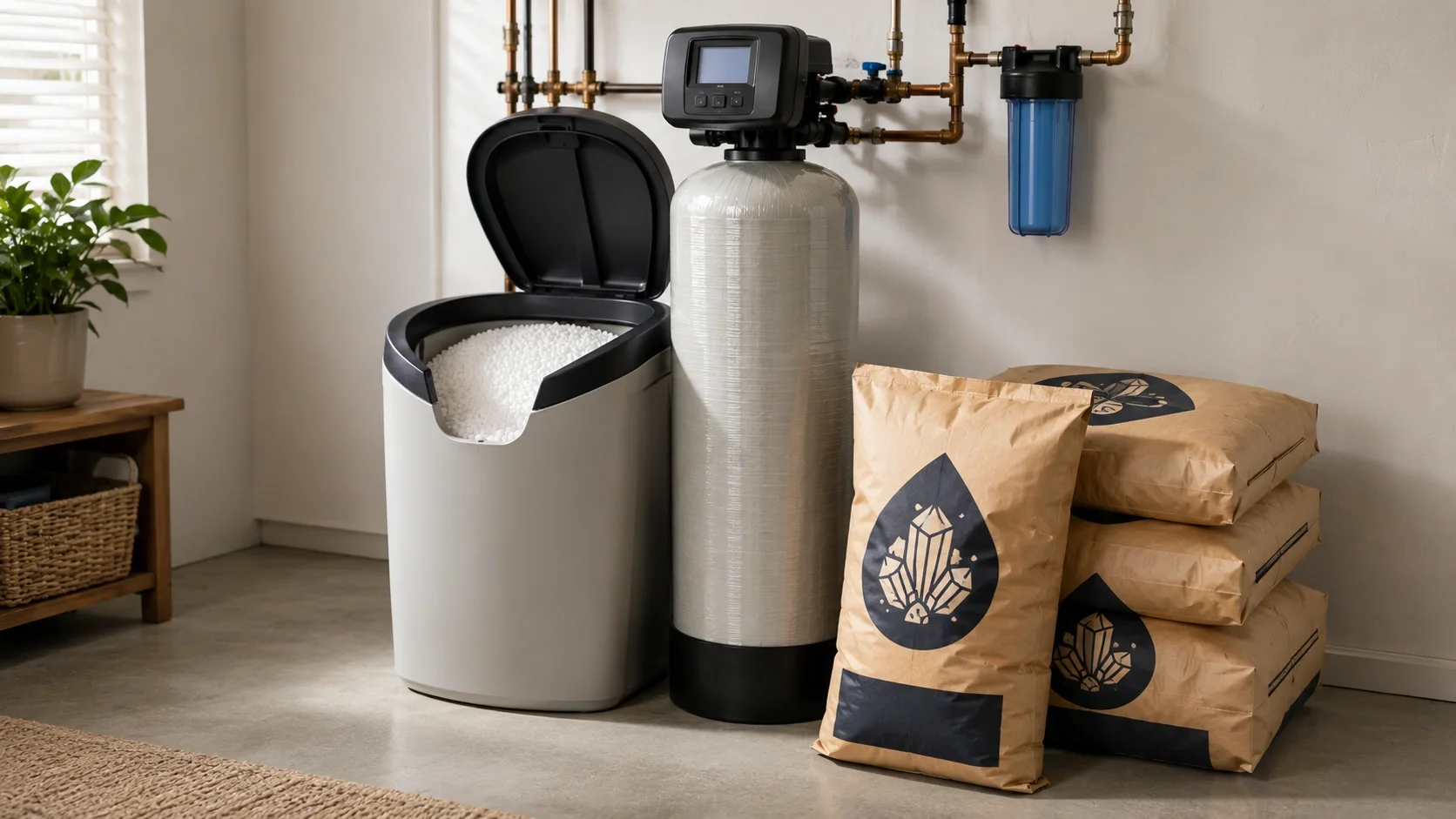
High Purity
Premium salt products with minimal insoluble content to prevent tank residue
Fast Dissolving
Specially formulated crystals and pellets that dissolve efficiently for consistent brine
System Protection
Reduces maintenance needs and extends the life of your water softener
Why Salt Quality Matters
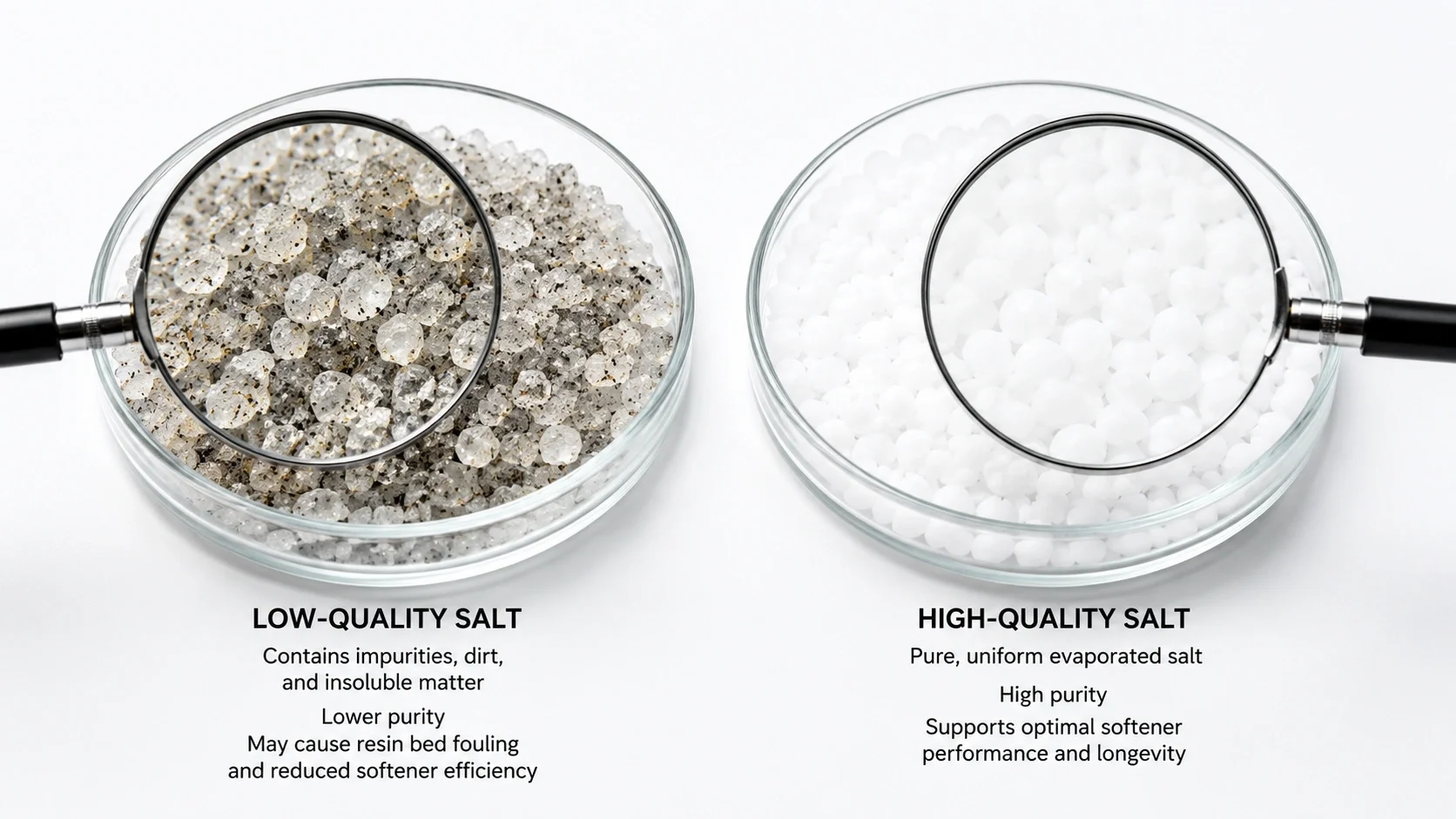
The quality of salt you use in your water softener directly affects its performance, efficiency, and lifespan. Low-quality salt contains more insoluble minerals and impurities that can:
- Create residue buildup in your brine tank, requiring more frequent cleaning
- Reduce regeneration efficiency, meaning your system uses more salt and water
- Shorten system lifespan by causing premature wear on components
- Increase maintenance costs due to more frequent repairs and service calls
- Cause salt bridging – hard crusts that prevent proper brine formation
Key Insight: Using high-purity salt (99.9%+ sodium chloride) can reduce maintenance frequency by up to 50% and extend your system's lifespan by 3-5 years. While it may cost slightly more upfront, it pays for itself through reduced maintenance and longer system life.
Recommended Water Softener Salt Products
Understanding Water Softener Salt
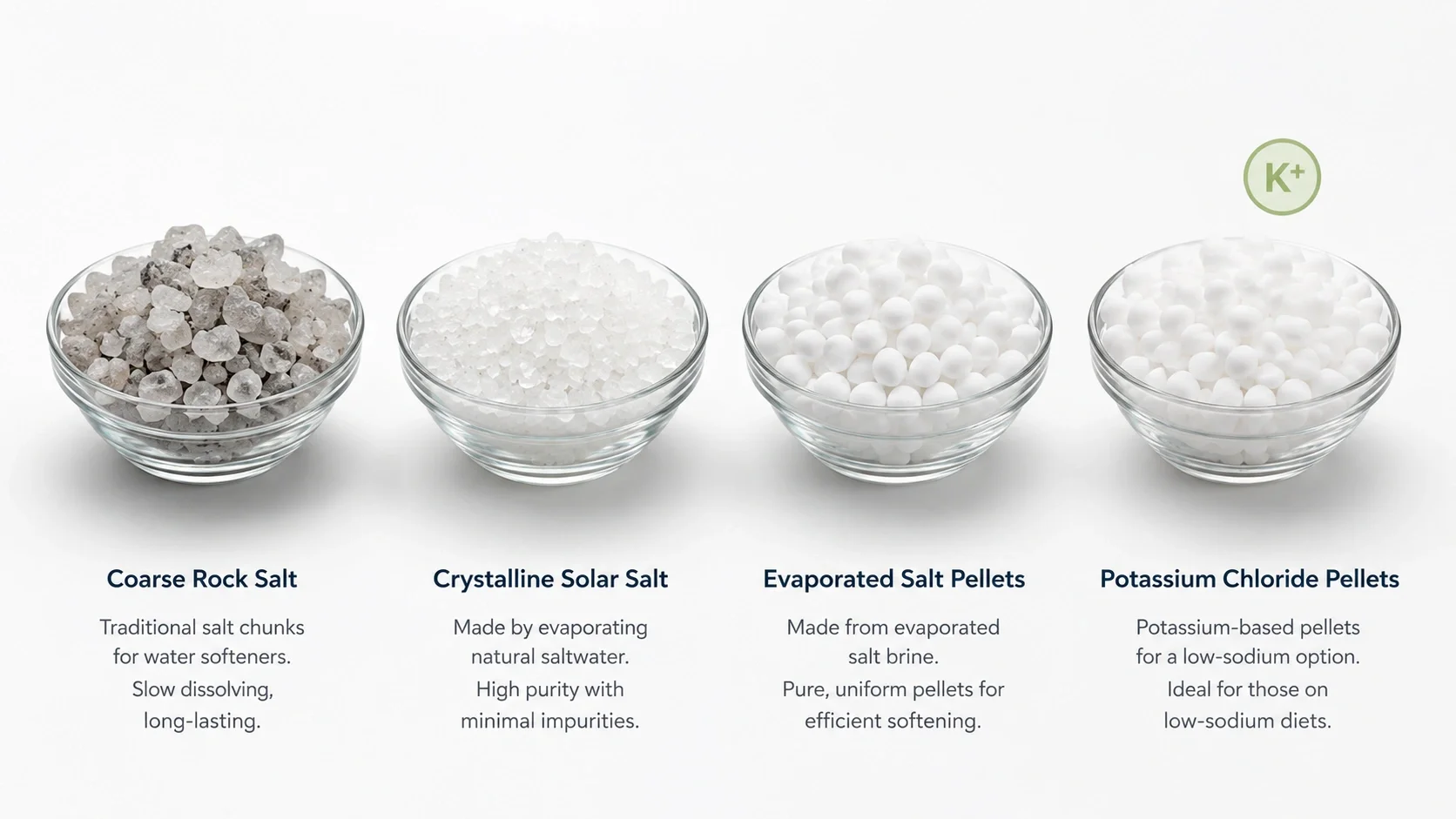
Water softener salt is an essential component of ion-exchange water softening systems. It regenerates the resin beads that remove hardness minerals (calcium and magnesium) from your water. Choosing the right salt for your system can significantly impact its efficiency and lifespan.
Types of Water Softener Salt:
Rock Salt
The most economical option but contains more insoluble minerals that can create residue in your brine tank. Best for budget-conscious users willing to perform more frequent maintenance.
$5-$10 per bag ~98% PuritySolar Salt
Evaporated from seawater, contains about 99.6% pure sodium chloride with fewer impurities. A good balance between cost and quality.
$8-$15 per bag ~99.6% PurityEvaporated Pellets
The purest form (99.99% sodium chloride), produced through mining and evaporation processes. Best for optimal performance and minimal maintenance.
$12-$20 per bag 99.99% PurityPotassium Chloride
Salt-free alternative for those on sodium-restricted diets. More expensive but adds potassium to your water instead of sodium. Compatible with most systems.
$20-$35 per bag 99.9% PuritySalt Forms: Pellets vs Crystals
Pellets: Compressed salt in pellet form. Less prone to bridging, dissolve more uniformly, and leave less residue. Recommended for most systems.
Crystals: Natural salt crystals. More affordable but can cause bridging and mushing. Best for systems with salt grids or platforms.
Choosing the Right Salt:
Consider your water softener type, local water hardness, and budget when selecting salt. Higher purity salts may cost more initially but can reduce maintenance and extend your system's life. Always consult your manufacturer's recommendations for optimal performance.
Salt Comparison: Which One Should You Choose?
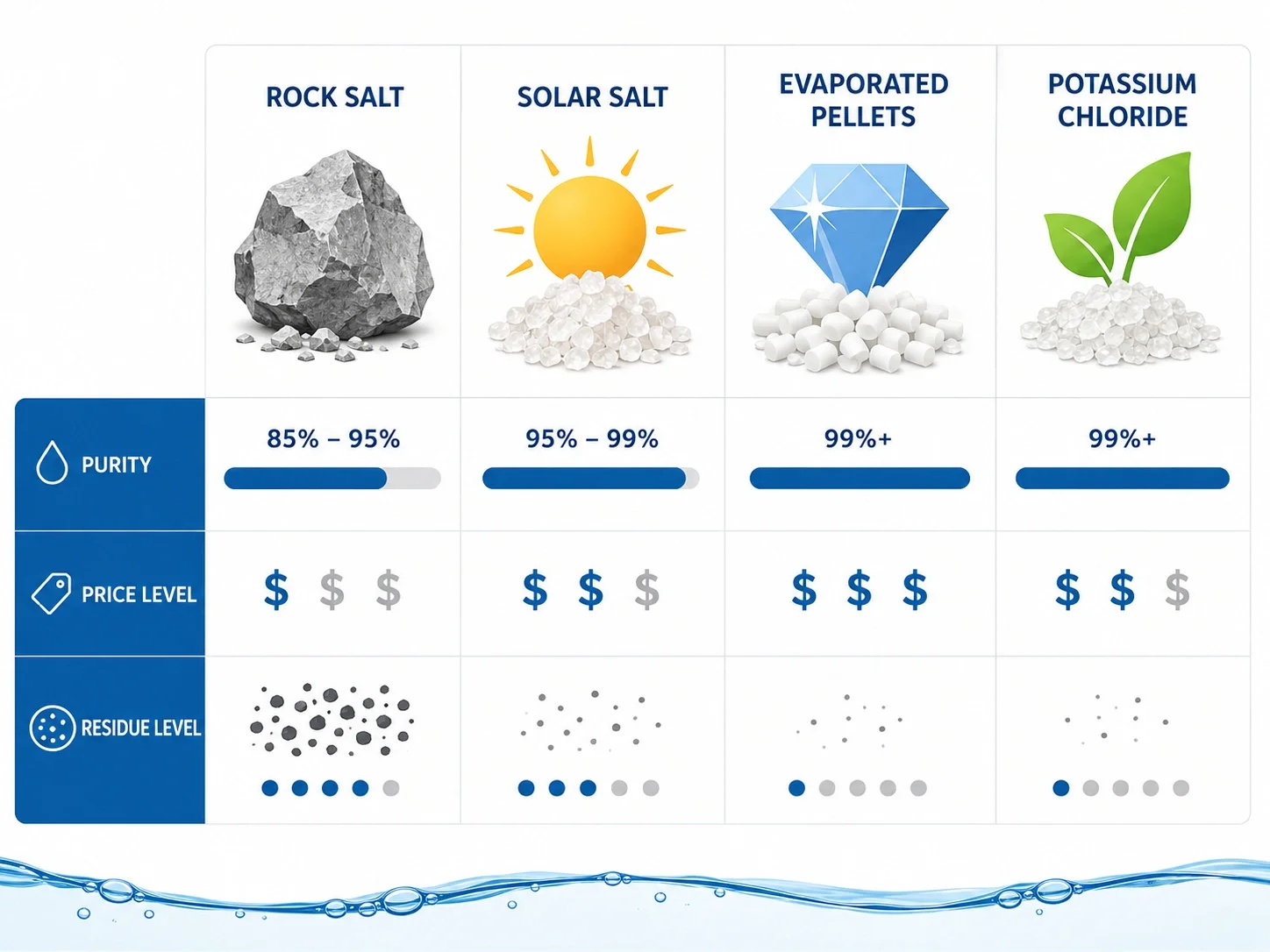
| Feature | Rock Salt | Solar Salt | Evaporated Pellets | Potassium Chloride |
|---|---|---|---|---|
| Purity | ~98% | ~99.6% | ~99.99% | ~99.9% |
| Price | $5-$10 | $8-$15 | $12-$20 | $20-$35 |
| Residue | High | Medium | Low | Low |
| Bridging Risk | High | Medium | Low | Low |
| Best For | Budget-conscious | Balanced approach | Optimal performance | Low-sodium diets |
Benefits of Using Quality Water Softener Salt
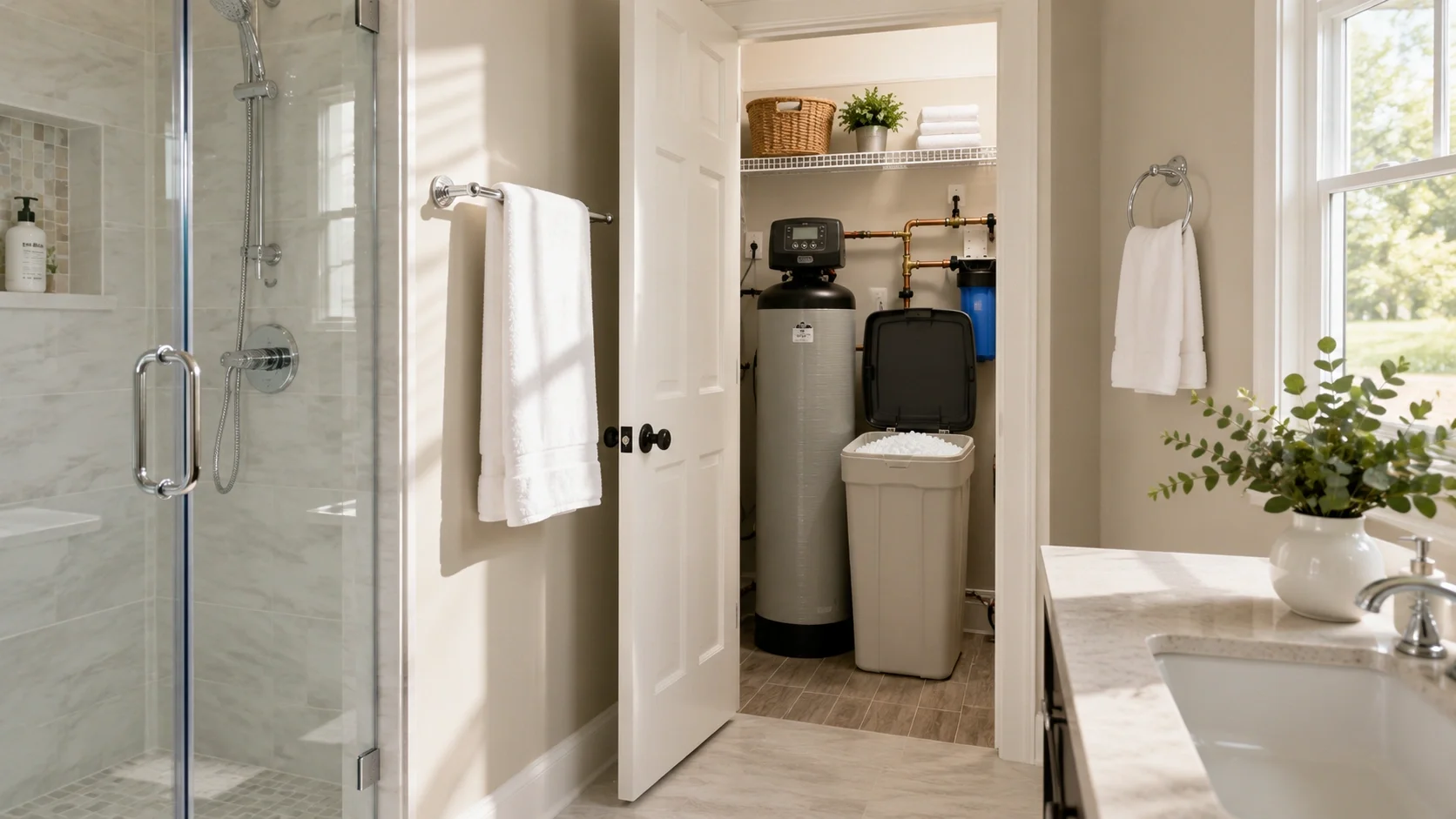
Investing in high-quality water softener salt provides several advantages:
- More efficient regeneration cycles, saving water and energy
- Reduced brine tank cleaning frequency
- Longer lifespan for your water softening system
- Consistent water softening performance
- Fewer maintenance issues and service calls
Maintenance Tips:
Check your salt level monthly and add salt before it falls below one-quarter full. Occasionally inspect for salt bridging (a hard crust that forms above water level) and break it up if necessary. Clean your brine tank annually or as recommended by your manufacturer.
How Much Salt Do You Need?
Salt Consumption Estimates:
- Average family of 4: 1-2 bags (40-80 lbs) per month
- Water hardness 10 GPG: Approximately 1 bag per month
- Water hardness 20 GPG: Approximately 2 bags per month
- Keep brine tank: At least 1/4 full at all times
- Don't overfill: Fill to about 3/4 full maximum
Popular Water Softener Salt Brands
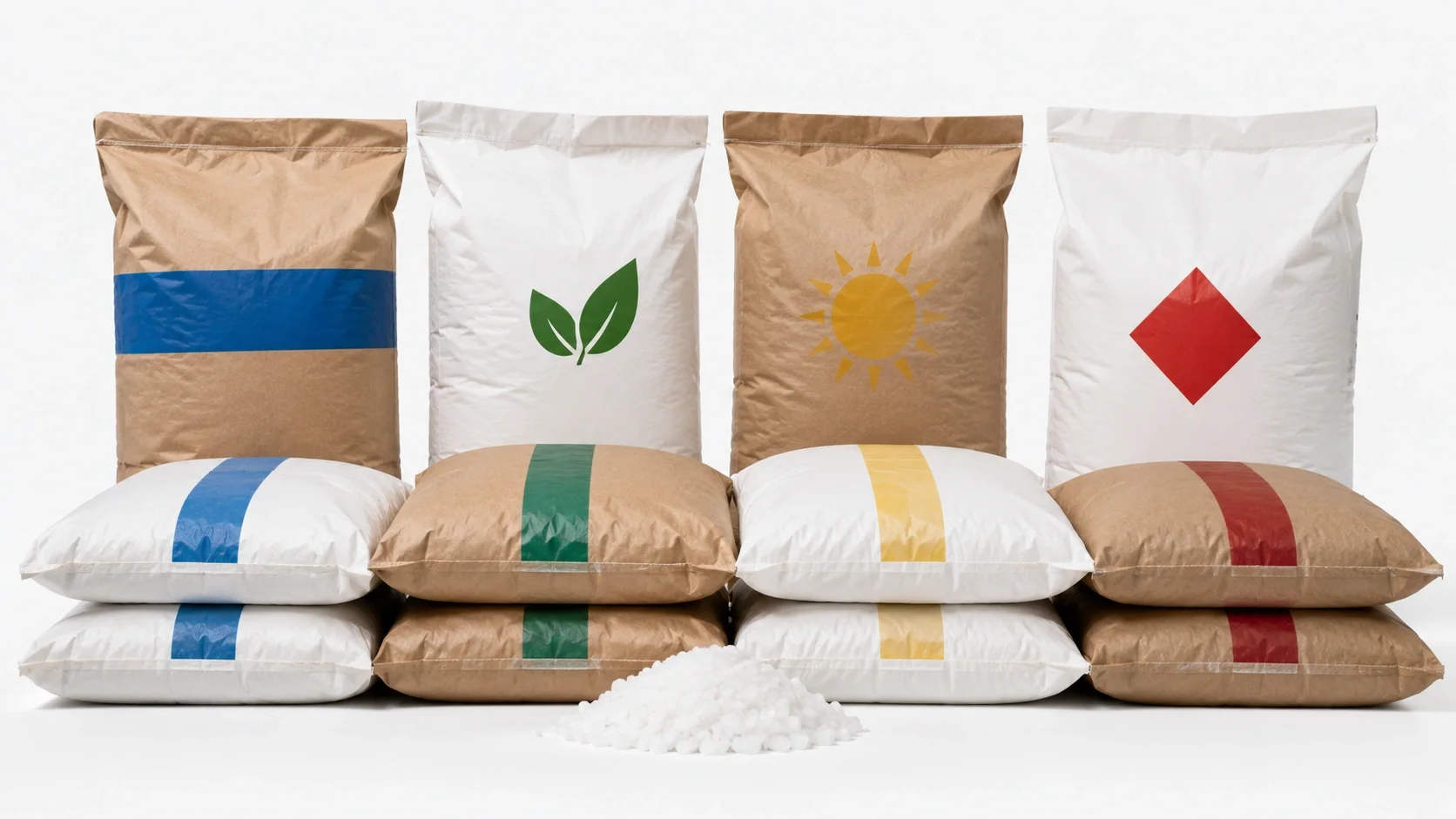
Brand Tip: Choose a brand that offers high-purity salt with less than 1% insoluble matter. Look for salt labeled as "water softener salt" rather than "ice melting salt" or "rock salt" as these may contain additives or higher impurities that can damage your system.
Common Salt Problems and Solutions
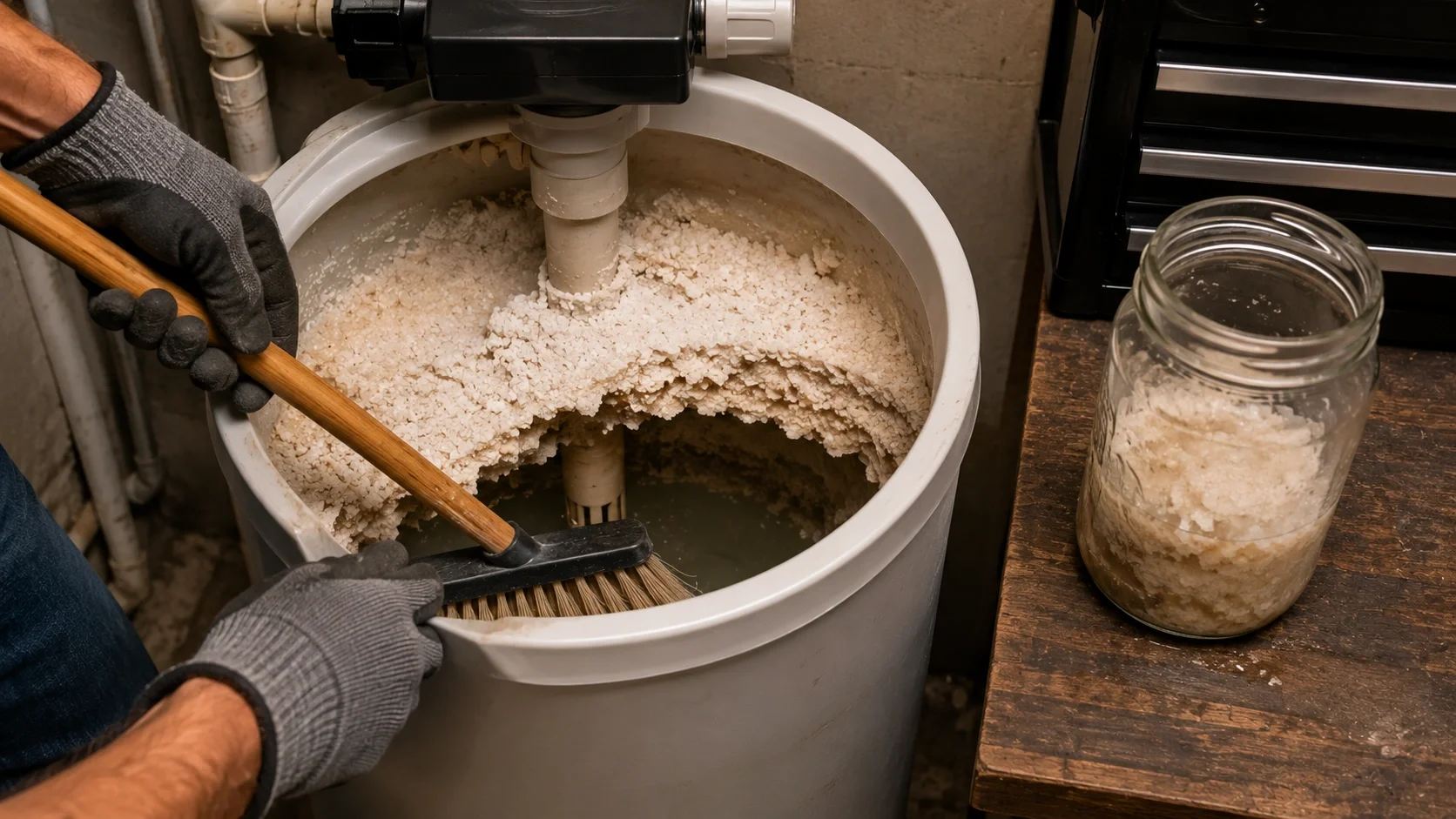
⚠ Salt Bridging
- Cause: Hard crust forms above water level
- Solution: Break with broom handle, use salt grid
- Prevention: Use pellets, don't overfill, maintain consistent salt level
⚠ Salt Mushing
- Cause: Salt dissolves into mushy sludge
- Solution: Clean tank thoroughly, use pellet salt
- Prevention: Avoid overfilling, use high-quality salt
⚠ Excessive Residue
- Cause: Low-quality salt with impurities
- Solution: Switch to evaporated pellets, clean tank
- Prevention: Use high-purity salt (99.9%+)
⚠ Low Salt Level
- Cause: Forgetting to refill
- Solution: Add salt immediately
- Prevention: Set monthly reminder, use salt monitor
Sodium Chloride vs Potassium Chloride
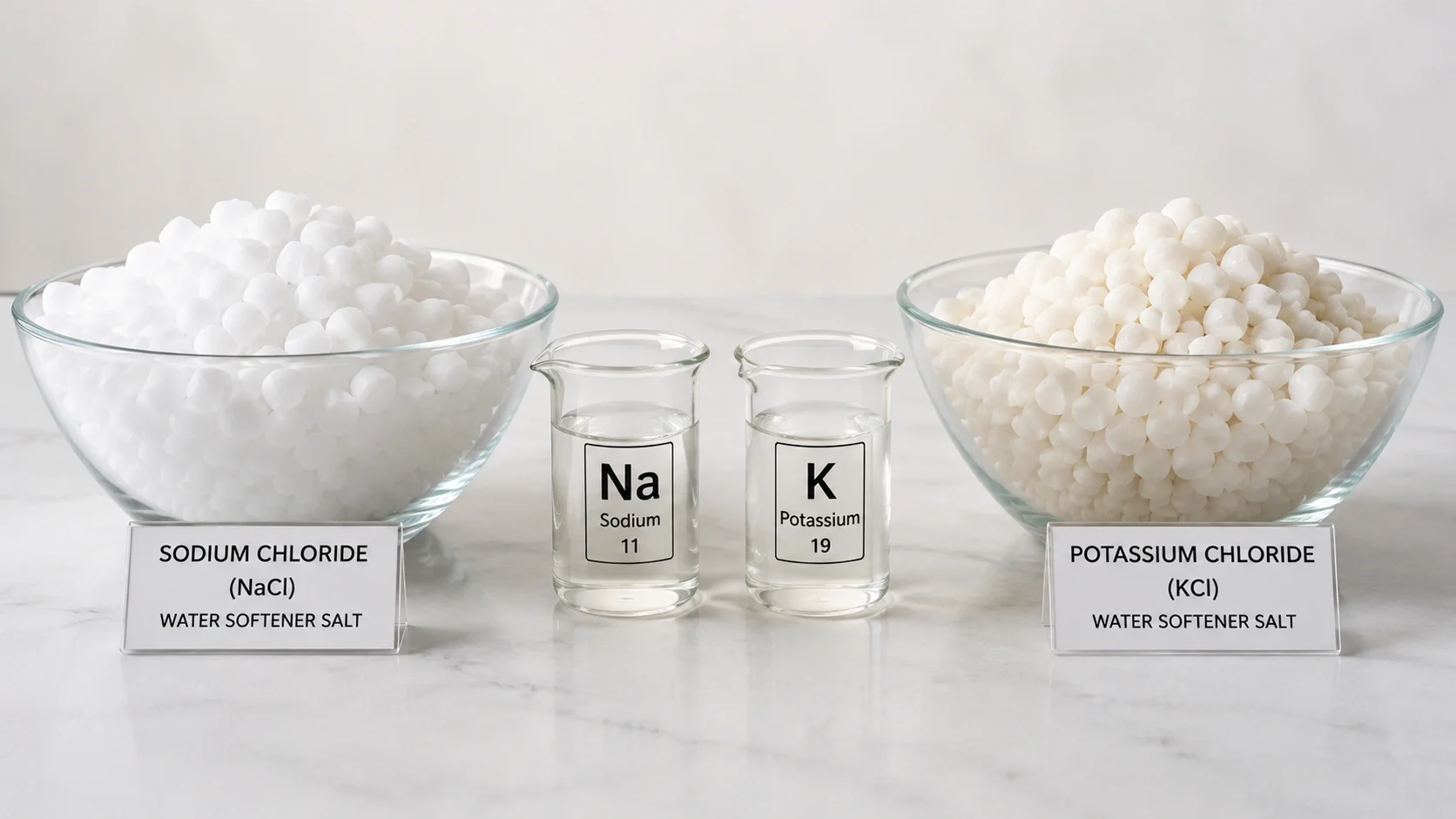
| Feature | Sodium Chloride (Salt) | Potassium Chloride |
|---|---|---|
| Purpose | Recharges resin beads with sodium ions | Recharges resin beads with potassium ions |
| Water Addition | Adds sodium to water | Adds potassium to water |
| Health Impact | May be concern for low-sodium diets | Safe for low-sodium diets; adds beneficial potassium |
| Price | $5-$20 per bag | $20-$35 per bag |
| Dissolving Rate | Standard | Similar to sodium chloride |
| System Compatibility | All systems | Most systems (check manufacturer) |
Which Should You Choose?
Choose Sodium Chloride if: Sodium isn't a health concern for your household and you want the most cost-effective option.
Choose Potassium Chloride if: Anyone in your household is on a sodium-restricted diet, or you want to add beneficial potassium to your water. Note that it's more expensive and may not be compatible with all systems.
Environmental Impact of Water Softener Salt
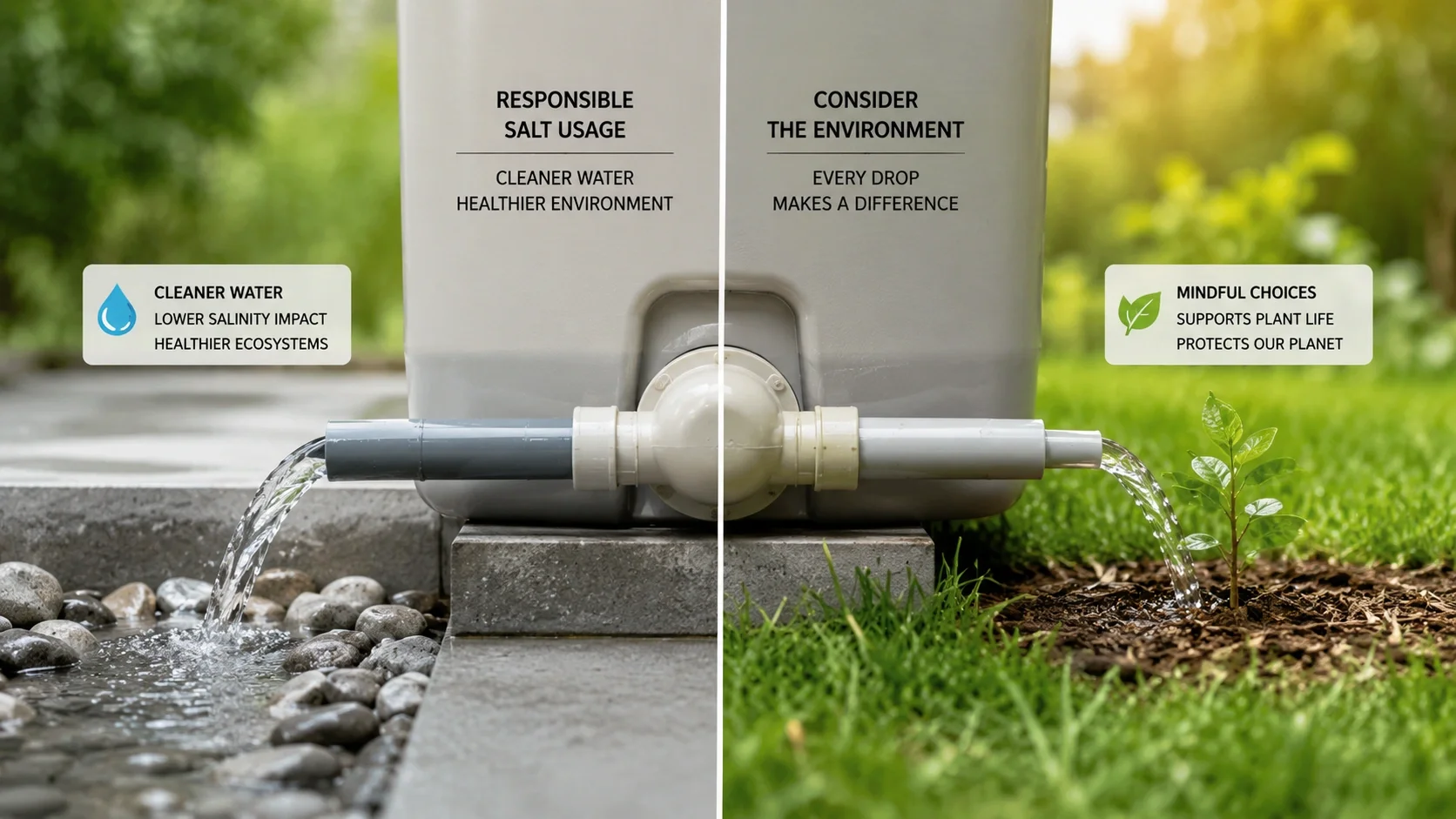
Water softener salt can have environmental impacts that are important to consider:
- Brine Discharge: Salt-based systems discharge brine into wastewater systems, which can affect aquatic life
- Salt Runoff: Can affect soil and groundwater if not properly managed
- Energy Consumption: More frequent regeneration uses more water and energy
- Packaging Waste: Salt bags contribute to plastic waste
Eco-Friendly Alternatives:
- Potassium Chloride: More environmentally friendly than sodium chloride
- High-Efficiency Systems: Use less salt and water per regeneration cycle
- Demand-Initiated Regeneration: Only regenerates when needed, saving salt and water
- Recyclable Packaging: Some brands offer recyclable or biodegradable bags
Frequently Asked Questions
How often should I add salt to my water softener?
Check salt levels monthly and refill when the tank is about 1/4 full. Most families use 1-2 bags per month depending on water hardness and usage.
Can I use table salt in my water softener?
No, table salt contains additives like iodine and anti-caking agents that can damage your system. Always use salt specifically formulated for water softeners.
What's the difference between pellets and crystals?
Pellets are compressed and less likely to bridge or mush. Crystals are natural and more affordable but can cause bridging issues. Most manufacturers recommend pellets.
Is potassium chloride better than salt?
Potassium chloride is better for low-sodium diets and adds beneficial potassium to water. However, it's more expensive and may not work in all systems.
How do I prevent salt bridging?
Use pellet salt, don't overfill the tank, maintain consistent salt levels, and consider installing a salt grid. If bridging occurs, break it up with a broom handle.
Can I mix different types of salt?
It's generally not recommended to mix different types of salt as it can cause bridging issues. Stick with one type for consistent performance.
Conclusion
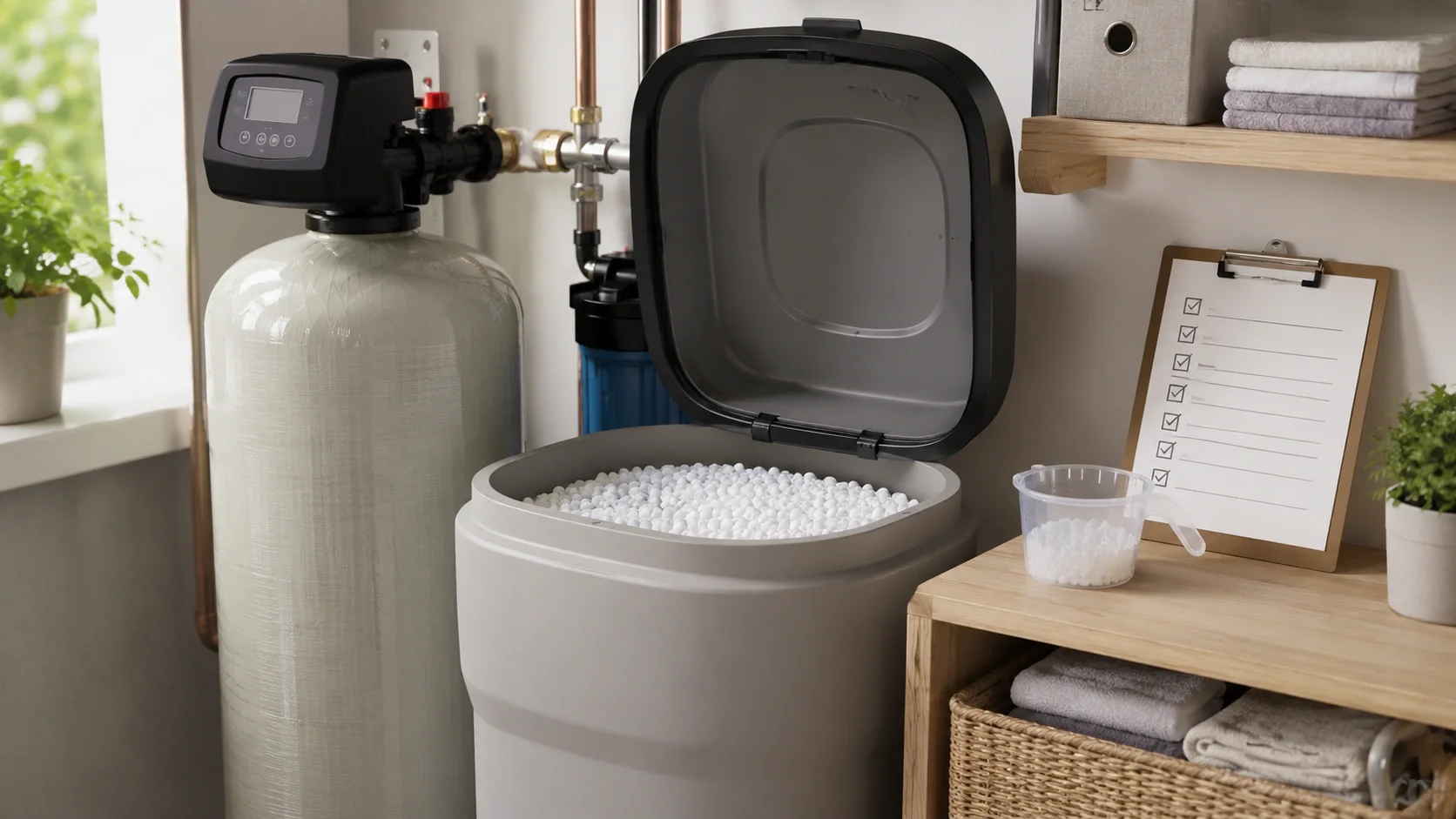
Choosing the right water softener salt is essential for maintaining an efficient and long-lasting water softening system. Whether you opt for budget-friendly rock salt, balanced solar salt, high-purity evaporated pellets, or potassium chloride for sodium-free operation, your choice significantly impacts system performance and maintenance requirements.
Regular maintenance, including monthly salt level checks and annual brine tank cleaning, will keep your system operating at peak efficiency. Investing in quality salt products not only improves water quality but also extends your system's lifespan, saving you time and money in the long run.
Remember that while higher-purity salts cost more upfront, they often pay for themselves through reduced maintenance and longer system life. Consider your household's specific needs, budget, and water conditions when making your selection.
Quick Recommendation
Best Overall: Evaporated Pellets – Highest purity, minimal maintenance, best system protection
Best Value: Solar Salt – Good balance of price and quality
Best for Low-Sodium Diets: Potassium Chloride – No sodium added, beneficial potassium
Best for Budget: Rock Salt – Most affordable, but requires more frequent maintenance
Remember: Always check your system manufacturer's recommendations for salt type and purity requirements to ensure optimal performance and maintain your warranty.
Related Water Softening Products
Explore these additional water softening solutions to complement your system:
Culligan Water Softener
Reliable and efficient water softening systems known for their durability and consistent performance in reducing water hardness.
Water Softener System
Complete water softening solutions designed to remove minerals that cause scale buildup and improve water quality throughout your home.
AO Smith Water Softener
High-quality water softeners from a trusted brand, featuring efficient regeneration and user-friendly control systems.
Fleck Water Softener
Industry-leading water softeners known for their durable control valves and efficient operation with minimal salt and water usage.
Water Softener Filter
Replacement filters and filtration systems that work alongside water softeners to provide comprehensive water treatment.
Water Softener Salt
High-purity salt products specifically formulated for optimal performance in ion-exchange water softening systems.