
Water Softener Buying Guide
📑 Table of Contents
How to Choose the Right Water Softener for Your Home
Selecting the right water softener can be challenging with so many options available. This comprehensive buying guide will help you understand the key factors to consider when choosing a water softening system that meets your household's needs.
A comprehensive guide to choosing the right water softener for your home
Understanding Water Hardness
Before purchasing a water softener, it's important to understand your water hardness level. Water hardness is measured in grains per gallon (GPG) or parts per million (PPM). You can test your water using a home testing kit or contact your local water provider for information. If you notice signs of hard water such as white spots on fixtures or dry skin, your water likely has high hardness.
Water hardness levels typically fall into these categories:
- Soft: 0-3 GPG
- Slightly hard: 3-7 GPG
- Moderately hard: 7-10 GPG
- Hard: 10-14 GPG
- Very hard: 14+ GPG
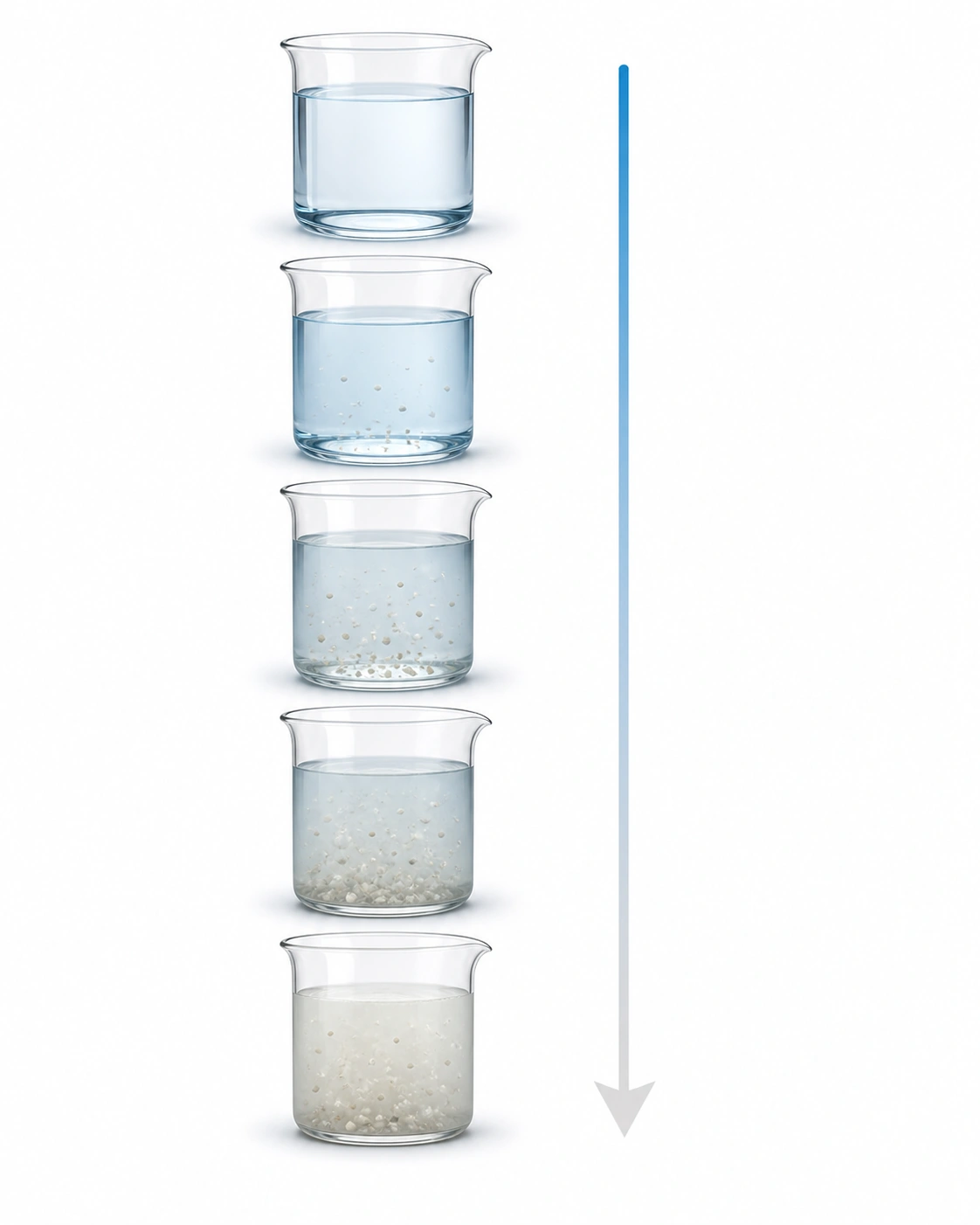
Water hardness scale chart showing different levels from soft to very hard
Types of Water Softeners
There are three main types of water softeners. Each uses a different method to treat hard water, and choosing the right one depends on your water hardness level, household size, and personal preferences. For a deeper comparison, read our salt vs salt-free water softener guide.
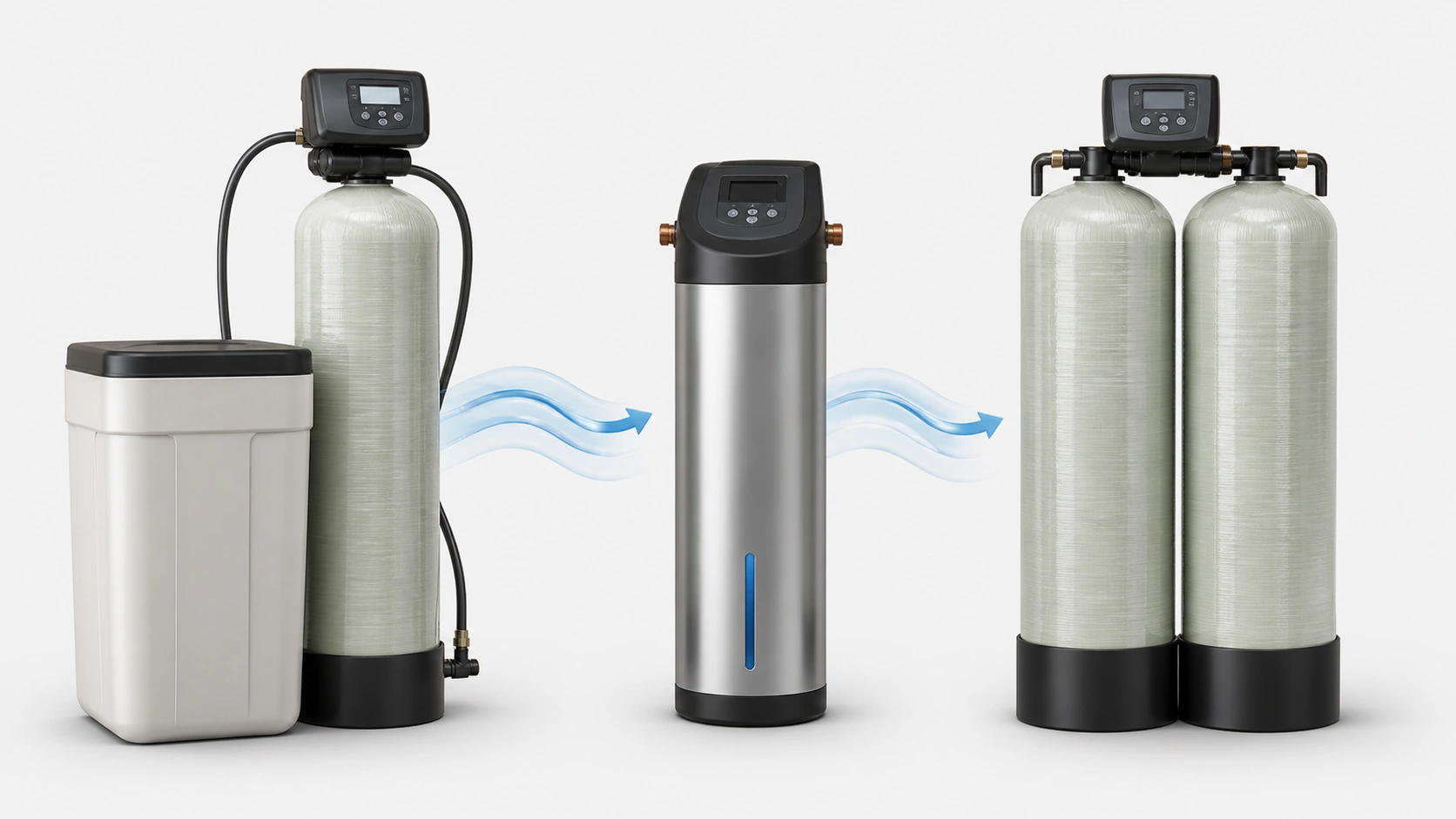
Comparison of the three main types of water softening systems
| Aspect | Salt-Based Ion Exchange | Salt-Free Conditioner | Dual-Tank System |
|---|---|---|---|
| How It Works | Exchanges calcium and magnesium ions with sodium ions | Alters mineral structure to prevent scaling | Ion exchange with two alternating tanks |
| Removes Minerals | Yes | No | Yes |
| Regeneration | Required (uses salt) | Not required | Required (uses salt) |
| Continuous Soft Water | No (downtime during regeneration) | Yes | Yes |
| Best For | Very hard water (10+ GPG) | Moderate hardness (3-10 GPG) | Large households, high demand |
| Maintenance Level | High (regular salt refills) | Low | High (regular salt refills) |
| Price Range | $500 - $2,000 | $300 - $1,500 | $1,500 - $3,500 |
Sizing Your Water Softener
Proper sizing is one of the most important steps in choosing a water softener. A system that's too small will regenerate too frequently, wasting water and salt. One that's too large may not regenerate often enough, leading to bacterial growth in the resin tank. For a more detailed walkthrough, check our complete water softener sizing guide.
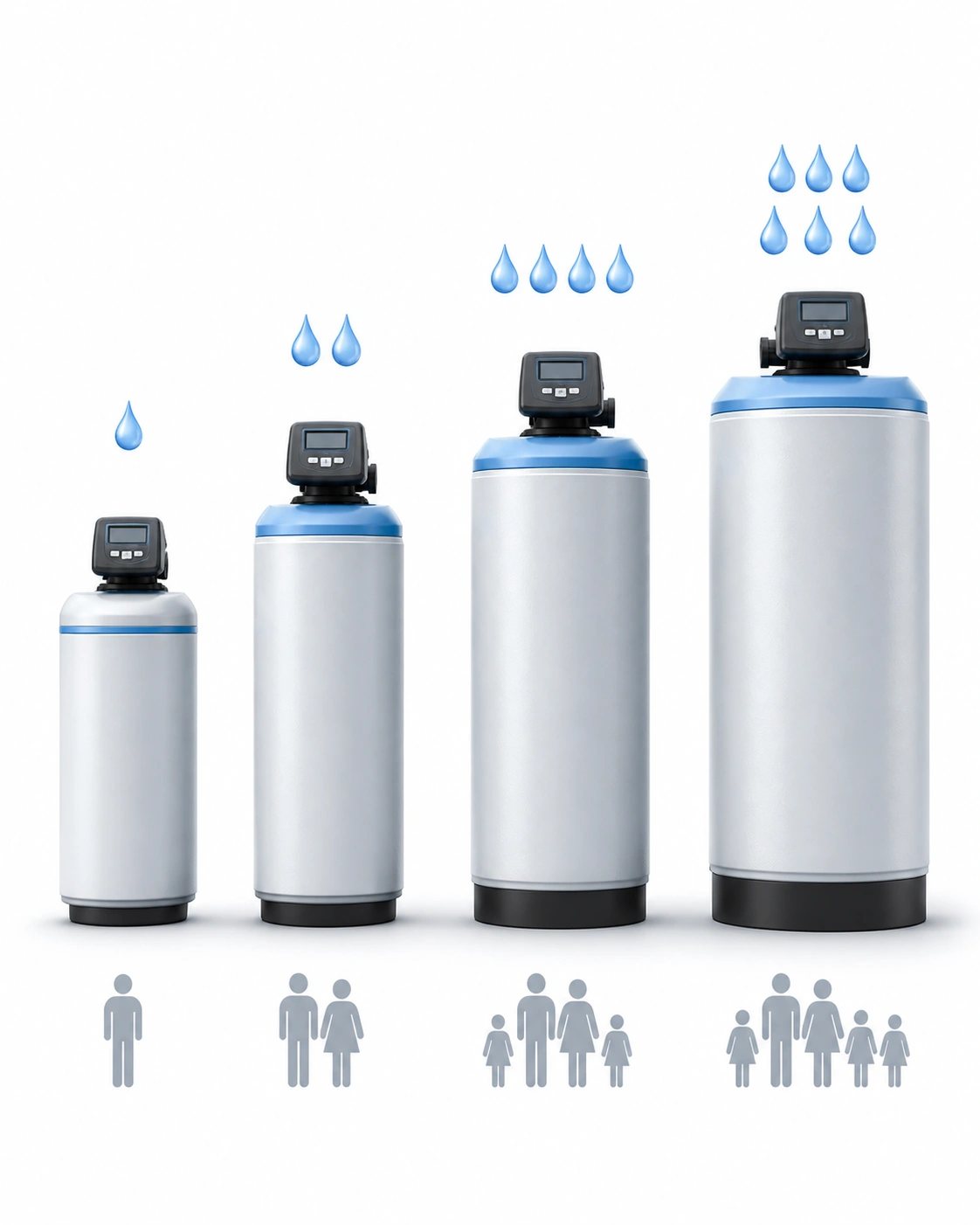
Water softener sizing chart based on household size and water hardness
Key Features to Consider
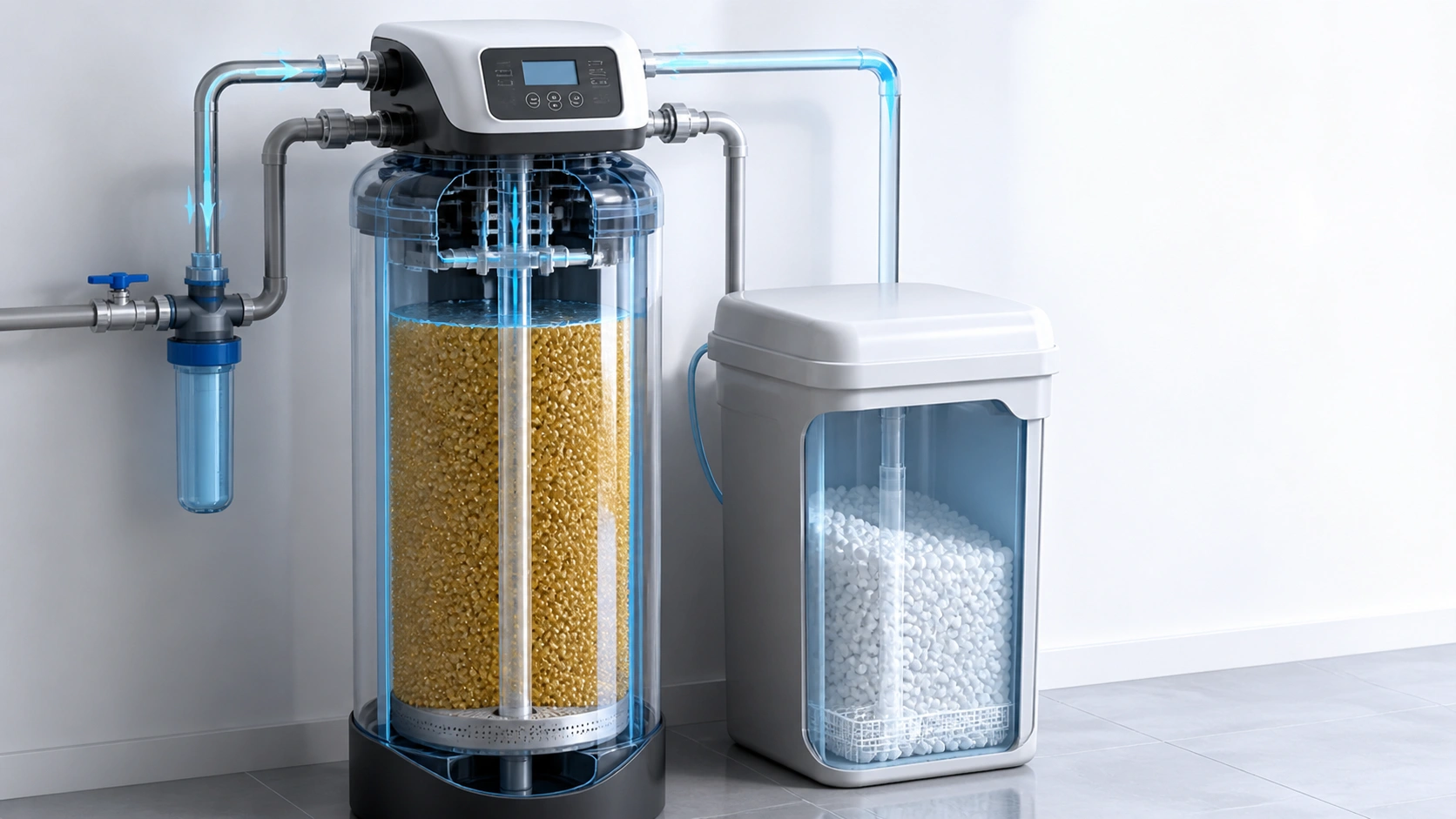
Important features to consider when comparing water softener systems
When comparing water softeners, look for these important features that affect long-term cost and performance:
- Demand-Initiated Regeneration: Regenerates only when needed, saving salt and water compared to timer-based systems.
- Grain Capacity: Must match your daily grain demand. Always choose a capacity slightly above your calculated need.
- Flow Rate (GPM): Ensure the system can handle peak water usage. Most homes need 7-15 GPM. Larger homes with multiple bathrooms may need 15+ GPM.
- Warranty Coverage: Look for at least 5-10 years on the control valve and tank. Some premium brands offer lifetime warranties.
- Efficiency Ratings: Check salt efficiency (grains removed per pound of salt) and water efficiency (gallons used per regeneration cycle).
- Ease of Maintenance: Features like low-salt indicators, easy-access brine tanks, and digital displays simplify upkeep.
Water Softener Price Ranges
Understanding price tiers helps you set a realistic budget. Here's what to expect at each level:
- Timer-based regeneration
- Smaller grain capacity (24,000-32,000)
- Basic control valve
- Suitable for 1-2 person households
- Lower salt efficiency
- Demand-initiated regeneration
- Medium grain capacity (32,000-48,000)
- Digital control valve
- Suitable for 3-5 person households
- Better salt and water efficiency
- Dual-tank or smart features
- High grain capacity (48,000-80,000+)
- WiFi-enabled controls
- Suitable for large households (5+ people)
- Best salt and water efficiency
Important: These are system-only prices. Factor in an additional $200-$600 for installation and $5-$15 per month for salt and operating costs. Visit our detailed cost analysis for a full breakdown.
Common Mistakes to Avoid When Buying
Many homeowners end up with the wrong system because they overlook critical factors. Here are the most common mistakes and how to avoid them:
Recommended Water Softener Systems
Installation and Maintenance Considerations
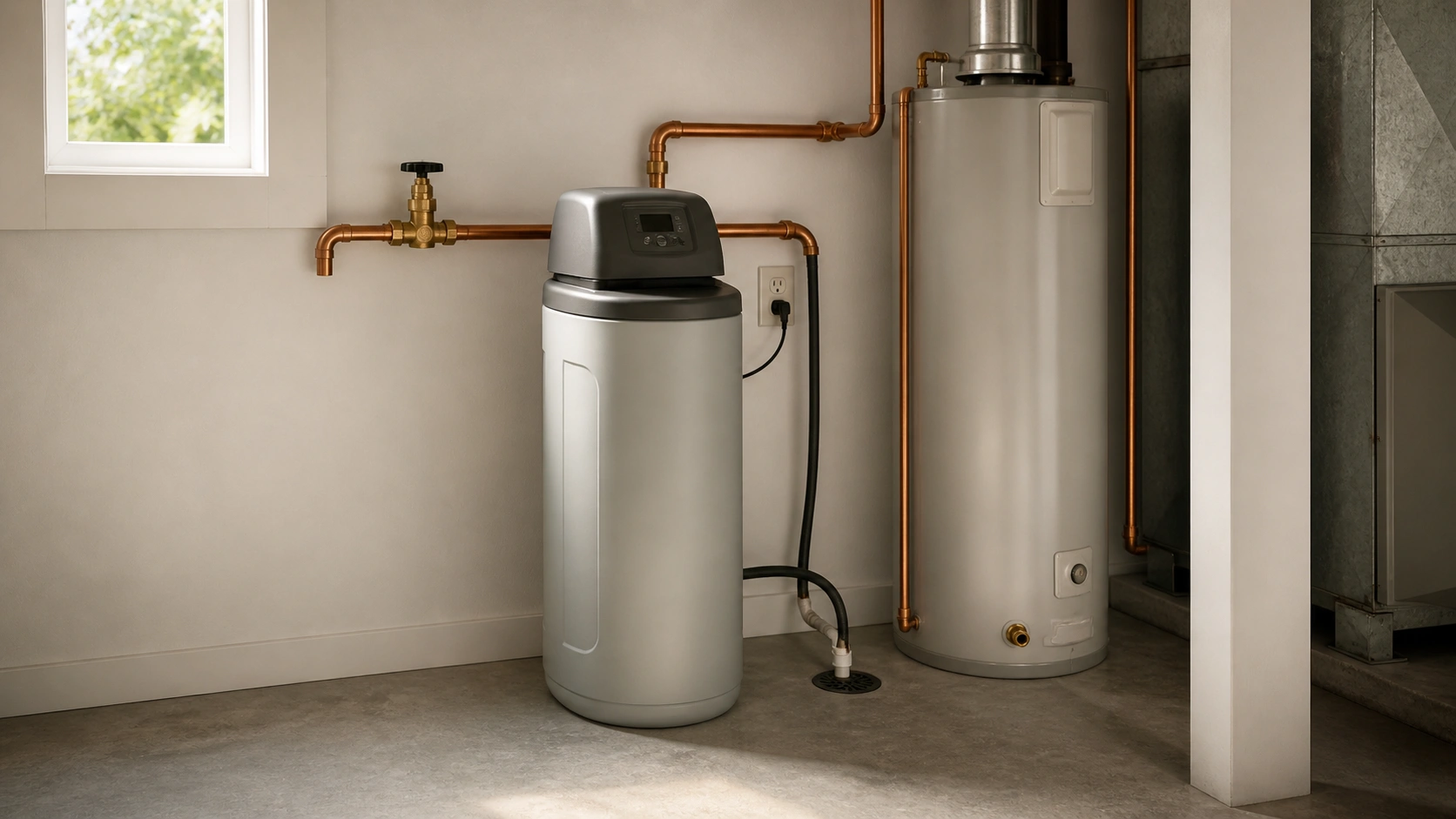
Proper installation is crucial for optimal water softener performance
Before making your final decision, consider these important factors. For a step-by-step walkthrough, see our complete installation guide:
- Installation Requirements: Most systems require plumbing connections, a drain line, and an electrical outlet nearby.
- Space Availability: Measure the installation area to ensure your chosen system will fit, including room for salt bag storage.
- Maintenance Needs: Salt-based systems require regular maintenance including salt refills every 4-8 weeks and occasional resin cleaning.
- Operating Costs: Factor in the cost of salt, electricity, and replacement filters. Budget $10-$30/month for most households.
- Local Regulations: Some areas have restrictions on salt-based softener discharge. Check with your local water authority before purchasing.
Professional vs DIY Installation
While some homeowners opt for DIY installation to save money, professional installation ensures proper setup and often includes warranty protection. Consider your skill level and local plumbing codes before deciding.
DIY installation can save $200-$500 in labor costs, but mistakes can lead to water damage, voided warranties, and inefficient operation. Professional installers can also recommend the best placement for optimal performance and handle any permitting requirements.
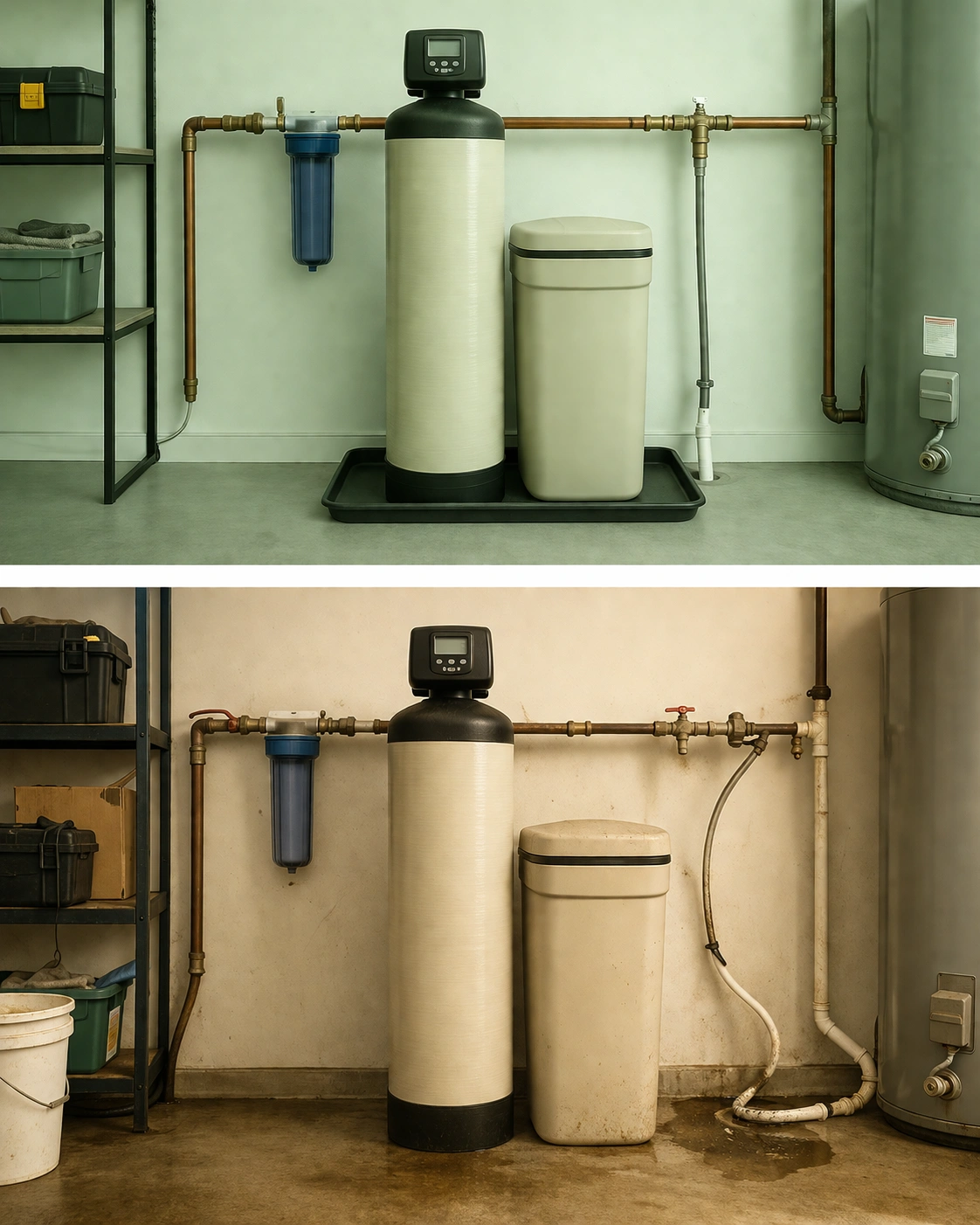
Comparing professional installation with DIY approach for water softeners
Frequently Asked Questions
Final Thoughts
Choosing the right water softener comes down to understanding three things: your water hardness level, your household's daily water usage, and which type of system best fits your situation. A salt-based ion exchange system remains the most effective option for very hard water, while salt-free conditioners work well for moderate hardness. Dual-tank systems are worth the investment for larger households that can't afford any downtime.
Don't skip the sizing calculation — it's the single most important step to avoid wasting money on a system that's either too small or unnecessarily large. And always check local regulations before committing to a salt-based system.
The next step is to determine your exact water hardness level with a test kit. Once you have that number, use the sizing formula above to calculate your ideal grain capacity, then browse our recommended water softener systems to find the perfect match for your home.
Other Water Softener Resources
Explore these additional resources to help you make an informed decision:
Culligan Water Softener Systems
Industry-leading water softening solutions with professional installation services and reliable performance for residential applications.
Water Softener Salt Options
Complete guide to choosing the right salt for your softening system, including crystal, pellet, and block salt varieties.
Whole House Water Softener Systems
Comprehensive information on whole house softening systems that treat all water entering your home for complete protection.
A.O. Smith Water Softeners
High-quality water softening systems from a trusted manufacturer known for reliability and efficient operation.
Fleck Water Softener Systems
Durable and efficient water softeners featuring Fleck control valves known for their reliability and precision.
Water Softener Filter Components
Replacement filters and components to maintain optimal performance of your water softening system.