
Water Softener Cost: Complete 2026 Pricing Guide
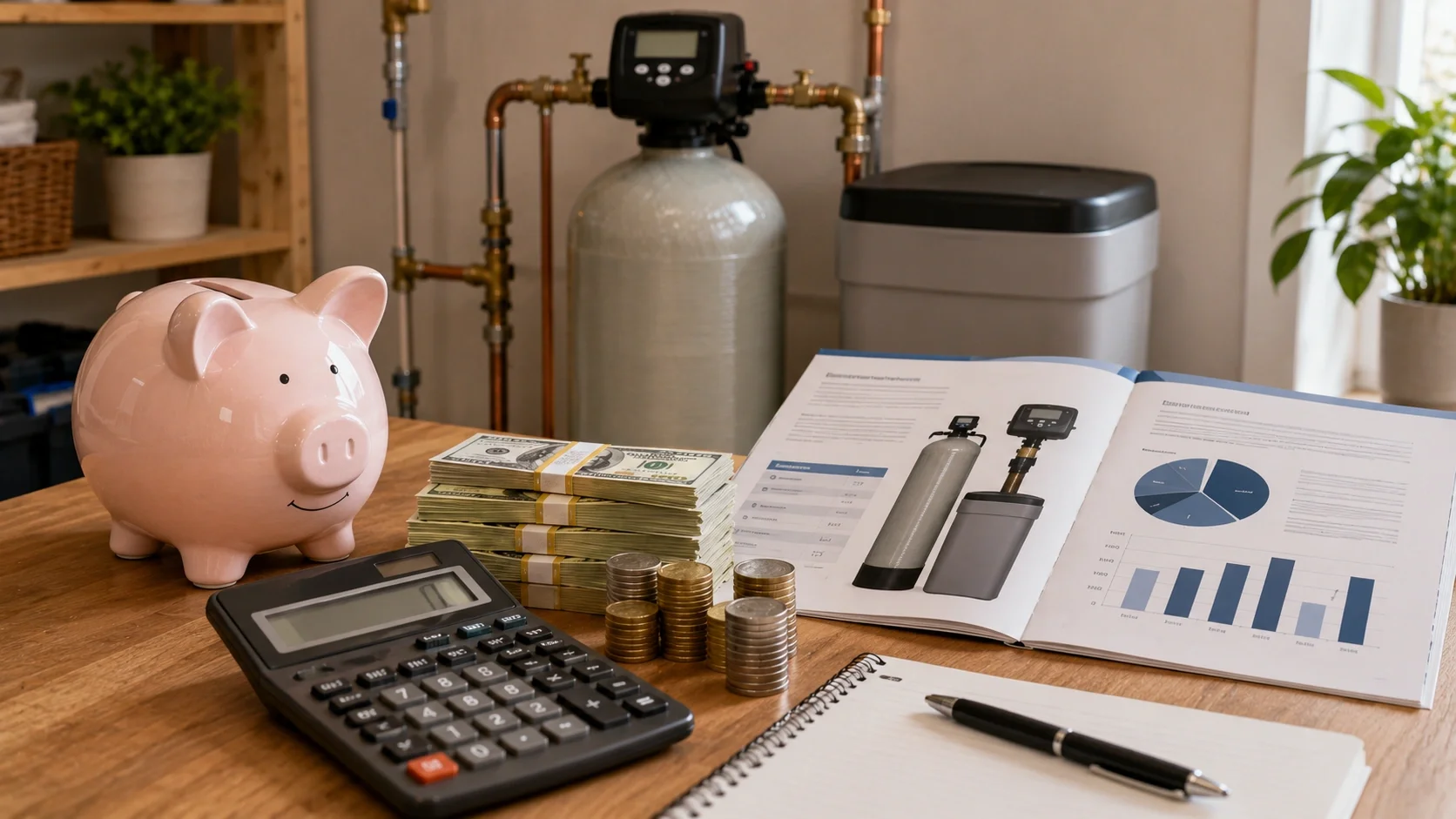
System Costs
Water softeners range from $400 to over $3,000 depending on type, size, and features
Installation Fees
Professional installation adds $500-$1,500 to your total cost
Maintenance
Annual salt and maintenance costs range from $100 to $300 per year
Recommended Water Softener Systems
Understanding Water Softener Costs
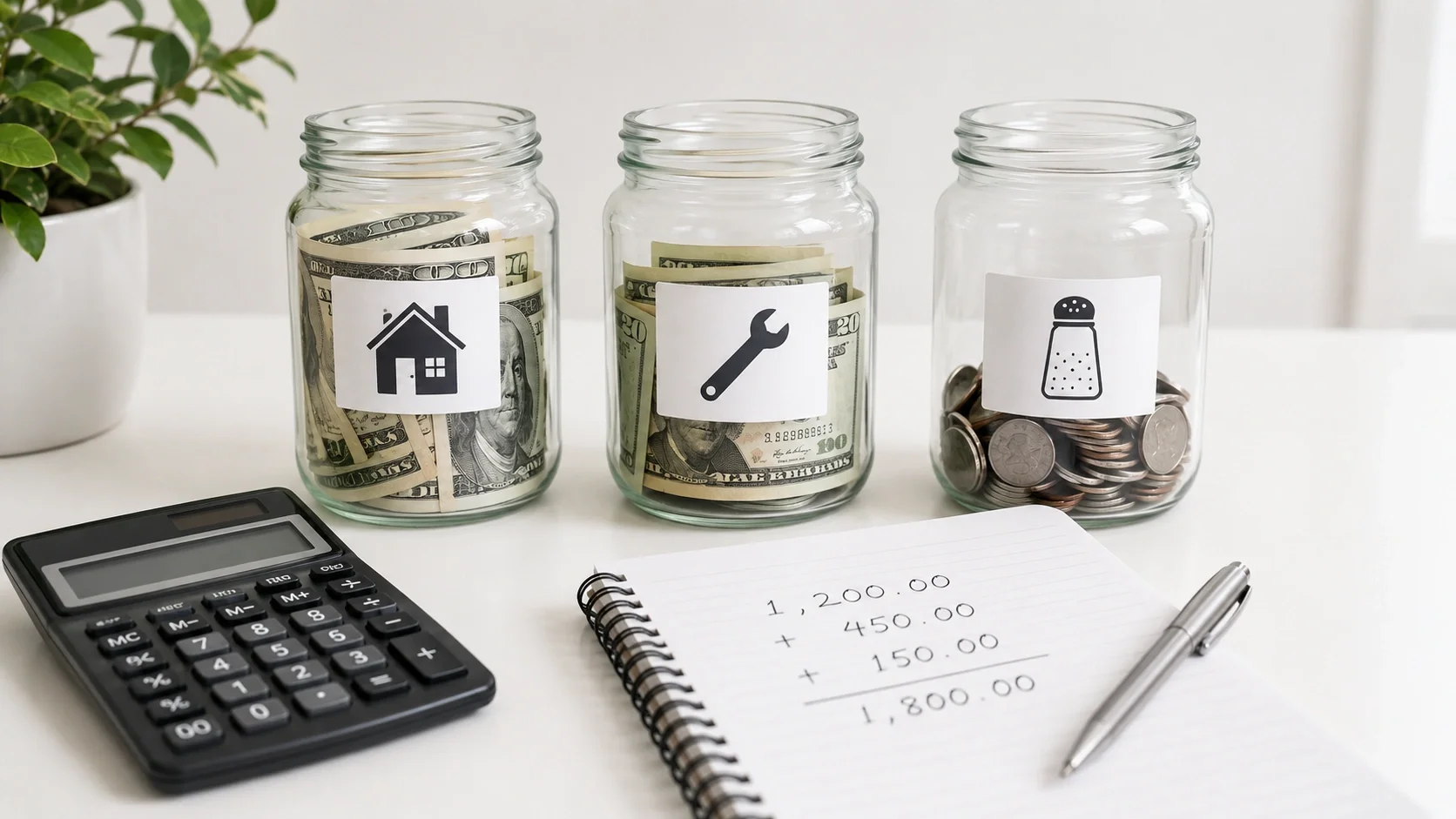
The total cost of a water softener system includes the initial purchase price, installation expenses, and ongoing maintenance costs. Understanding these different components will help you budget appropriately and choose the right system for your home.
Initial System Costs:
Salt-Based Ion Exchange
Traditional softeners that remove hardness minerals through ion exchange. Most common and effective option.
Most PopularSalt-Free Conditioners
Condition water without removing minerals. No salt needed, low maintenance, eco-friendly option.
Low MaintenanceDual-Tank Systems
Two alternating tanks for continuous soft water. Ideal for large households or high usage.
Continuous SupplyMagnetic/Electronic Descalers
Budget-friendly option that alters mineral structure. Limited effectiveness for moderate to hard water.
Budget OptionPortable/RV Softeners
Compact systems for RVs, boats, or small spaces. Limited capacity but portable.
PortableWhole-House Systems
Comprehensive systems that treat all water entering the home. Includes advanced features and controls.
Complete SolutionInstallation Expenses:
Professional installation typically adds $500-$1,500 to your total cost, depending on your plumbing setup, location, and any additional work required. DIY installation can save you money but requires plumbing knowledge and proper tools.
Installation Cost Breakdown
- Basic Installation: $300-$500 (Simple plumbing setup, standard location)
- Standard Installation: $500-$800 (Some plumbing modifications needed)
- Complex Installation: $800-$1,500 (Major plumbing work, difficult access)
- DIY Installation: $50-$150 (Tools and materials only)
Cost Comparison: System Types
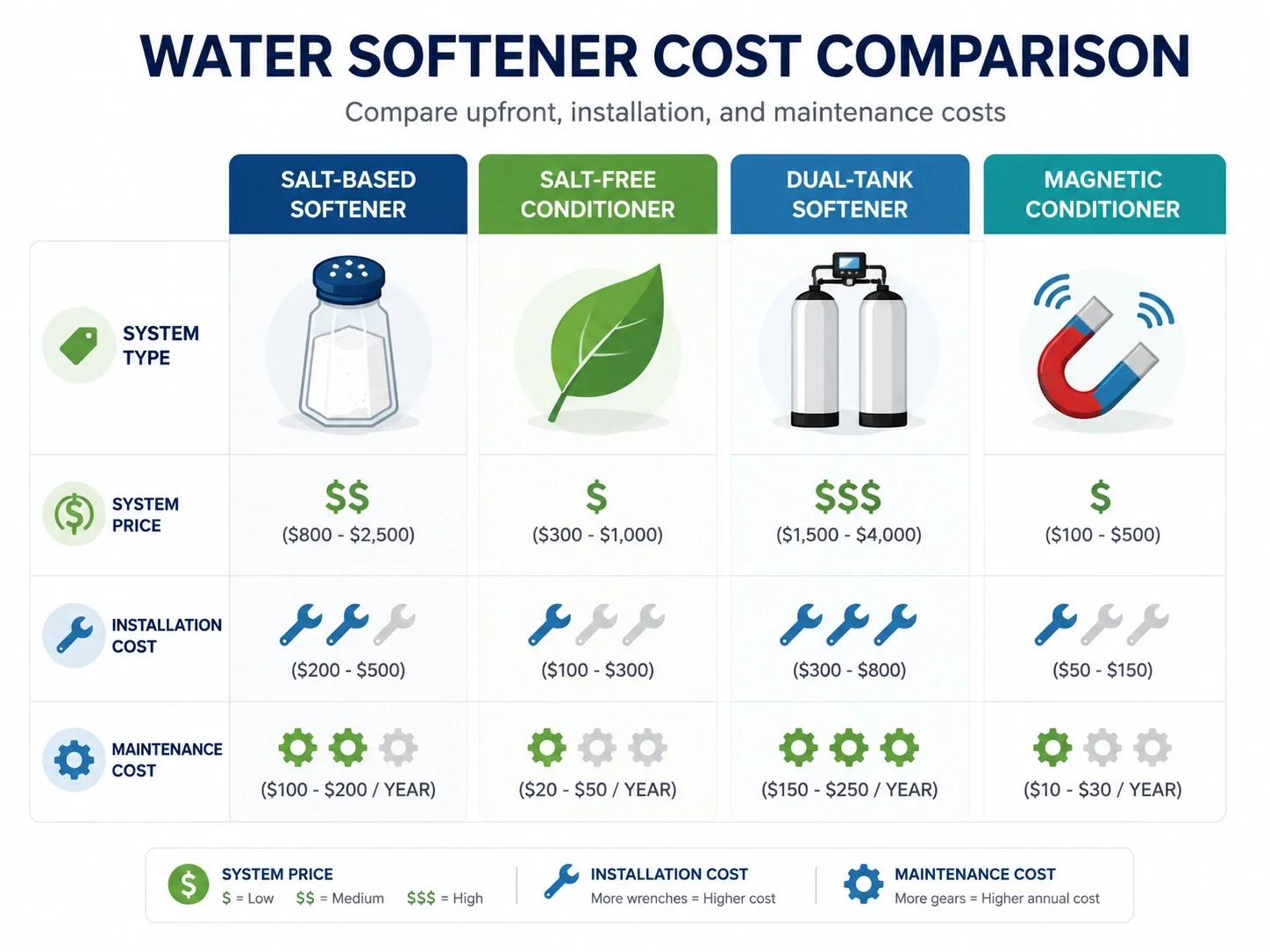
| System Type | Unit Cost | Installation | Annual Maintenance | 10-Year Total |
|---|---|---|---|---|
| Salt-Based | $400-$3,000 | $500-$1,500 | $100-$200 | $2,400-$6,500 |
| Salt-Free | $600-$2,000 | $300-$800 | $20-$50 | $1,700-$4,300 |
| Dual-Tank | $1,200-$4,000 | $600-$1,500 | $150-$300 | $4,200-$8,500 |
| Magnetic/Electronic | $100-$500 | $0-$200 | $0-$20 | $200-$900 |
Key Insight: While salt-free systems have higher upfront costs, they typically have much lower maintenance expenses over time. Salt-based systems are more affordable initially but have ongoing salt and maintenance costs. Choose based on your budget and maintenance preferences.
Ongoing Maintenance Costs
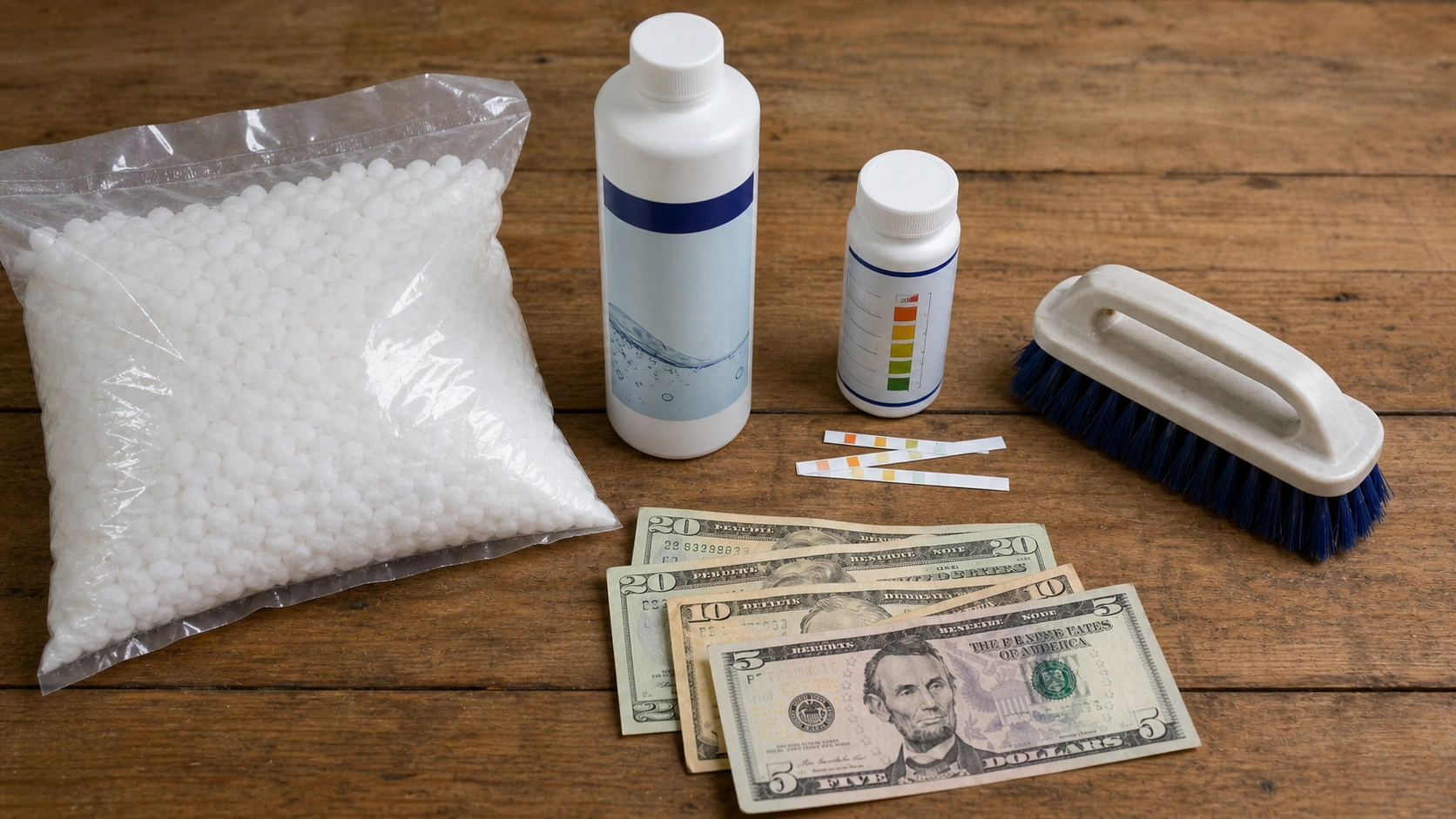
Beyond the initial purchase and installation, water softeners have ongoing expenses that should factor into your decision:
- Salt: $5-$25 per 40-lb bag, with usage depending on water hardness
- Electricity: $20-$50 annually for electric models
- Resin bed replacement: $200-$600 every 10-15 years
- Filter changes: $30-$100 annually for systems with pre-filters
- Water testing: $0-$50 annually depending on DIY or professional testing
Factors Affecting Water Softener Cost:
Several factors influence the total cost of a water softening system, including your home's size, water hardness level, flow rate requirements, system capacity, and the type of technology (salt-based vs. salt-free). Additional features like digital controls, Wi-Fi connectivity, and bypass valves also affect pricing.
Estimated Annual Operating Costs
Salt-Based System
- Salt: $50-$150/year
- Electricity: $20-$50/year
- Maintenance: $30-$50/year
Salt-Free System
- No salt required: $0
- Electricity: $0 (most models)
- Maintenance: $20-$80/year
Cost by Household Size
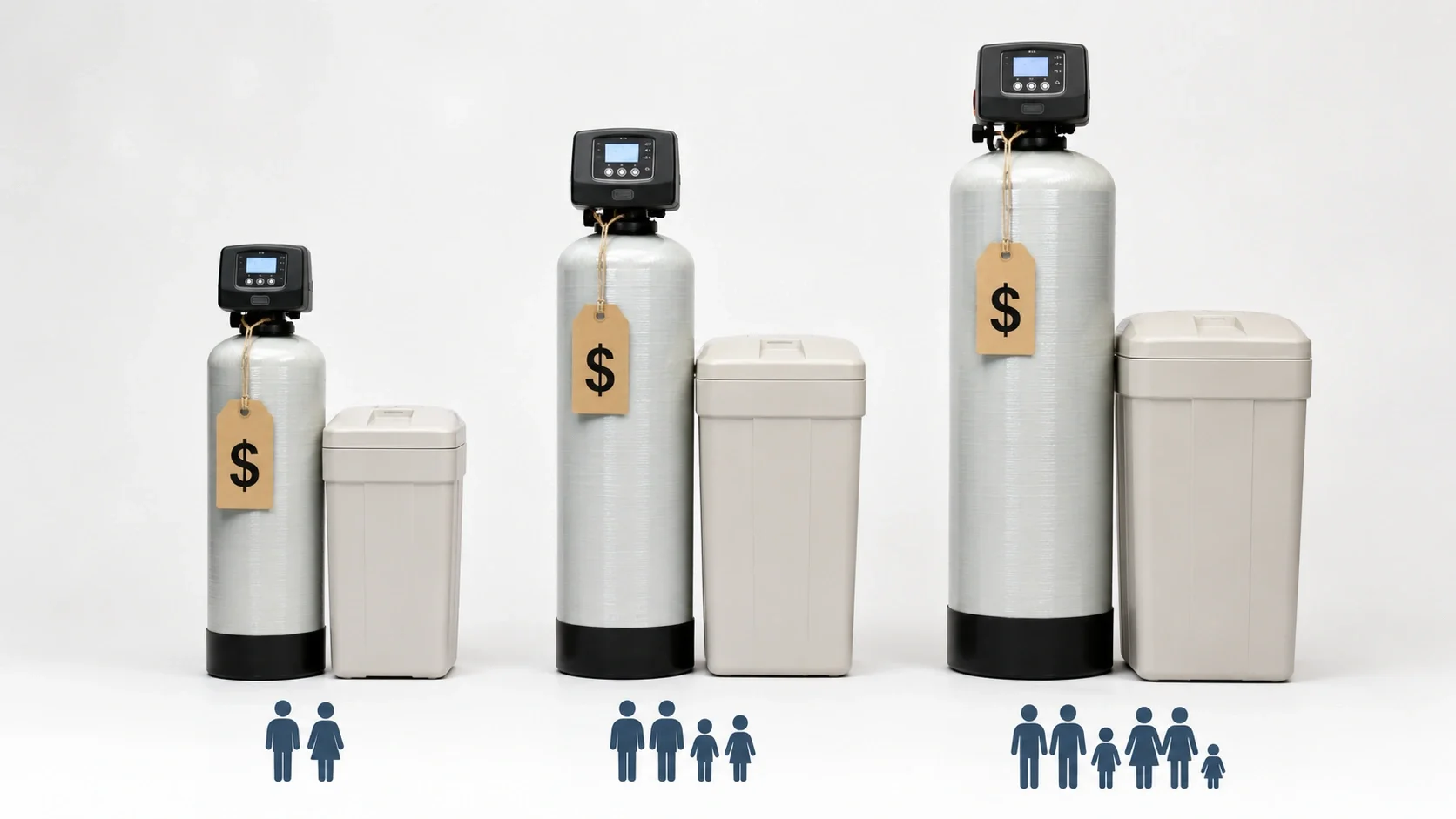
1-2 People
Small capacity systems (24,000-32,000 grains)
Budget Friendly3-4 People
Medium capacity systems (32,000-40,000 grains)
Most Common5+ People
Large capacity systems (48,000-64,000+ grains)
Heavy DutyReturn on Investment: How a Water Softener Pays for Itself
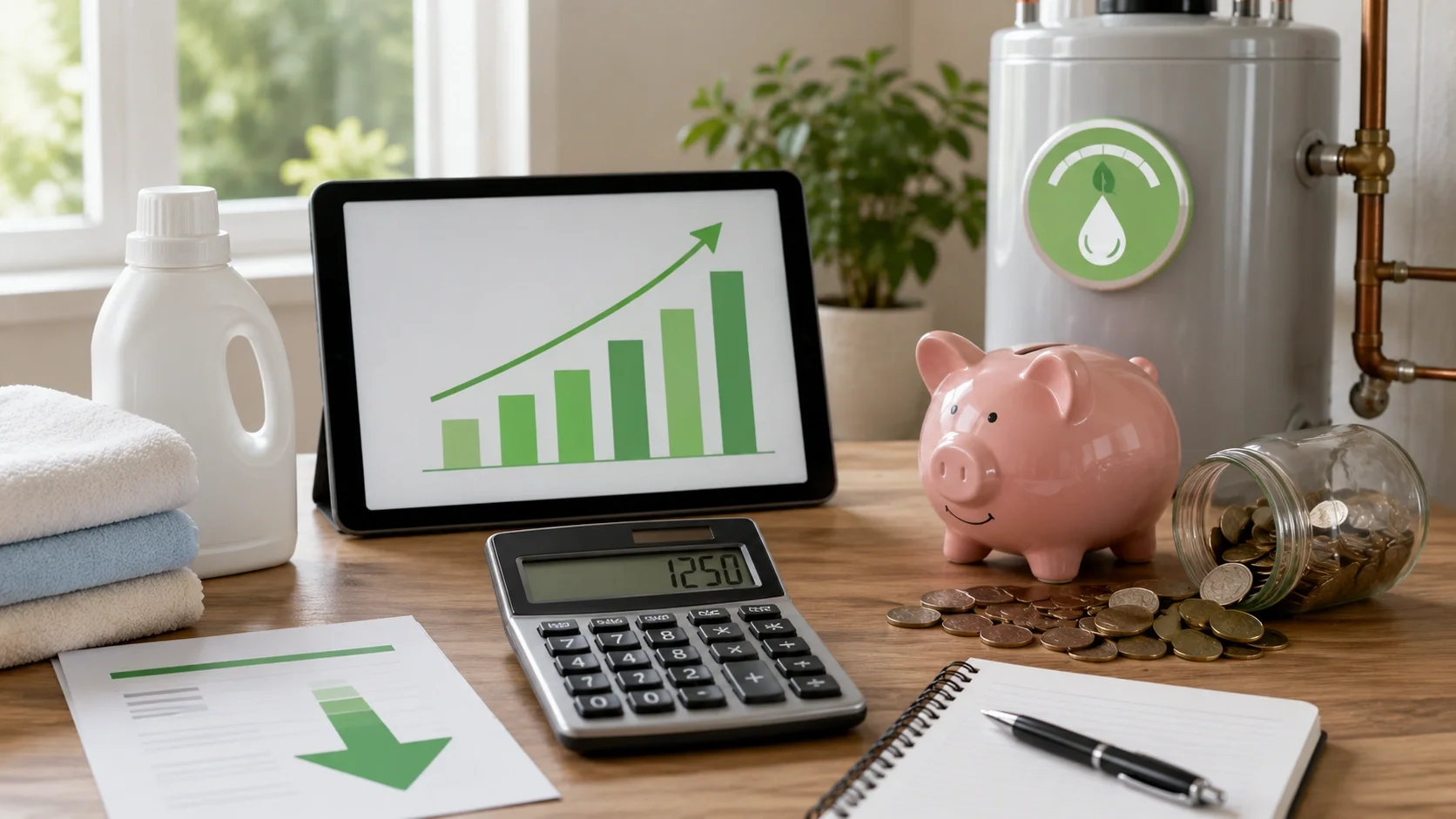
💰 Annual Savings with a Water Softener
- Soap & Detergent: Save $50-$150/year (uses 50-75% less)
- Energy Costs: Save $30-$100/year (water heater efficiency up 22-29%)
- Appliance Repairs: Save $100-$300/year (less scale damage)
- Plumbing Maintenance: Save $50-$200/year (reduced scale buildup)
- Appliance Replacement: Save $200-$500 over 10 years (extended lifespan)
- Total Annual Savings: $300-$800+ per year
Payback Period Analysis:
- System Cost: $800-$2,000 (average system + installation)
- Annual Savings: $300-$800 per year
- Payback Period: 2-4 years
- 10-Year Net Savings: $2,000-$6,000 after payback
Hidden Costs to Consider
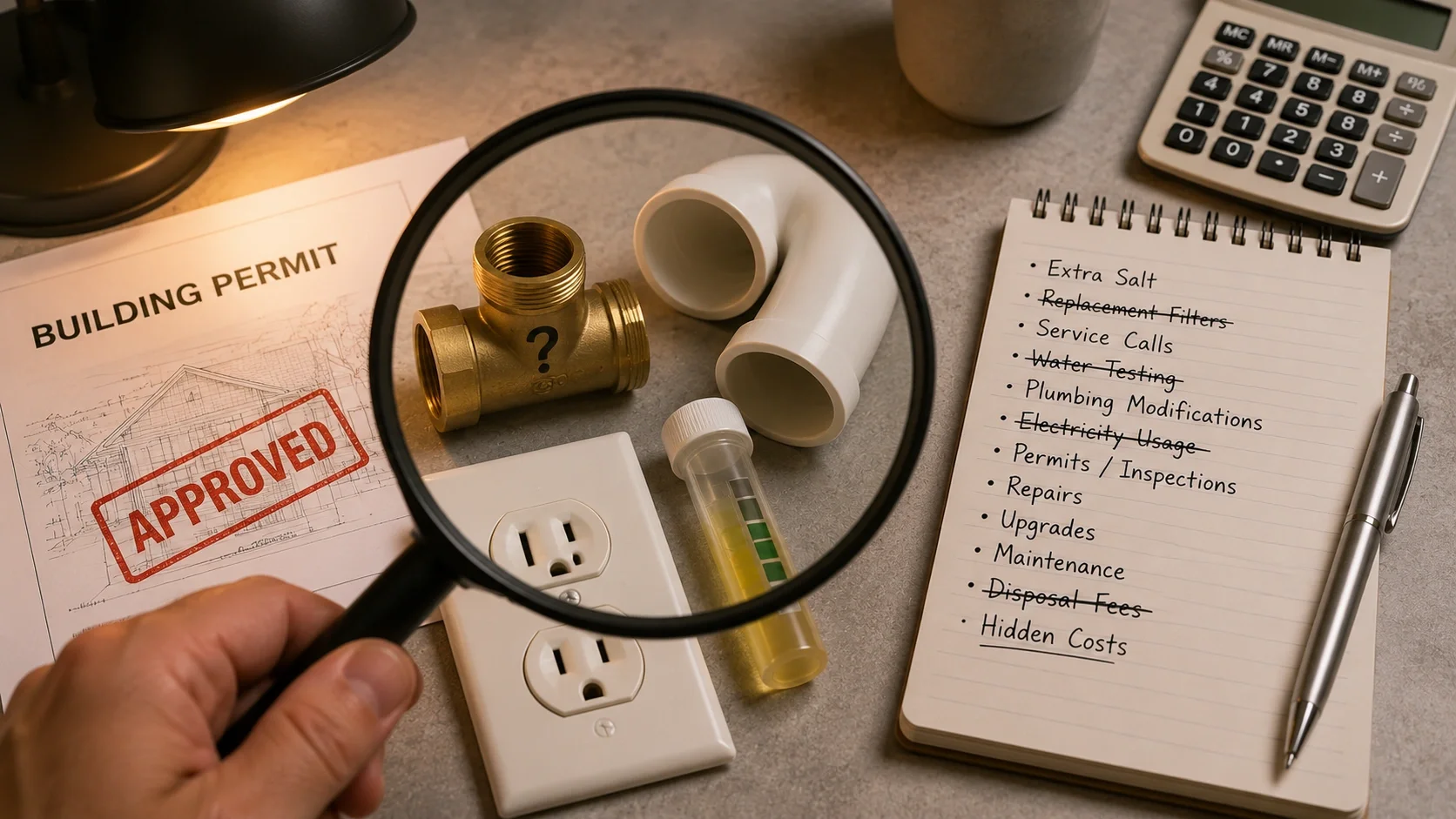
Beyond the obvious costs, there are some hidden expenses to be aware of:
⚠ Potential Additional Costs
- Permits: $50-$200 (required in some areas)
- Plumbing Upgrades: $100-$500 (if your plumbing needs modification)
- Drain Line Installation: $100-$300 (if no drain nearby)
- Electrical Work: $100-$400 (if outlet needs to be added)
- Water Testing: $20-$150 (professional testing)
- Salt Delivery: $20-$50 per delivery (if using delivery service)
✅ Ways to Save Money
- DIY Installation: Save $500-$1,500
- Buy Salt in Bulk: Save $20-$50 per year
- Use High-Efficiency Systems: Save $50-$100 per year
- Shop Sales and Discounts: Save 10-30% on system cost
- Consider Refurbished Systems: Save 30-50% (with warranty)
- Compare Multiple Quotes: Save $100-$500 on installation
Financing Options
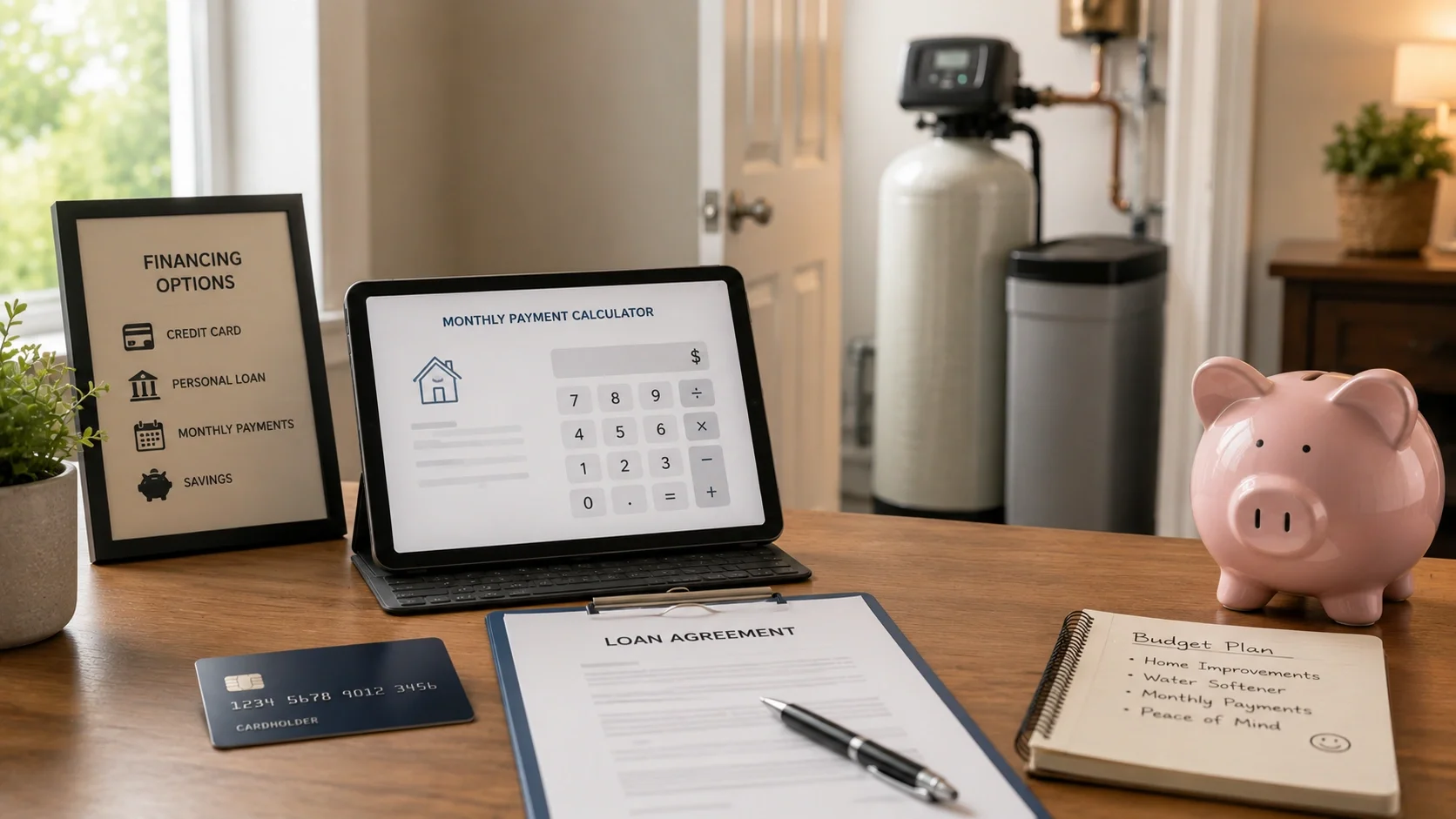
If the upfront cost is a concern, consider these financing options:
- Manufacturer Financing: Many brands offer 0% APR financing for 12-24 months
- Home Improvement Loans: Personal loans for home projects, typically 6-10% APR
- Credit Cards: 0% introductory offers can spread payments over 12-18 months
- Local Utility Programs: Some utilities offer rebates or financing for water treatment
- Lease-to-Own: Some companies offer lease programs with option to purchase
Financing Example: A $1,500 system financed over 24 months at 0% APR costs $62.50/month. This is often less than the monthly savings from reduced soap, energy, and appliance repairs!
Frequently Asked Questions
How much does a water softener cost in 2026?
Water softener systems cost between $400 and $3,000 depending on type, size, and features. Installation adds $500-$1,500 for professional installation.
Is a water softener worth the money?
Yes! Most homeowners recoup their investment within 2-4 years through savings on soap, energy, appliance repairs, and extended appliance life.
What's the cheapest water softener option?
Magnetic/electronic descalers are the cheapest at $100-$500, but they have limited effectiveness for moderate to hard water. Portable softeners are another budget option.
How much salt does a water softener use per month?
Average usage is 1-2 bags (40-80 lbs) per month for a family of 4 with moderately hard water. Costs range from $10-$50 per month depending on salt prices.
Can I install a water softener myself to save money?
Yes, DIY installation can save $500-$1,500. However, ensure you have basic plumbing skills and understand local codes. Professional installation is recommended for complex setups.
How long does a water softener last?
With proper maintenance, a quality water softener can last 15-20 years. The resin bed typically needs replacement every 10-15 years at a cost of $200-$600.
Regional Cost Differences
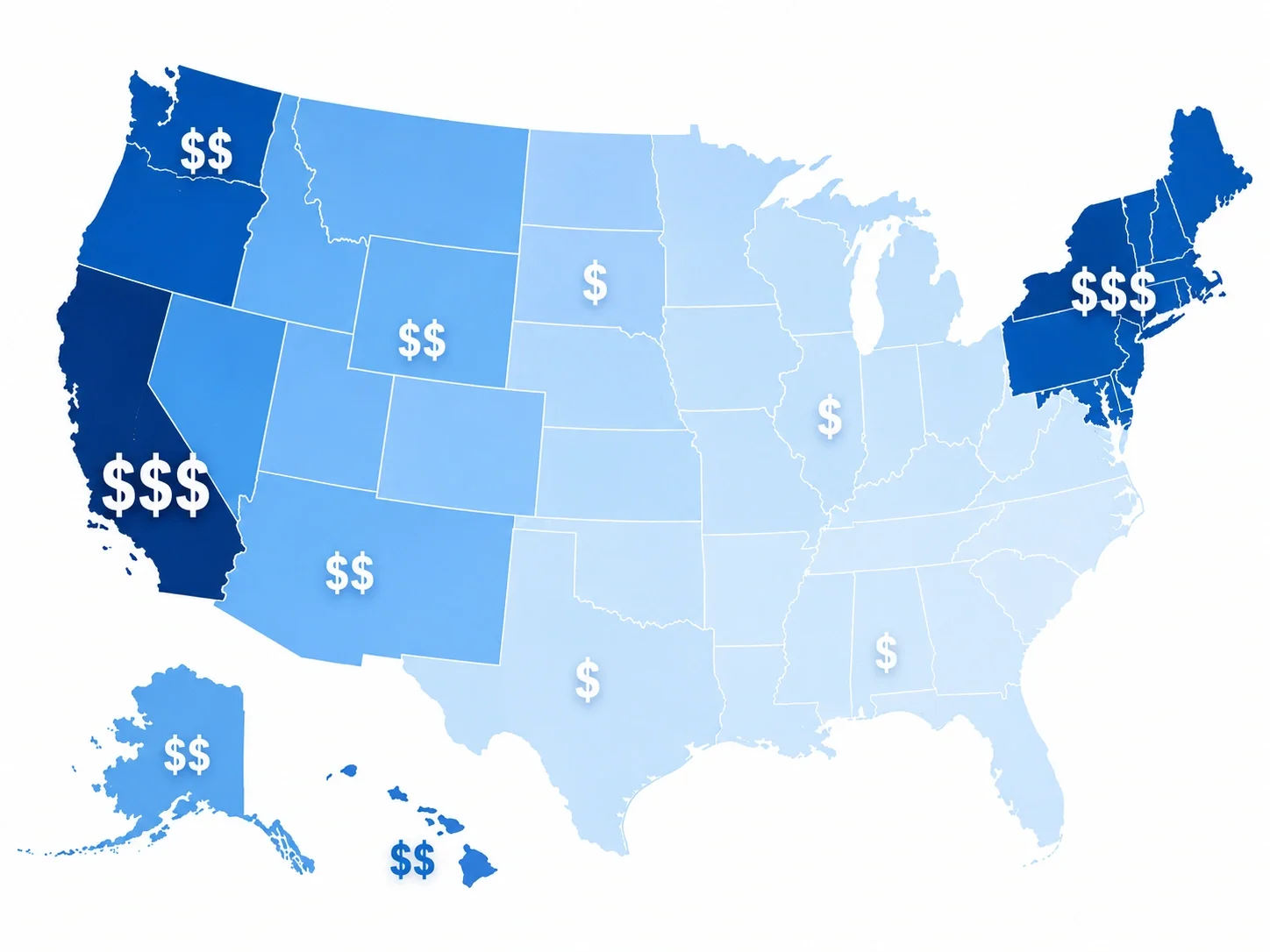
Water softener costs can vary significantly by region due to labor rates and local water conditions:
- Northeast: $800-$2,500 (higher labor costs)
- Southeast: $700-$2,000 (moderate prices)
- Midwest: $600-$1,800 (most affordable)
- Southwest: $900-$2,800 (hard water areas, higher demand)
- West Coast: $1,000-$3,000 (highest labor and product costs)
- Northwest: $800-$2,200 (moderate to high)
Note: Prices are for systems plus professional installation. DIY installations save $500-$1,500 regardless of region.
Conclusion: Investing in a Water Softener
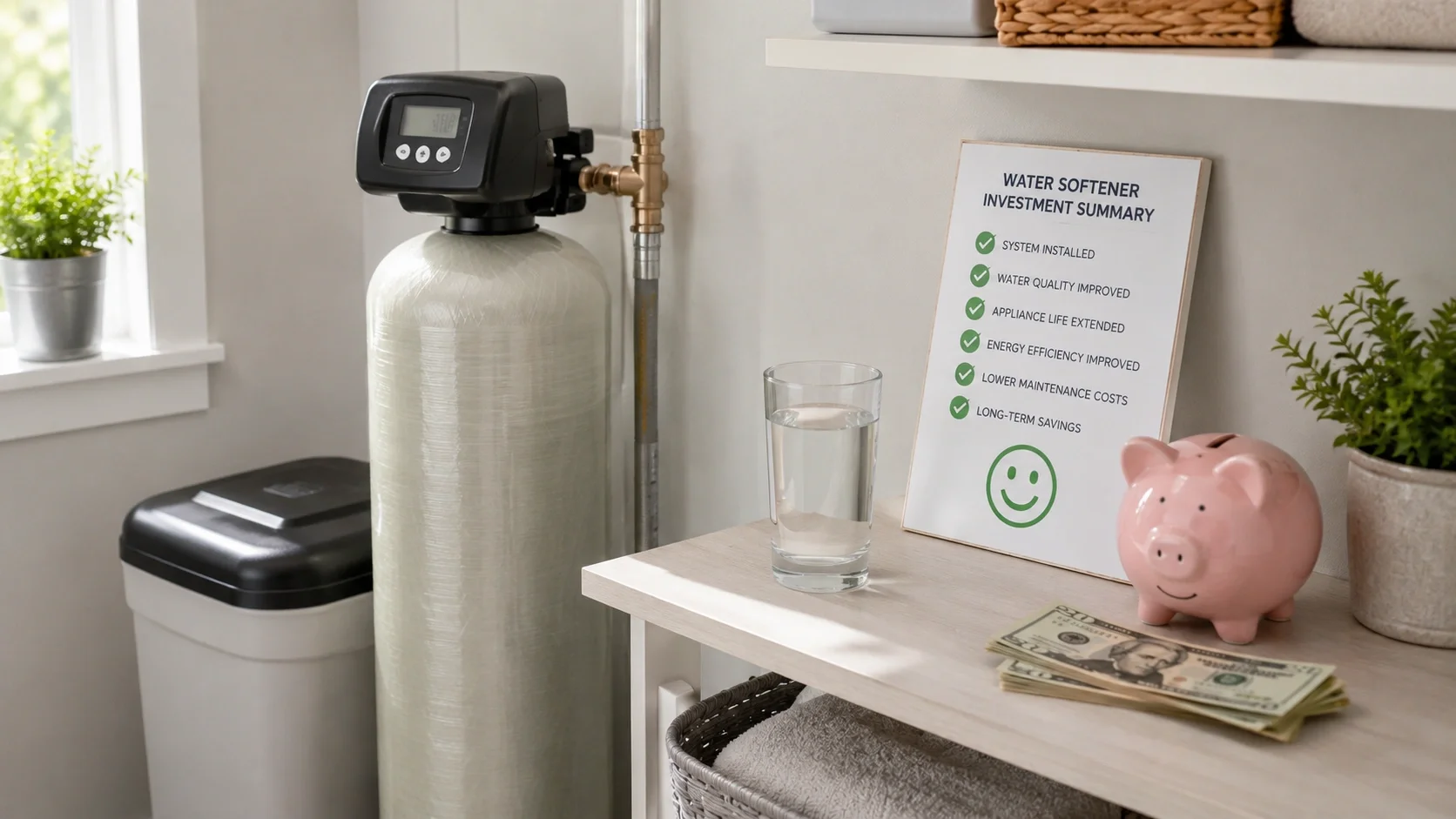
Understanding the complete cost picture of water softener ownership helps you make an informed decision that fits your budget and addresses your hard water problems. While the initial investment might seem significant, a quality water softening system can save you money in the long run by extending the life of your appliances, reducing soap and detergent usage, and preventing costly plumbing repairs.
When budgeting for a water softener, remember to account for not just the equipment cost but also installation expenses and ongoing maintenance. Salt-based systems typically have lower upfront costs but higher maintenance expenses, while salt-free systems often have higher initial prices but minimal ongoing costs.
Consider your household size, water hardness level, and personal preferences when selecting a system. Whether you choose a traditional salt-based softener, a salt-free conditioner, or a portable unit, the investment in better water quality will pay dividends in appliance longevity, cleaner surfaces, and potentially softer skin and hair.
Quick Cost Summary
Best Budget Option: Salt-based 32,000 grain system ($500-$800 + installation) – ideal for small to medium households.
Best Value: Salt-free conditioner ($800-$1,500) – low maintenance, eco-friendly, ideal for moderate hardness.
Best for Large Families: Dual-tank or 48,000+ grain system ($1,500-$3,000) – continuous soft water for high demand.
Best Long-Term Investment: High-efficiency salt-based system ($800-$1,200) – lower salt and water usage over time.
Related Water Softener Products
Explore these additional water softening solutions that might fit your budget and needs:
Culligan Water Softener Systems
Trusted brand offering reliable water softening solutions with various capacity options for different household sizes and water conditions.
Water Softener Salt Products
High-quality salt options for maintaining your water softening system, including pellets, crystals, and potassium chloride alternatives.
Complete Water Softener Systems
Comprehensive whole-house water softening systems designed to address hard water problems throughout your entire home.
AO Smith Water Softeners
Efficient and durable water softening systems from a reputable manufacturer known for water treatment solutions.
Fleck Water Softener Systems
Popular valve-based water softening systems known for their reliability, efficiency, and ease of maintenance.
Water Softener Filters
Replacement filters and filtration components designed to maintain optimal performance of your water softening system.