
Water Softener Troubleshooting: Common Problems and Easy Fixes
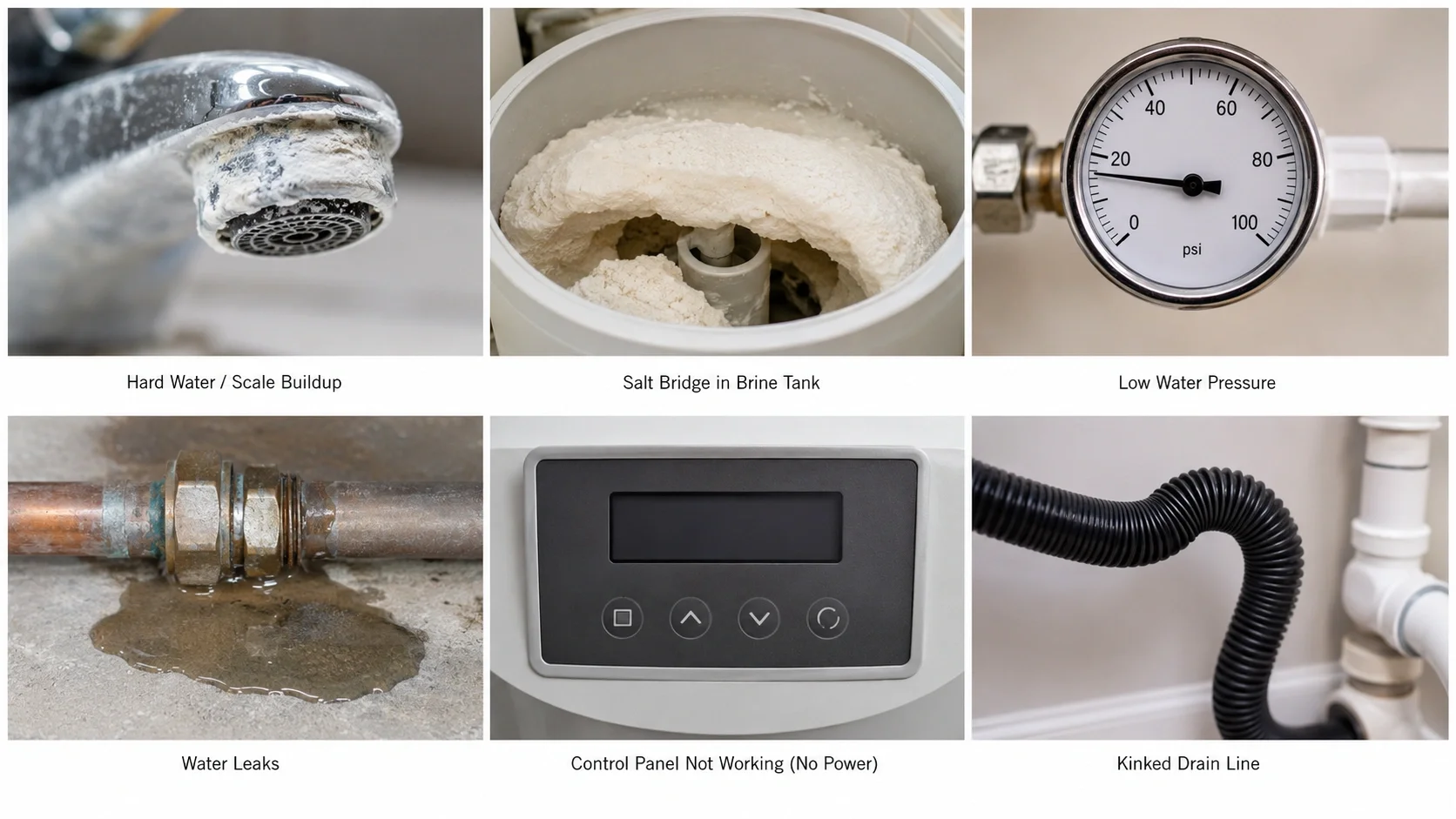
Quick Problem Reference
Introduction to Water Softener Troubleshooting
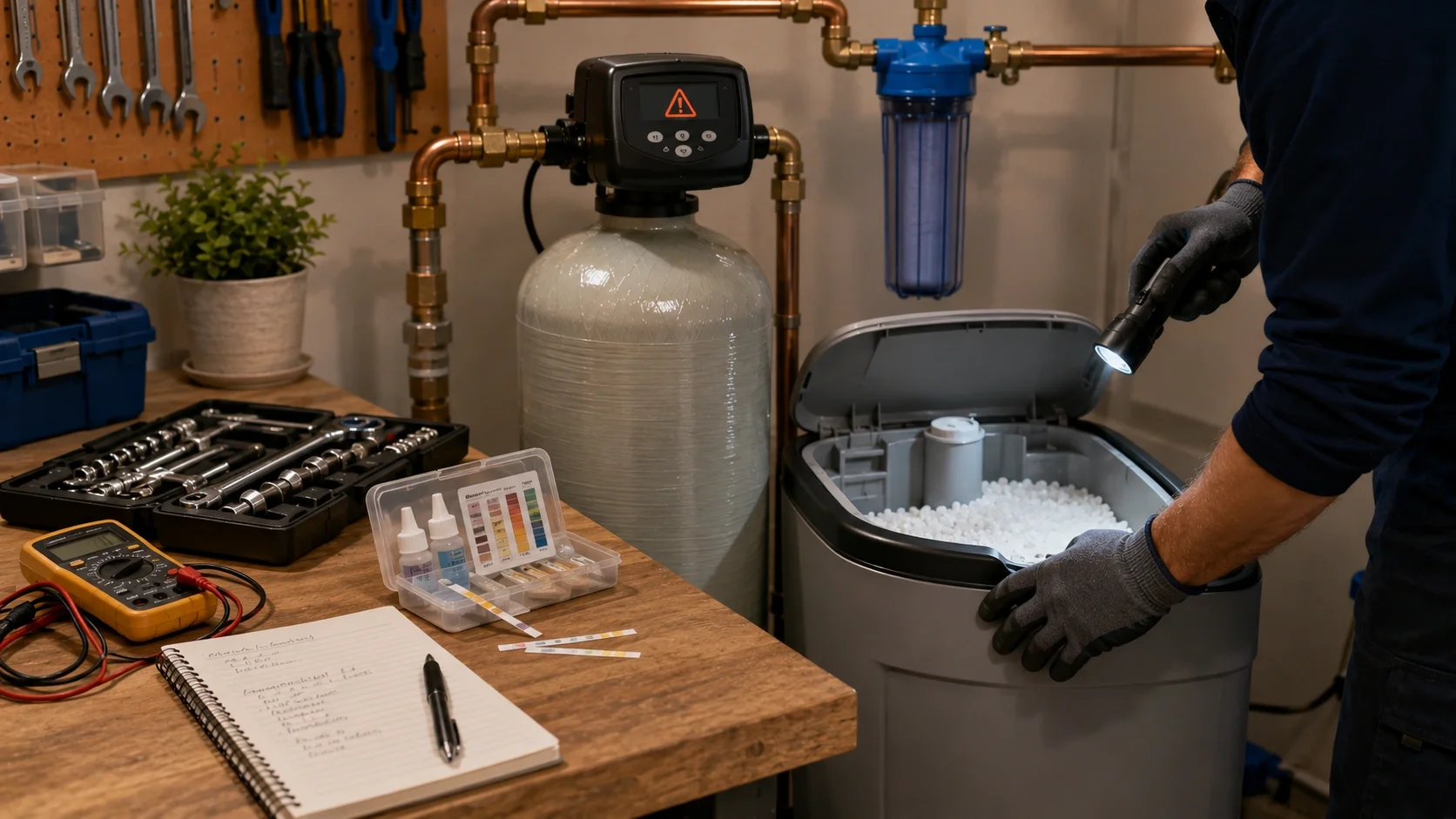
Water softeners are essential appliances for many households, providing softened water that extends the life of plumbing, improves soap efficiency, and prevents scale buildup. Like any mechanical system, they can occasionally experience problems that affect their performance.
Fortunately, many common water softener issues have simple solutions that homeowners can implement without professional help. This comprehensive troubleshooting guide will help you identify and fix the most frequent problems, saving you time and money on service calls.
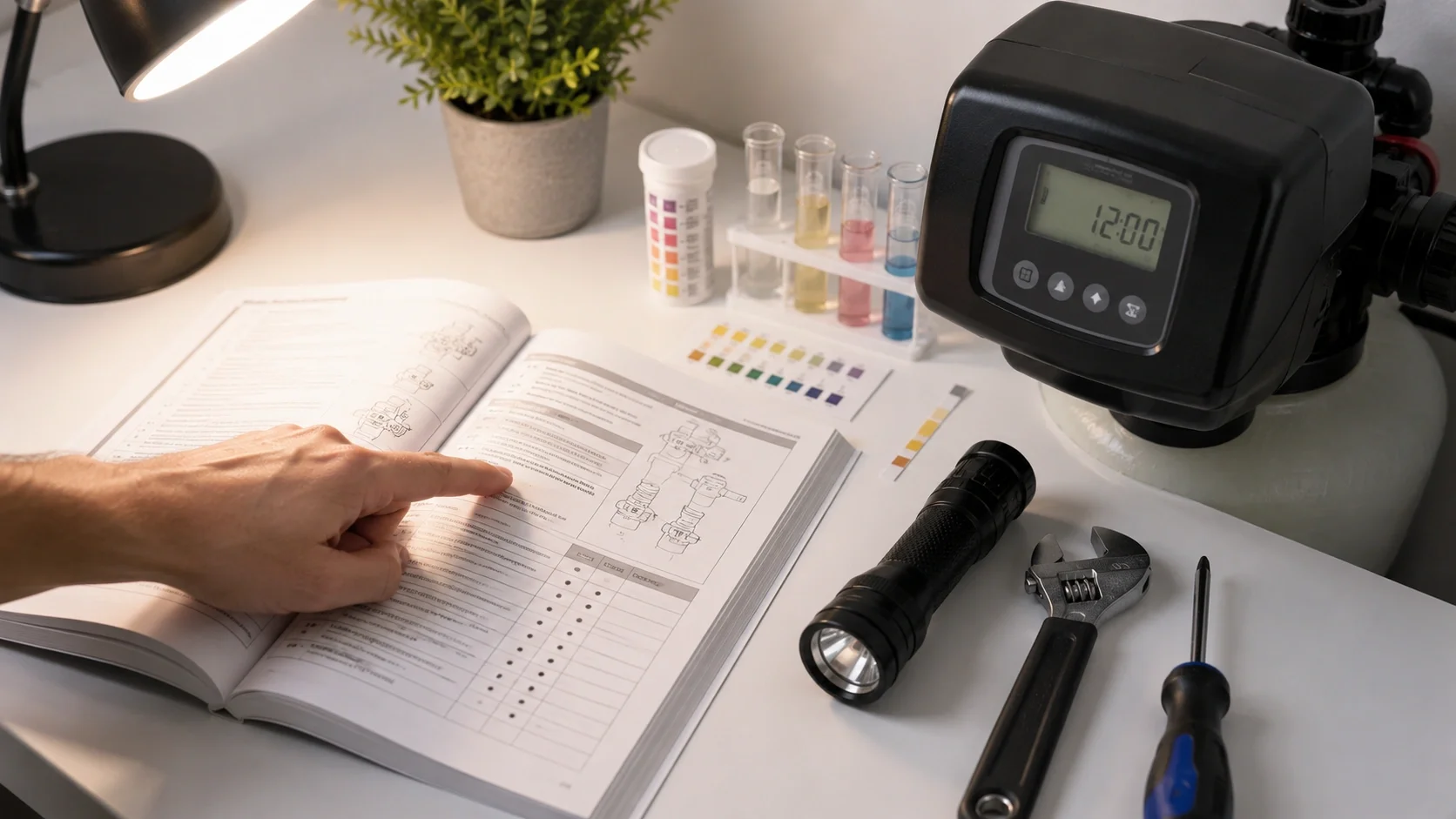
Before You Begin: Always check your owner's manual first. Many problems have simple solutions that are specific to your model. Also, check if your system is still under warranty before performing any repairs.
Common Signs of Water Softener Problems
Hard Water Returning
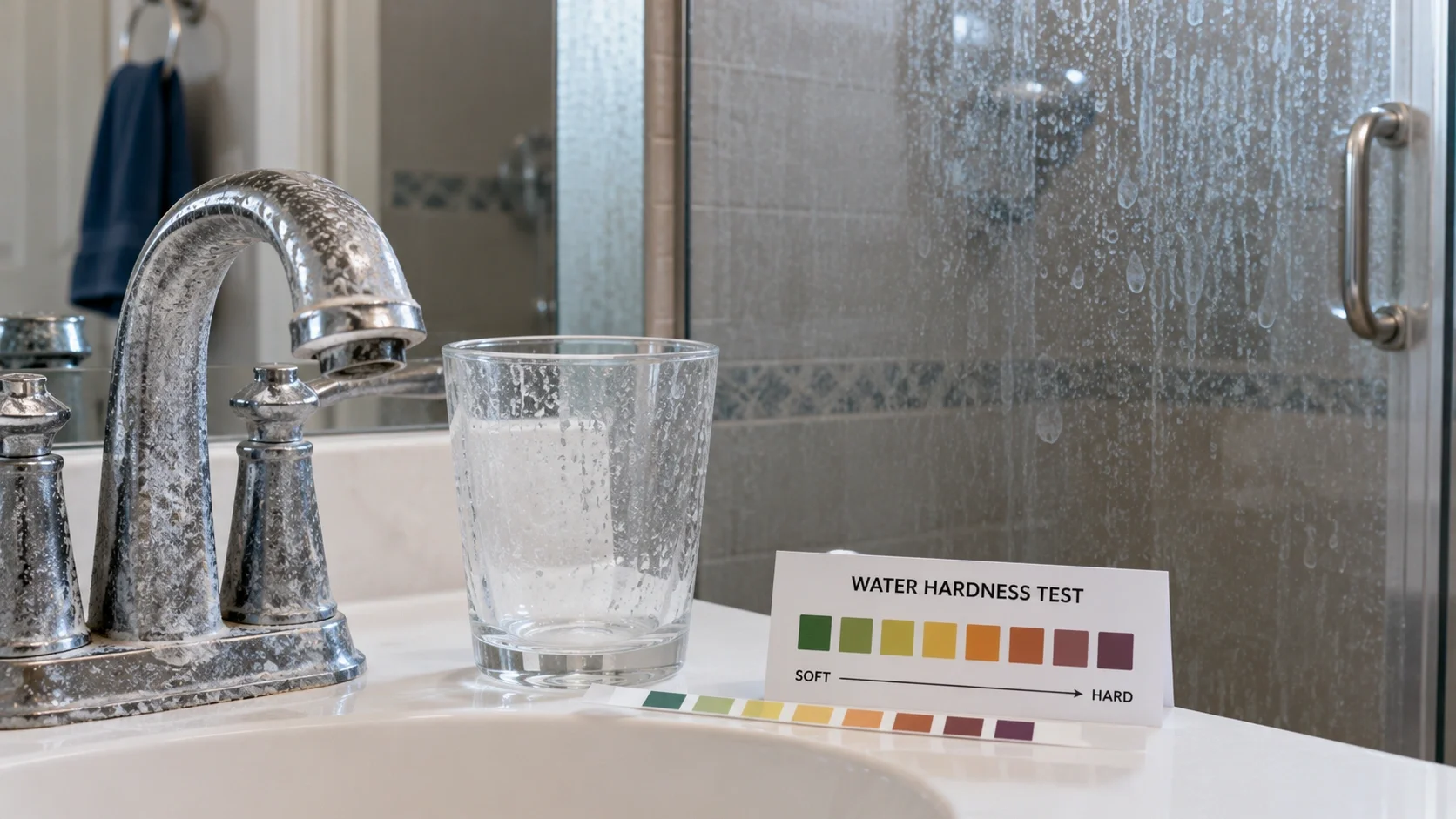
If you notice soap doesn't lather well, spots on dishes after washing, or scale buildup on fixtures, your water softener might not be working properly.
Easy FixStrange Taste or Odor
Unpleasant tastes or smells in your water could indicate bacterial growth in the resin tank or issues with the regeneration process.
Medium FixLow Water Pressure
Reduced water pressure throughout your home might signal a clogged resin bed or issues with the control valve.
Medium FixSalt Usage Problems
Your softener using too much or too little salt indicates potential issues with the brine system or regeneration settings.
Easy FixUnit Not Regenerating
If your softener isn't going through its regeneration cycle as expected, you may have timer issues, power problems, or a malfunctioning control head.
Hard FixLeaking Water
Water leaks around the unit can indicate worn seals, cracked tanks, or loose connections that need immediate attention.
Medium FixTroubleshooting Salt-Related Issues
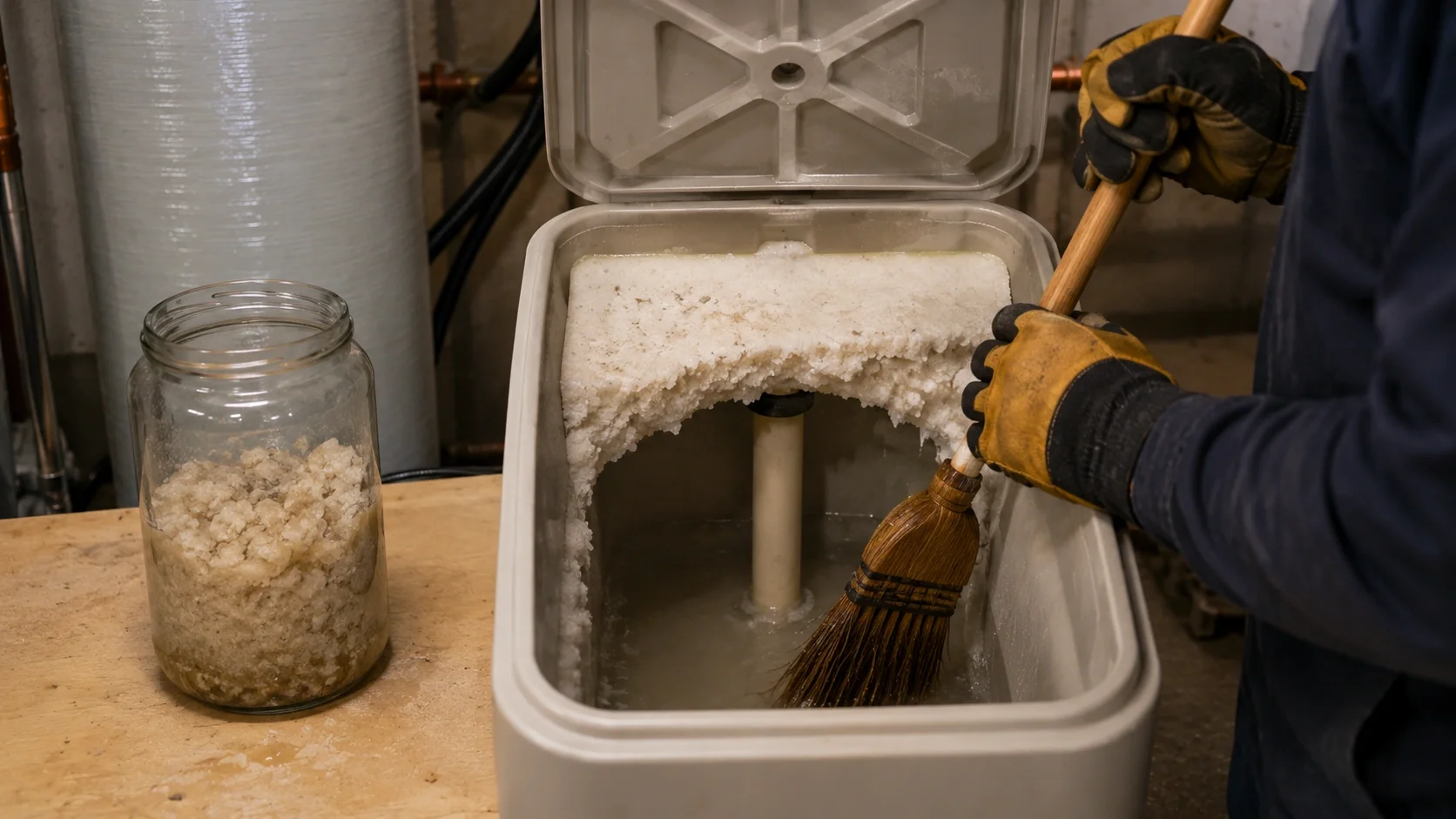
Salt Bridges
What it is: A salt bridge is a hardened crust that forms in the brine tank, creating an empty space between the water and the salt above it.
How to fix:
- Carefully break up the crust using a broom handle or similar tool
- Add hot water to help dissolve the bridge
- Remove any large chunks of hardened salt
- Refill with fresh salt, leaving space at the top
Salt Mushing
What it is: Salt mushing occurs when dissolved salt recrystallizes at the bottom of the brine tank, forming a thick sludge that can clog the brine line.
How to fix:
- Empty all salt and sludge from the brine tank
- Thoroughly clean the tank with a brush and warm water
- Allow the tank to dry completely
- Refill with high-quality pellet salt to prevent future mushing
Wrong Salt Type
Using the incorrect salt type can lead to various problems:
- Rock salt: Contains more impurities that can clog your system
- Solar salt: Better than rock salt but may still contain some impurities
- Evaporated salt pellets: Recommended for most water softeners as they're 99.99% pure
Always check your manufacturer's recommendations for the appropriate salt type.
Troubleshooting Water Hardness Issues
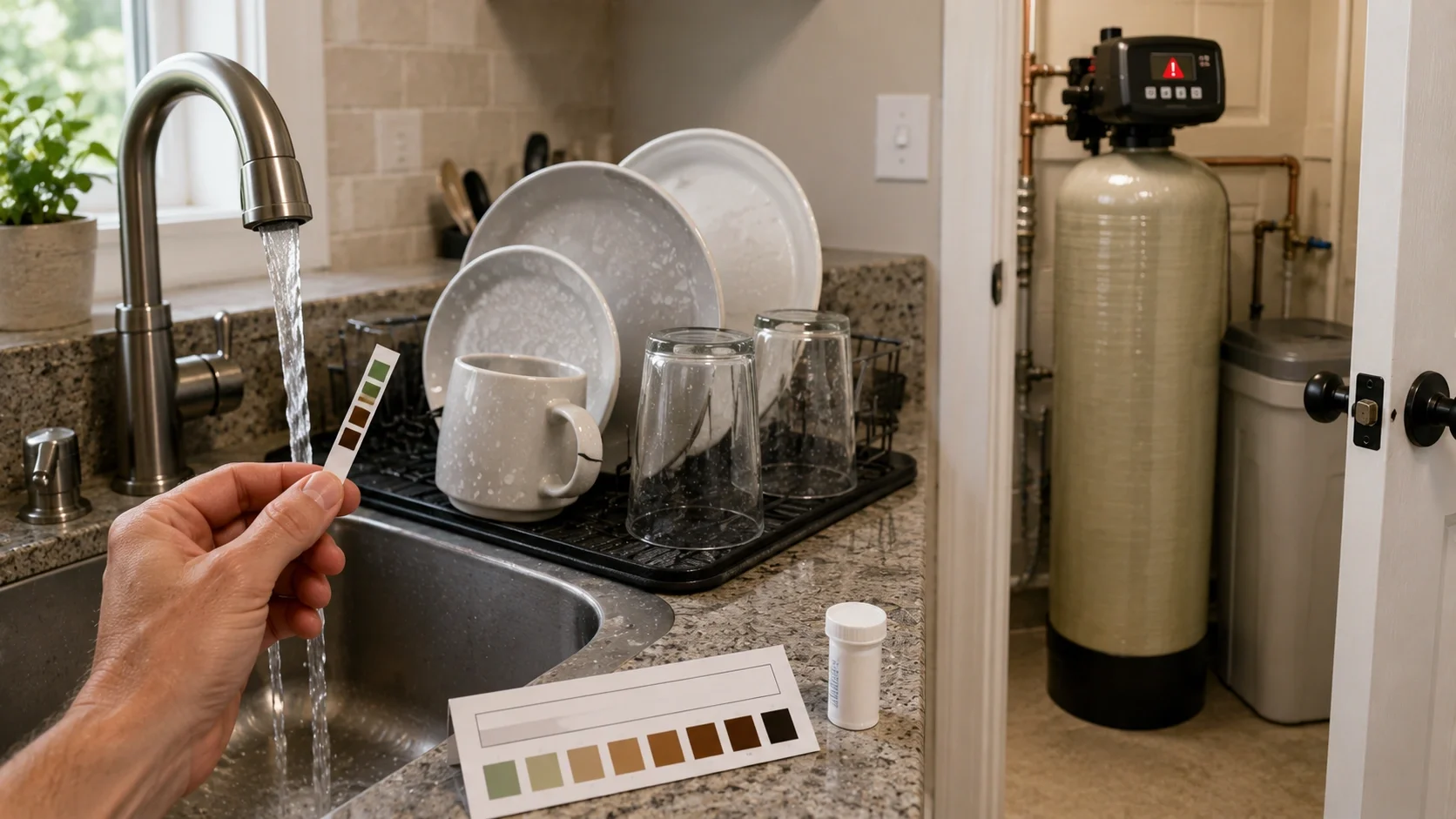
Softener Not Regenerating
If your water softener isn't regenerating as expected:
- Check the timer and settings to ensure they're correct
- Verify the power supply is working (for electric models)
- Ensure the unit is plugged in and the circuit breaker hasn't tripped
- Check if the bypass valve is in the correct position
Resin Issues
Water softener resin beads can become worn or contaminated over time:
- Resin typically lasts 10-15 years before needing replacement
- Use a resin cleaner annually to remove iron and other contaminants
- If water remains hard despite proper regeneration, resin may need replacement
Bypass Valve Issues
Sometimes the simple solution is overlooked:
- Locate the bypass valve on your water softener
- Ensure it's in the "service" position, not "bypass"
- Check for leaks around the valve and tighten if necessary
Troubleshooting Mechanical or System Issues
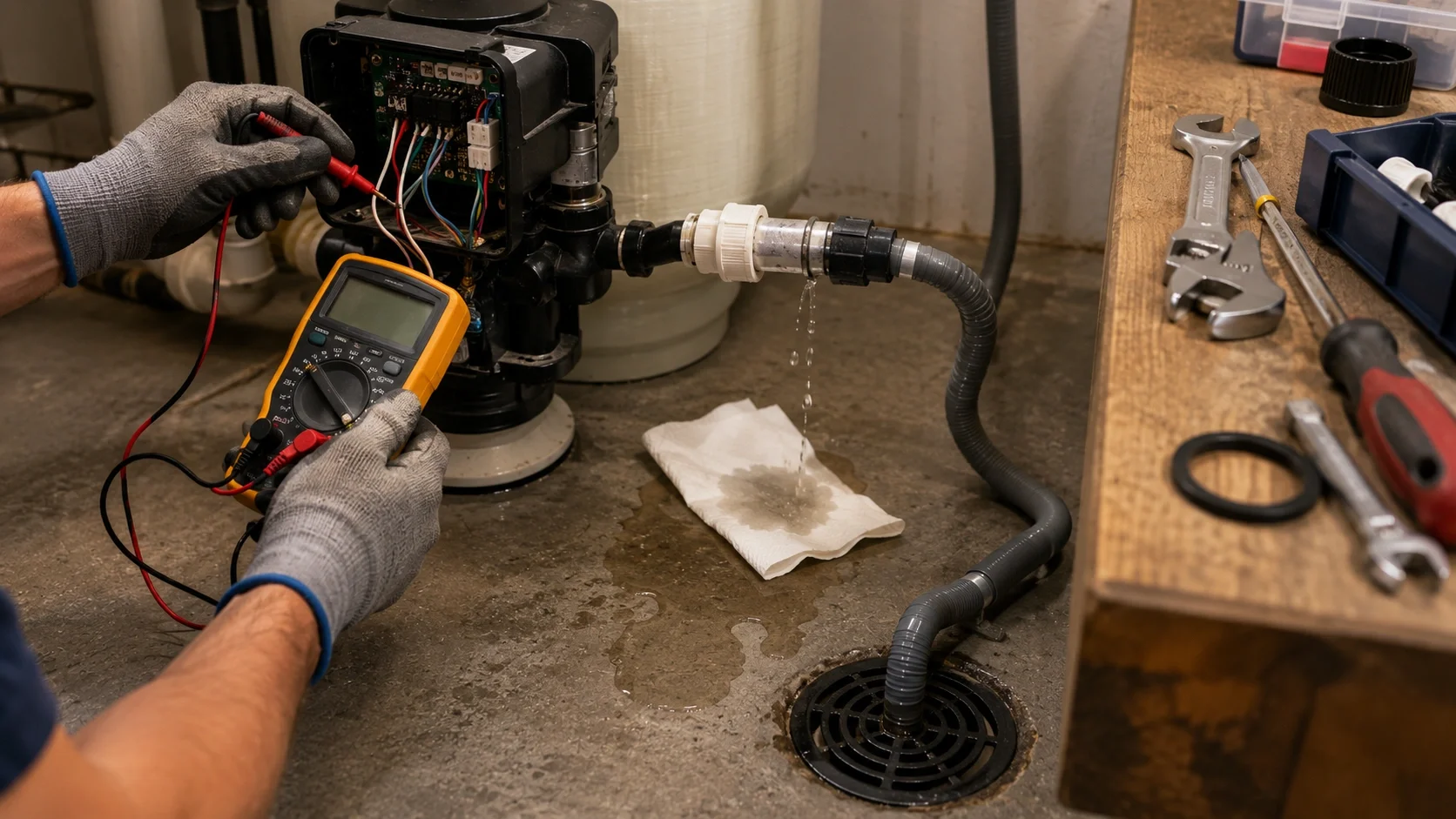
No Power to the Unit
For electric water softeners:
- Check that the unit is plugged in securely
- Test the outlet with another device
- Check your circuit breaker or fuse box
- Inspect the power cord for damage
Clogged or Kinked Drain Line
The drain line carries wastewater during regeneration:
- Inspect the drain line for kinks or obstructions
- Ensure the drain line isn't submerged in standing water
- Clear any clogs using a plumber's snake or compressed air
- Check that the drain line flow control isn't clogged
Faulty Control Valve or Motor
Control valve issues often require professional attention:
- Listen for unusual noises during regeneration
- Check for error codes on digital displays
- Consult your manual for specific troubleshooting steps
- Consider professional repair for complex valve issues
Leaks Around Fittings or Tanks
Water softener leaks can occur in several areas:
- Tighten connections with a wrench (don't overtighten)
- Replace worn O-rings or seals
- Inspect tanks for cracks or damage
- Use plumbing tape on threaded connections if needed
Troubleshooting Water Pressure Problems
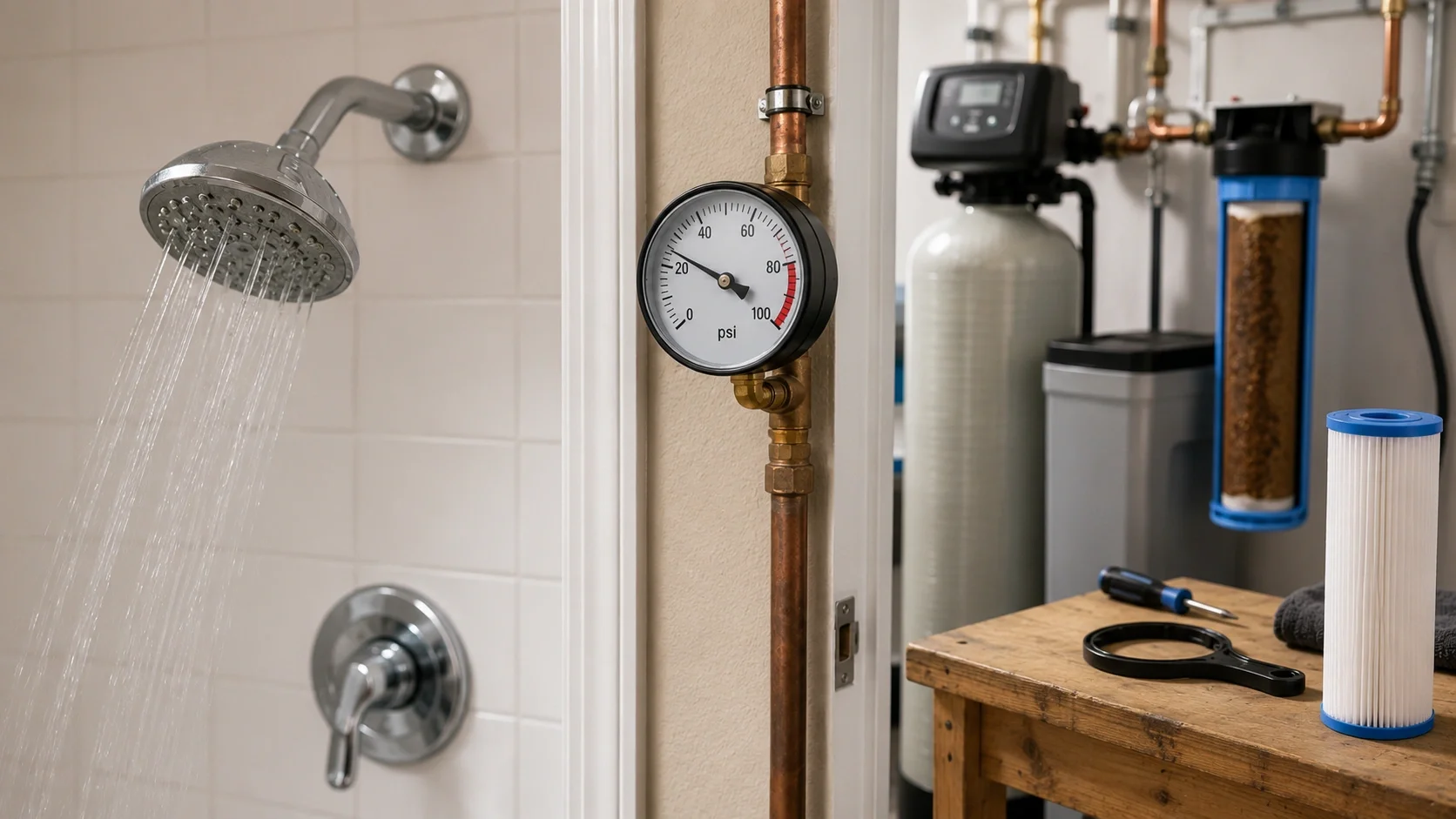
Clogged Resin Bed
Iron, manganese, or sediment can clog the resin bed:
- Try backwashing the unit manually
- Use a resin cleaner designed to remove iron buildup
- If severely clogged, the resin may need replacement
Sediment Filter Issues
If your system has a pre-filter:
- Locate and inspect the sediment filter
- Clean or replace if clogged with debris
- Ensure the filter housing is properly sealed
Blocked Drain Hose
During regeneration, a blocked drain hose can affect pressure:
- Inspect the drain hose for kinks or obstructions
- Ensure the drain hose has a proper air gap
- Clear any blockages with a plumber's snake
When to Call a Professional
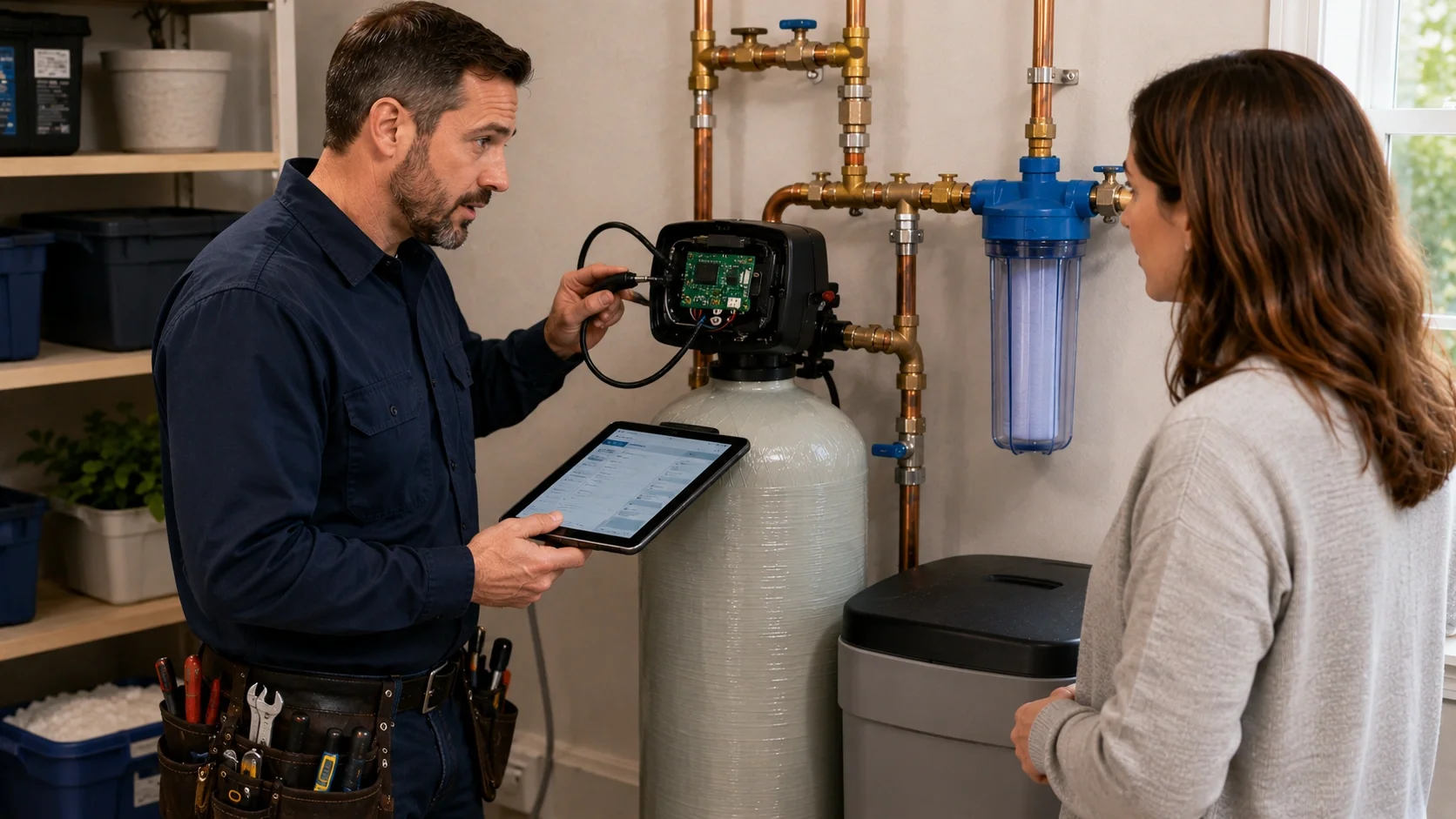
- Electrical or motor issues beyond basic troubleshooting
- Persistent hard water despite attempting all fixes
- Major leaks or tank damage that can't be easily repaired
- Control valve replacement or complex repairs
- If you're uncomfortable performing repairs yourself
Professional technicians have the tools and expertise to diagnose and fix complex issues safely and efficiently.
DIY vs Professional Cost Comparison
| Issue | DIY Cost | Professional Cost | Savings |
|---|---|---|---|
| Salt Bridge Removal | $0-$10 | $100-$200 | Save $100-$200 |
| Brine Tank Cleaning | $10-$20 | $150-$250 | Save $130-$240 |
| Resin Replacement | $100-$300 | $400-$800 | Save $100-$700 |
| Control Valve Repair | $50-$150 | $300-$600 | Save $150-$550 |
Preventive Tips to Reduce Future Problems
✅ Best Practices
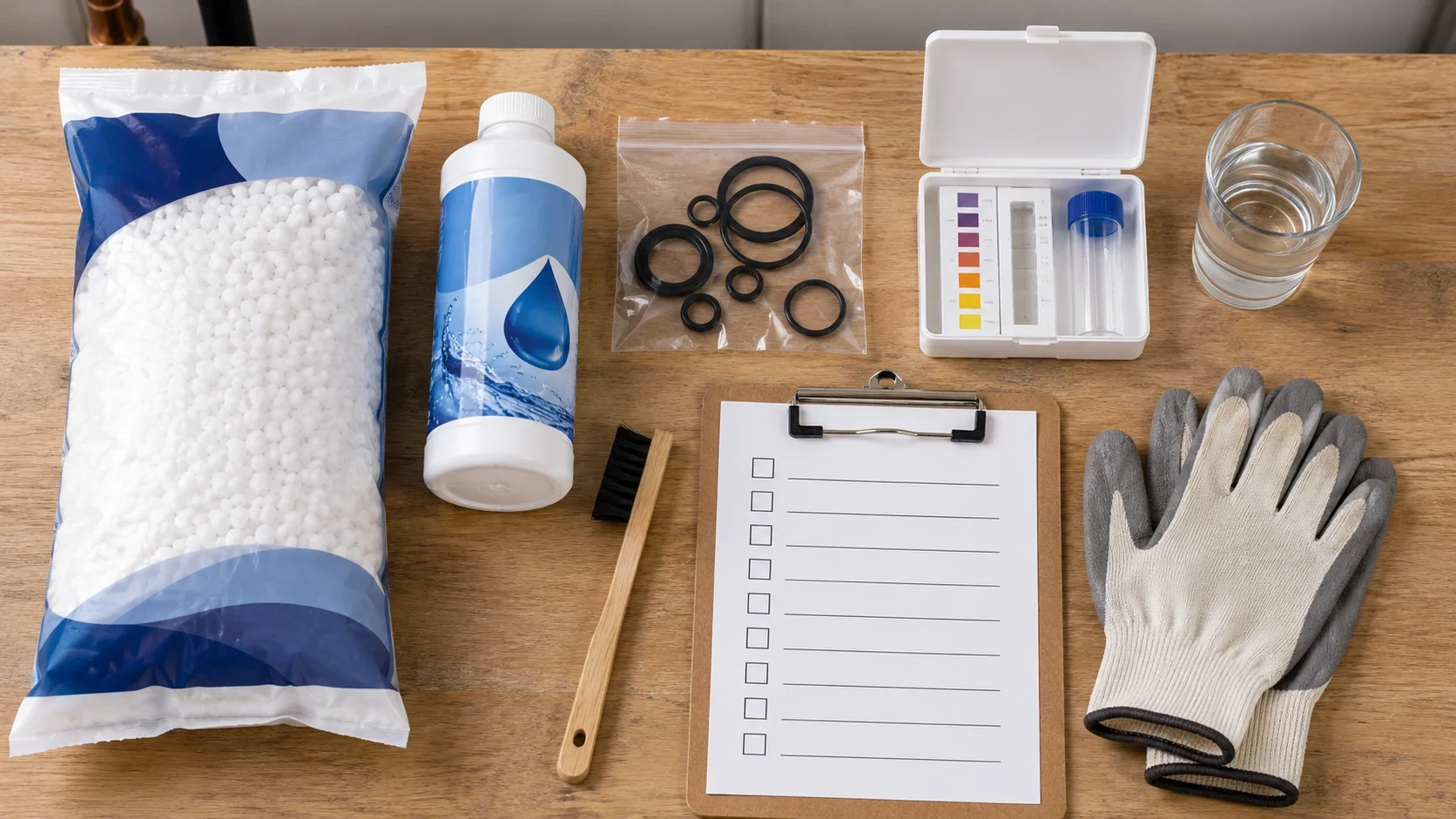
- Use high-quality salt to prevent bridging and mushing
- Clean the brine tank once or twice a year
- Check salt levels regularly (at least monthly)
- Run manual regeneration cycles if the unit isn't used frequently
- Schedule annual inspections by a professional
✅ Additional Tips
- Test your water hardness periodically to ensure proper operation
- Keep the area around the softener clean and dry to prevent corrosion
- Inspect for salt bridging monthly and break if needed
- Use a resin cleaner annually to prevent iron buildup
- Document maintenance dates and actions for reference
Annual Maintenance Schedule
- Monthly: Check salt levels, inspect for salt bridging
- Quarterly: Test water hardness, inspect for leaks
- Annually: Clean brine tank, use resin cleaner, inspect all connections
- Every 2-3 Years: Professional system inspection
- Every 10-15 Years: Consider resin bead replacement
Common Error Codes and Their Meanings
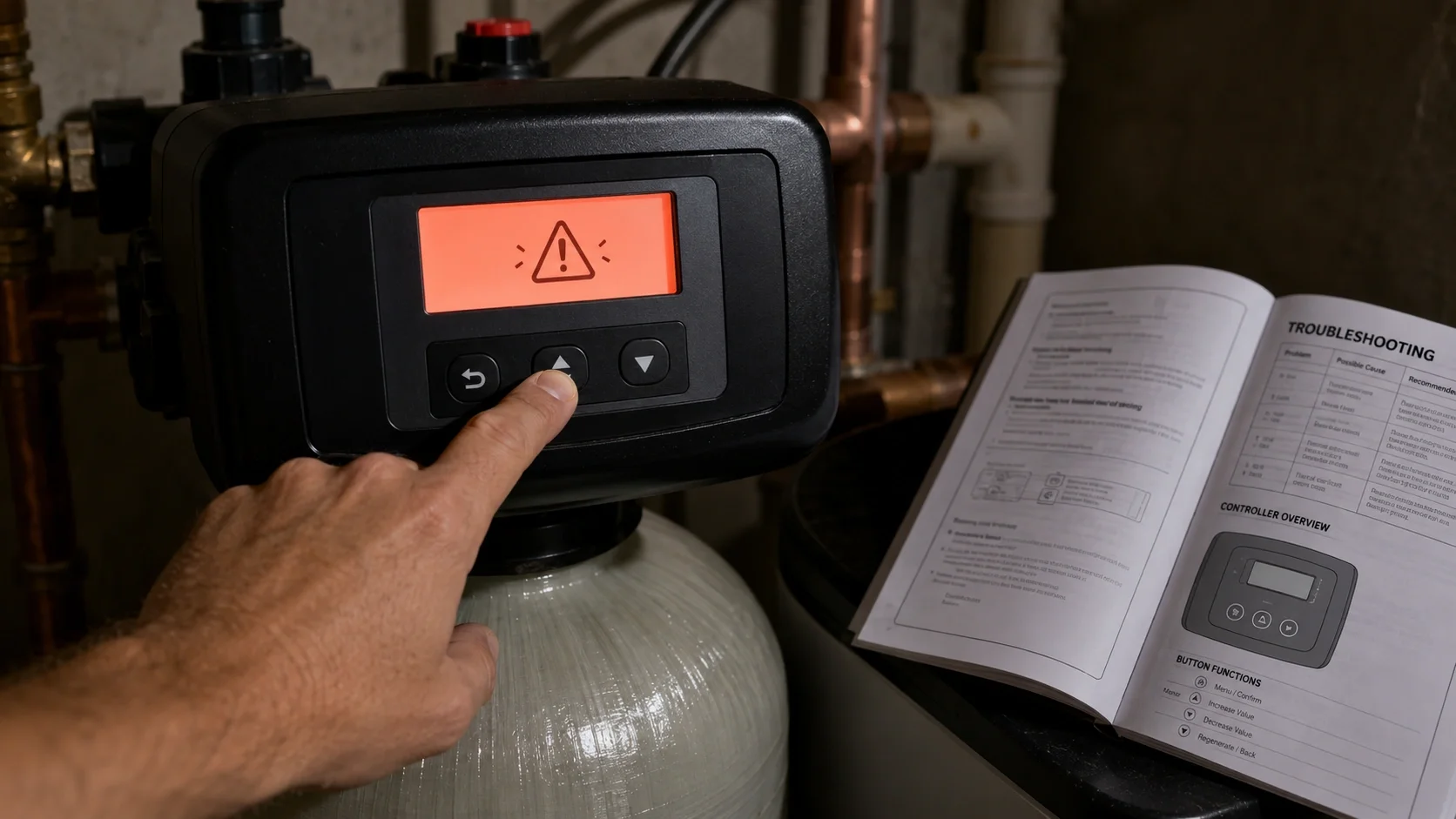
| Error Code | Meaning | Possible Fix |
|---|---|---|
| Err-1 | Motor stalled | Check motor, check for obstructions |
| Err-2 | Valve position error | Reset valve, check position sensor |
| Err-3 | Brine draw failure | Check salt level, clean brine line |
| Err-4 | Flow meter error | Check flow meter, clean sensor |
| Err-5 | Valve driver error | Check valve driver board |
Note: Error codes vary by manufacturer. Always check your owner's manual for specific error codes.
Frequently Asked Questions
Why is my water still hard even after regeneration?
This could be due to several issues: incorrect timer settings, a clogged injector or nozzle, damaged resin beads, insufficient salt, or a malfunctioning control valve. Follow the troubleshooting steps above to identify the specific cause.
How do I know if the resin needs replacing?
Signs that your resin may need replacement include: persistent hard water despite proper regeneration, significant loss of water pressure, or if your softener is over 10-15 years old. You may also see resin beads in your plumbing fixtures.
Can I use any type of salt in my softener?
No, it's best to use high-purity evaporated salt pellets specifically designed for water softeners. Rock salt contains more impurities that can lead to maintenance issues. Always follow your manufacturer's recommendations for salt type.
How long should a water softener last?
With proper maintenance, a quality water softener typically lasts 10-15 years. The control valve may need service or replacement after 5-10 years, while the resin bed usually lasts 10-15 years before needing replacement.
Why does my water softener make strange noises?
Unusual noises often indicate issues with the control valve, motor, or brine tank. Clunking sounds might suggest a problem with the piston or seals, while grinding noises could indicate motor issues. If noises persist, consult a professional.
How often should I clean my brine tank?
You should clean your brine tank at least once a year, or more frequently if you notice salt bridging, mushing, or excessive residue. Regular cleaning prevents buildup and ensures proper regeneration.
Conclusion

Water softener troubleshooting doesn't have to be daunting. Most common problems have straightforward solutions that homeowners can implement without professional help. Regular maintenance and timely attention to issues will keep your water softener functioning efficiently for years to come.
Remember to start with simple solutions like checking salt levels, ensuring proper power supply, and verifying settings before moving on to more complex repairs. When in doubt, consult your owner's manual or contact a professional water treatment specialist.
Quick Troubleshooting Flowchart
1. Hard Water Return? → Check salt levels → Check bypass valve → Check regeneration settings → Consider resin replacement
2. No Softening? → Check power supply → Check timer settings → Check for error codes → Inspect control valve
3. Low Pressure? → Check sediment filter → Check resin bed → Check drain line → Check for clogs
4. Salt Issues? → Check for bridging → Check for mushing → Use high-quality salt → Clean brine tank
5. Leaks? → Tighten connections → Replace O-rings → Check for cracks → Call a professional
Remember: Most issues are fixable with basic tools and a little patience. If you're unsure about any repair, don't hesitate to call a professional. The cost of a service call is often less than the cost of damage from a DIY mistake.
Recommended Water Softener Products
Other Water Softener Resources
Explore these additional water softening solutions and resources:
Culligan Water Softener Systems
Industry-leading water softening solutions with innovative technology for efficient salt and water usage in residential applications.
Water Softener Salt Options
Comprehensive guide to choosing the right salt for your water softener, including comparisons of pellet, crystal, and block salt.
Complete Water Softener Systems
Full home water softening systems with various capacities to meet different household needs and water hardness levels.
AO Smith Water Softeners
Reliable and efficient water softening systems from a trusted brand known for quality water treatment products.
Fleck Water Softener Systems
Durable water softeners featuring Fleck control valves known for their reliability and precision in water treatment.
Water Softener Filter Components
Replacement filters and components to maintain optimal performance of your water softening system.