
Kwik Trip Water Softener Salts: High Quality for Efficient Softening
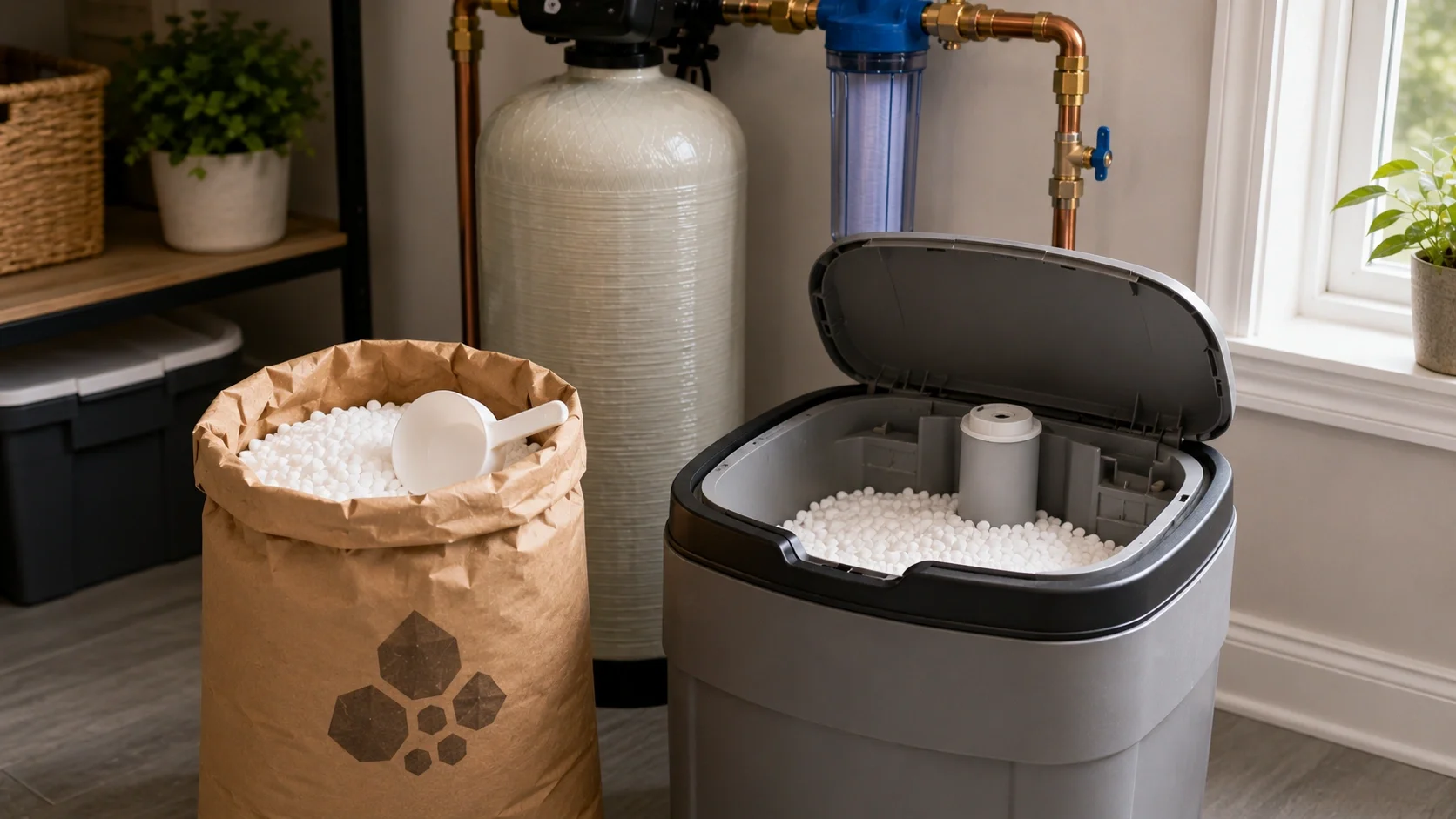
99.5% Pure Salt
High purity crystals for efficient ion exchange and optimal softening performance
Fast Dissolving
Specially formulated pellets dissolve quickly for consistent brine solution
Clean Formula
Low insolubles content reduces residue and maintenance requirements
Key Features of Premium Water Softener Salt
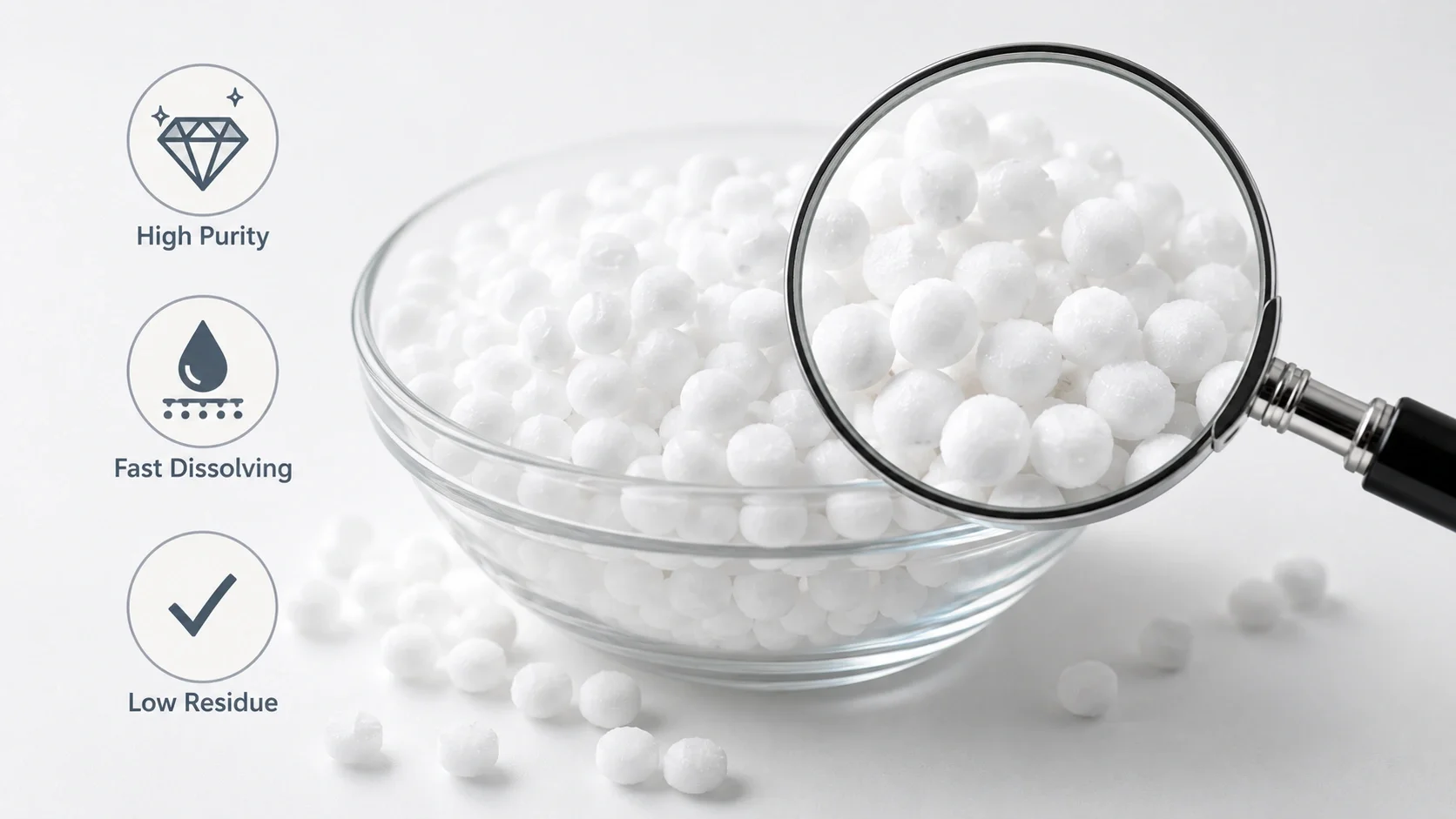
99.5% Pure Salt
High purity content ensures efficient ion exchange and optimal regeneration of resin beads.
Fast Dissolving
Specially formulated pellets dissolve quickly to create a consistent and effective brine solution.
Low Insolubles
Less than 0.5% insoluble content reduces residue buildup and maintenance requirements.
Resists Bridging
Pellet formula resists mushing and bridging, ensuring consistent salt delivery to the system.
Efficient Regeneration
Optimized crystal structure provides maximum surface area for efficient ion exchange.
Universal Compatibility
Compatible with all ion-exchange water softening systems, regardless of brand or model.
Recommended Water Softener Salt Products
About Kwik Trip Softener Salt
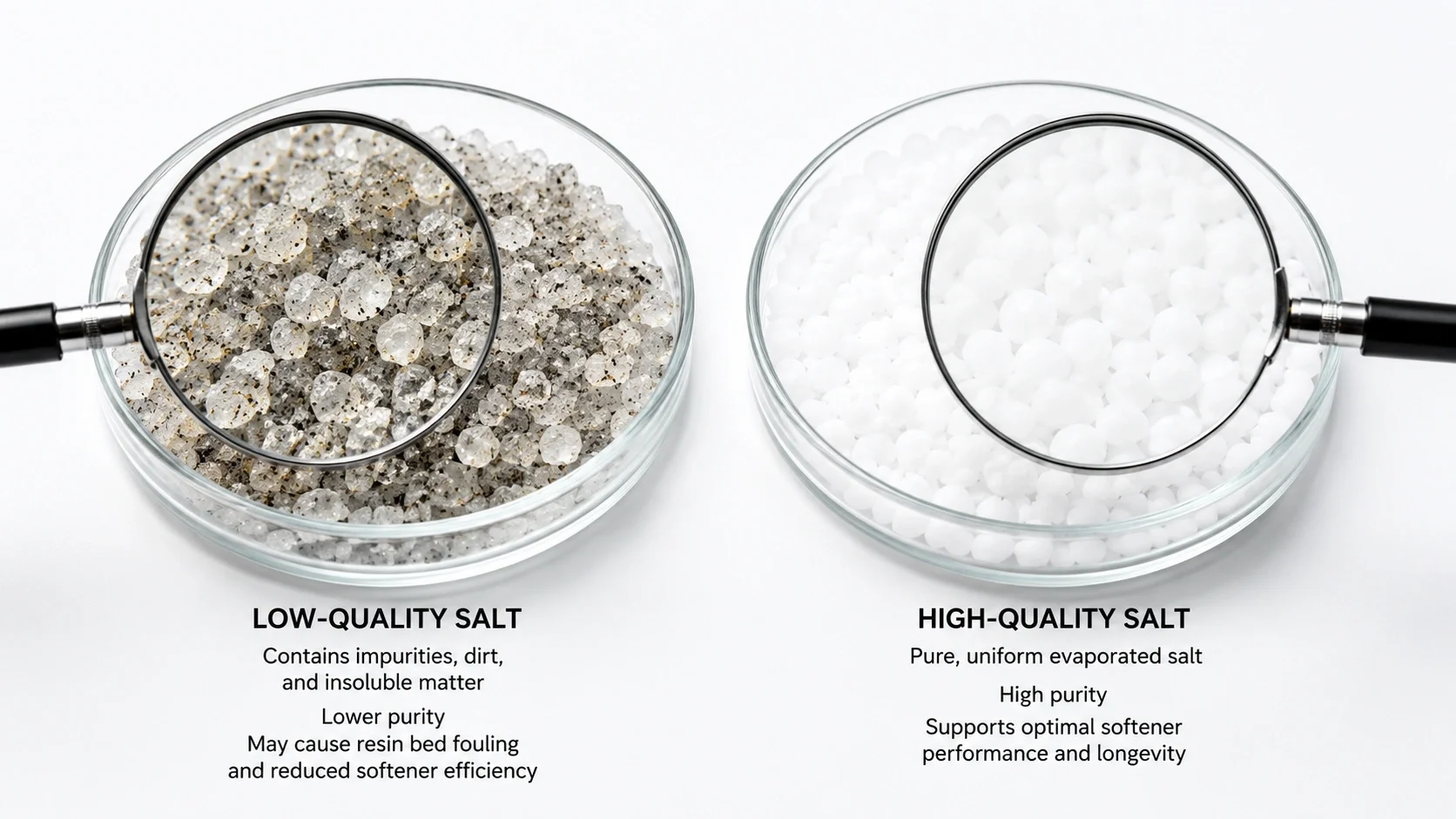
Kwik Trip water softener salt is a high-quality product designed specifically for use in all ion-exchange water softening systems. These 99.5% pure salt pellets are formulated to create an optimal brine solution that effectively regenerates your water softener's resin beads.
Key Features:
- 99.5% pure salt content for efficient regeneration
- Specially formed pellets resist mushing and bridging
- Low insoluble content (less than 0.5%) reduces residue buildup
- Fast-dissolving formula for consistent brine solution
- Compatible with all ion-exchange water softening systems
Benefits of Using Quality Water Softener Salt:
Using high-quality water softener salt like Kwik Trip pellets ensures your water softening system operates at peak efficiency. This results in better-tasting water, reduced scale buildup in appliances and plumbing, and longer system lifespan with fewer maintenance issues.
Types of Water Softener Salt
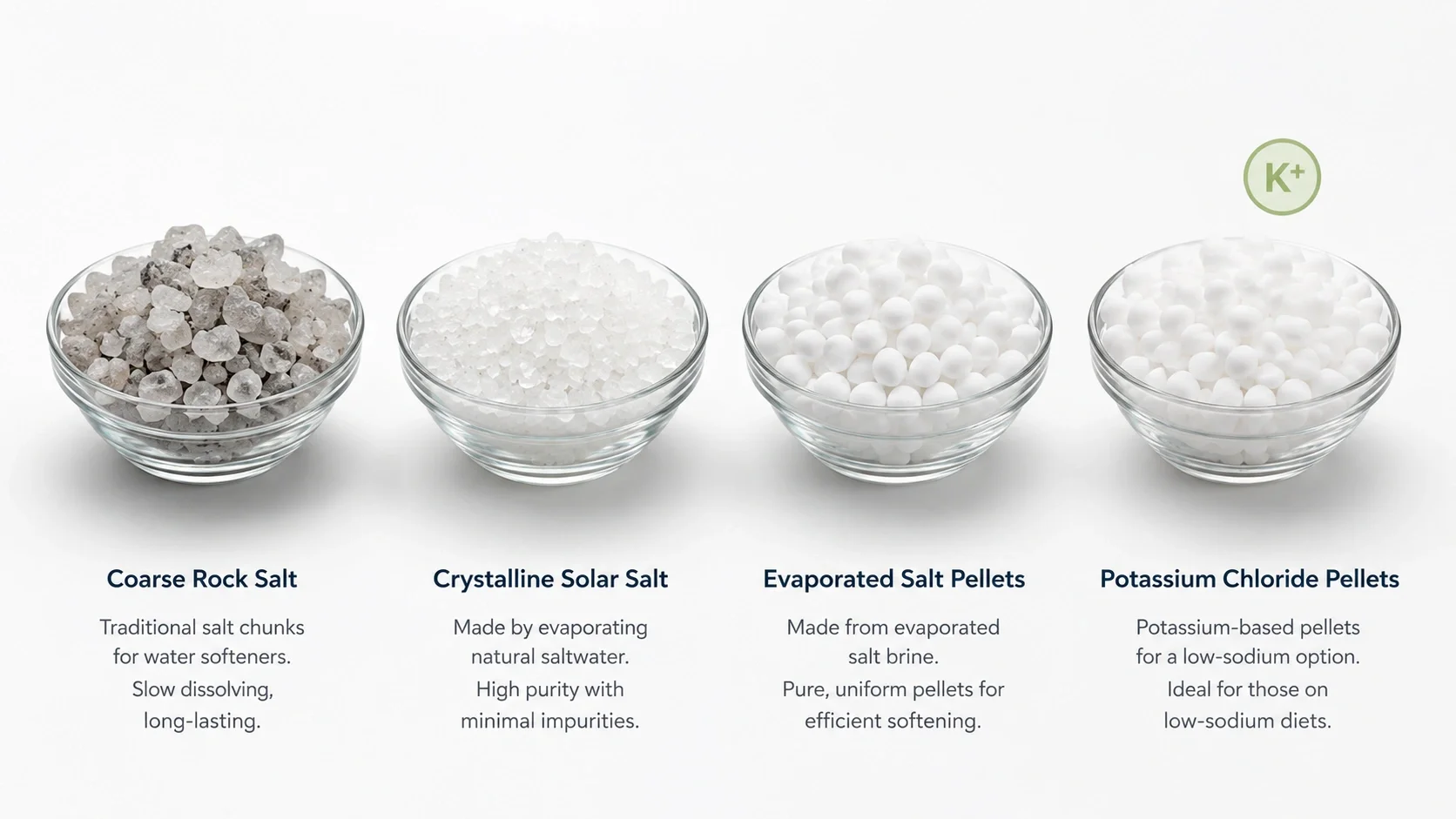
💎 Salt Pellets
Best Choice: Pellets are the recommended option for most systems. They dissolve evenly, resist bridging and mushing, and contain the highest purity (99.5-99.99%).
$8-$15 per bag☀ Solar Salt Crystals
Evaporated from seawater, solar salt is 99.6% pure. Crystals are more affordable but can be more prone to bridging than pellets.
$6-$12 per bag🛣 Rock Salt
The most affordable option but contains more impurities (~98% purity). Rock salt can cause more residue and maintenance issues over time.
$5-$8 per bag⚛ Potassium Chloride
A sodium-free alternative for those on restricted diets. More expensive but adds beneficial potassium to your water instead of sodium.
$20-$35 per bagRecommendation: For most households, high-purity salt pellets offer the best balance of cost, performance, and ease of maintenance. They provide the most consistent results and require the least maintenance over time.
Choosing the Right Water Softener Salt
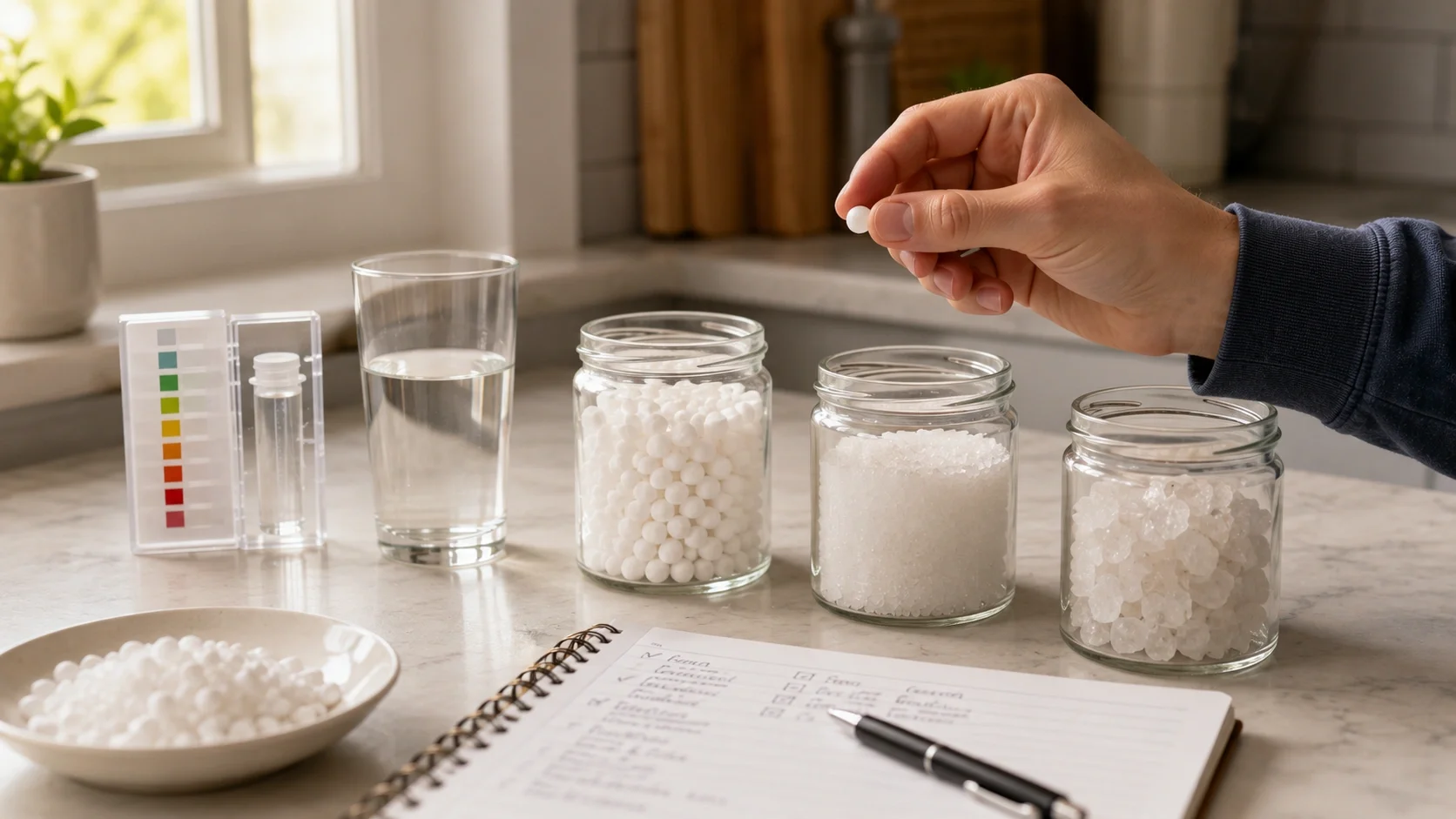
Selecting the appropriate salt for your water softener is essential for optimal performance. Consider these factors when choosing water softener salt:
- Water Hardness Level: Higher hardness may require more frequent regeneration
- Iron Content: Water with high iron may benefit from salt with rust inhibitors
- System Type: Consult your manufacturer's recommendations for salt type
- Purity Level: Higher purity salt (99%+) reduces residue and maintenance needs
- Pellet vs Crystal: Pellets are generally cleaner and less prone to bridging
Maintenance Tips:
For best results, check your salt level monthly and maintain it at least half full. Perform an annual cleaning of the brine tank to remove any accumulated sediment. If you notice salt bridging (empty space between salt and water), break it up with a broom handle to restore proper operation.
How Much Salt Do You Need?
- Average family of 4: 1-2 bags (40-80 lbs) per month
- Water hardness 10 GPG: Approximately 1 bag per month
- Water hardness 20 GPG: Approximately 2 bags per month
- Keep brine tank: At least 1/4 full at all times
- Don't overfill: Fill to about 3/4 full maximum
Common Salt Problems and Solutions
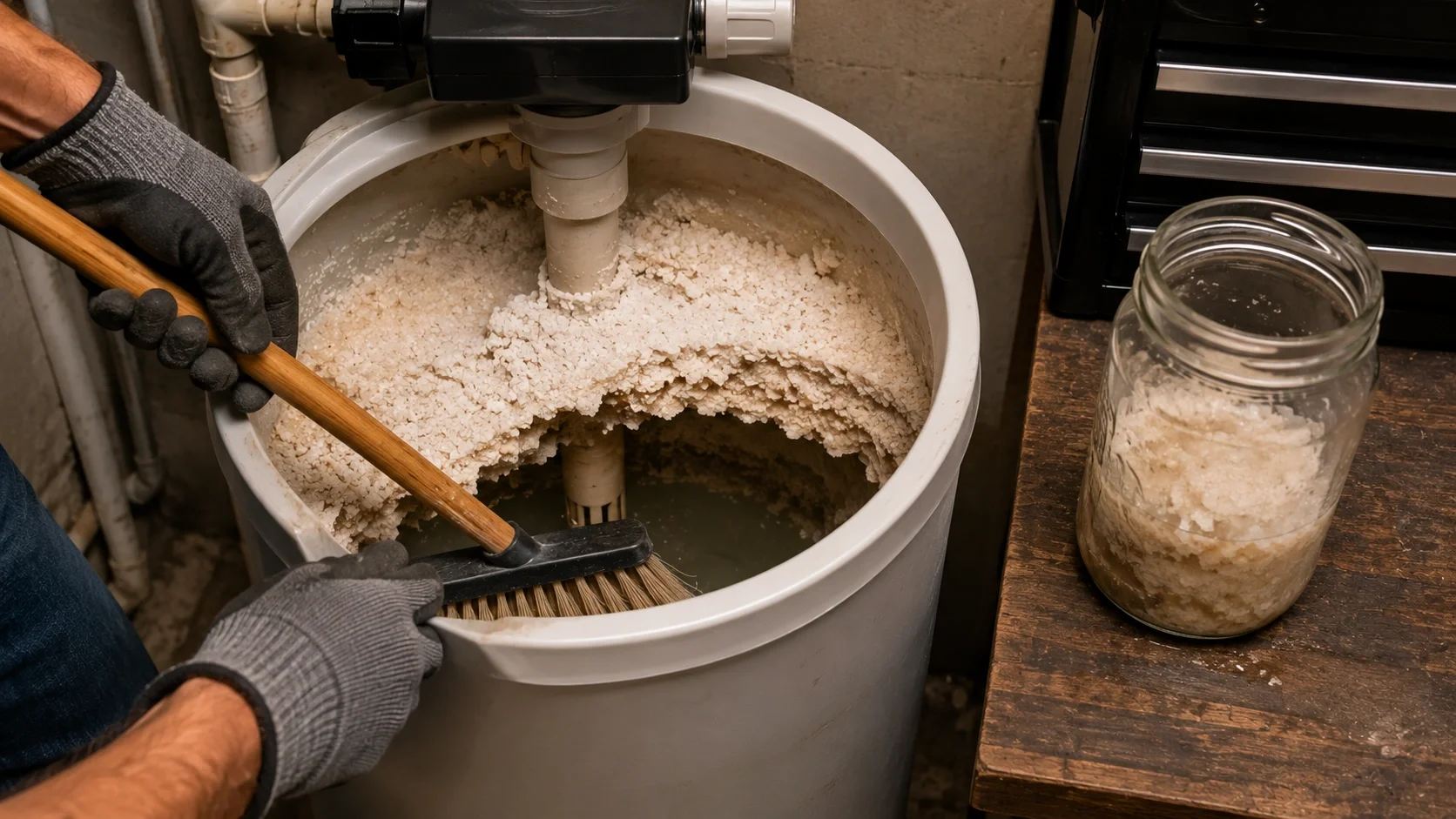
⚠ Salt Bridging
- Cause: Hard crust forms above water level
- Solution: Break with broom handle, use salt grid
- Prevention: Use pellets, don't overfill, maintain consistent salt level
⚠ Salt Mushing
- Cause: Salt dissolves into mushy sludge
- Solution: Clean tank thoroughly, use pellet salt
- Prevention: Avoid overfilling, use high-quality salt
⚠ Excessive Residue
- Cause: Low-quality salt with impurities
- Solution: Switch to evaporated pellets, clean tank
- Prevention: Use high-purity salt (99.5%+)
⚠ Low Salt Level
- Cause: Forgetting to refill
- Solution: Add salt immediately
- Prevention: Set monthly reminder, use salt monitor
Frequently Asked Questions
How often should I add salt to my water softener?
Check salt levels monthly and refill when the tank is about 1/4 full. Most families use 1-2 bags per month depending on water hardness and usage.
Can I use table salt in my water softener?
No, table salt contains additives like iodine and anti-caking agents that can damage your system. Always use salt specifically formulated for water softeners.
What's the difference between pellets and crystals?
Pellets are compressed and less likely to bridge or mush. Crystals are natural and more affordable but can cause bridging issues. Most manufacturers recommend pellets.
Is potassium chloride better than salt?
Potassium chloride is better for low-sodium diets and adds beneficial potassium to water. However, it's more expensive and may not work in all systems.
How do I prevent salt bridging?
Use pellet salt, don't overfill the tank, maintain consistent salt levels, and consider installing a salt grid. If bridging occurs, break it up with a broom handle.
Can I mix different types of salt?
It's generally not recommended to mix different types of salt as it can cause bridging issues. Stick with one type for consistent performance.
Proper Salt Storage Tips

Proper storage of your water softener salt ensures it remains effective and easy to use:
- Keep it dry: Store salt in a dry area to prevent clumping and moisture absorption
- Off the floor: Place salt bags on pallets or shelves to prevent moisture wicking from concrete
- Protect from elements: Keep salt bags away from rain, snow, and high humidity
- Rotate stock: Use older bags first to prevent prolonged storage issues
- Check for damage: Inspect bags for tears or holes before adding to your system
Other Water Softening Products
Explore these additional water softening solutions that complement your salt needs:
Culligan Water Softener Systems
Industry-leading water softening systems known for reliability and efficient salt usage with advanced regeneration technology.
Water Softener Salt Guide
Comprehensive guide to selecting the right salt type and quality for your specific water conditions and softening system.
Complete Water Softener Systems
Full water softening solutions including installation considerations, sizing guidelines, and maintenance requirements.
AO Smith Water Softeners
High-efficiency water softeners from a trusted brand with innovative features for optimal water quality and salt efficiency.
Fleck Water Softener Systems
Durable softening systems with precision control valves for customized regeneration based on your water usage patterns.
Water Softener Pre-Filters
Pre-filtration solutions that protect your water softener from sediment and extend the life of your resin bed.